Protein-Packed Philly Cheesesteak Bowls – Big Flavor, Simple Meal Prep
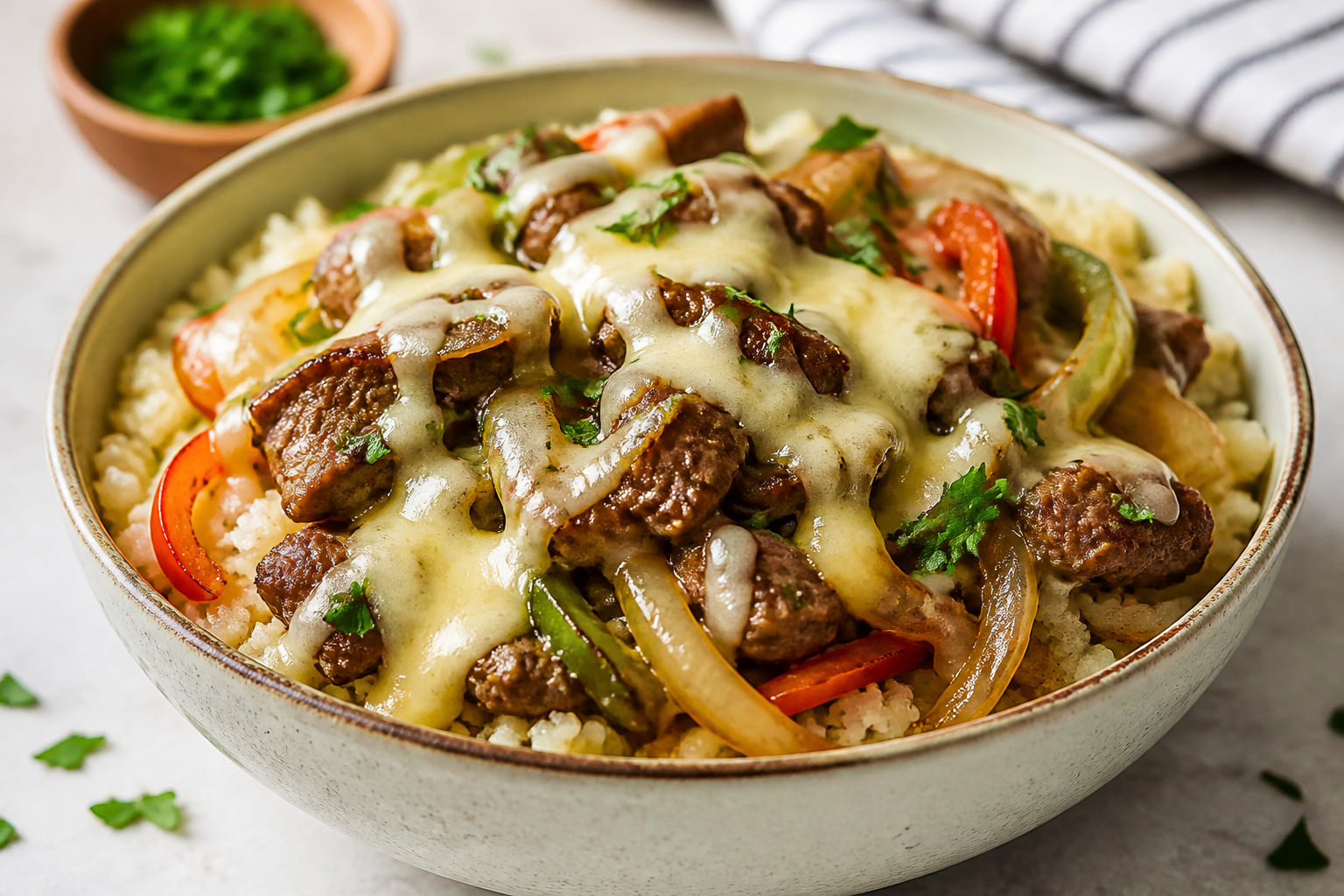
Skip the bread and keep everything you love about a cheesesteak—tender beef, melty cheese, peppers, and onions—stacked over a hearty, high-protein base. These Protein-Packed Philly Cheesesteak Bowls are fast, flexible, and great for weeknights or meal prep. You’ll get bold flavor without fuss, plus easy swaps for your diet and pantry.
Stop wondering what's for dinner.
Get 7 healthy, family-friendly dinners complete with recipes and simple meal plans delivered straight to your inbox.
Everything cooks in one pan, and it reheats like a dream. If you want dinner that feels indulgent but eats clean, this hits the sweet spot.
Ingredients
Method
- Prep the steak: Pat the sliced beef dry with paper towels. Toss with 1/2 teaspoon salt, black pepper, smoked paprika, and oregano. If you have time, refrigerate for 15 minutes to help the seasoning sink in.
- Cook the base: Warm your chosen base (quinoa, rice, beans, or cauliflower rice). For cauliflower rice, sauté with a little oil and a pinch of salt until tender and lightly browned, about 5–7 minutes. Keep warm.
- Sauté the veggies: Heat 1 tablespoon oil in a large skillet over medium-high heat. Add peppers and onions (and mushrooms, if using) with a pinch of salt. Cook, stirring occasionally, until softened and slightly charred at the edges, 7–9 minutes. Stir in garlic during the last minute until fragrant. Transfer veggies to a bowl.
- Sear the steak: Add the remaining 1 tablespoon oil to the same skillet. Increase heat to high. Add the steak in a single layer. Cook without moving for 1–2 minutes to get color, then flip and cook another 1–2 minutes. You want browned edges but a tender center.
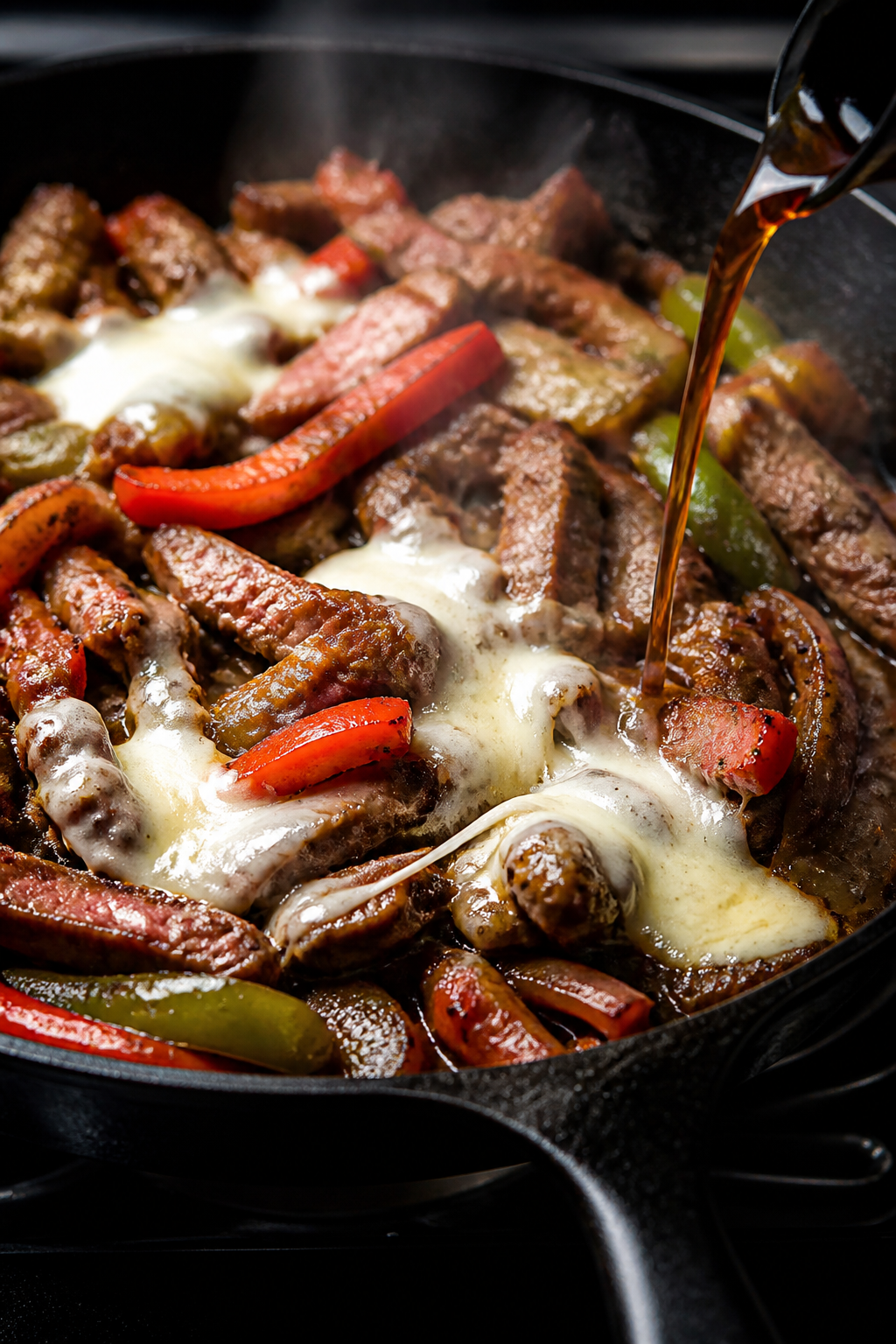
- Season and deglaze: Reduce heat to medium. Add Worcestershire sauce to the skillet and scrape up browned bits. Return peppers and onions to the pan and toss to combine. Taste and adjust salt and pepper.
- Melt the cheese: Turn off the heat. Lay provolone slices over the mixture or sprinkle on mozzarella. Cover the pan for 1–2 minutes until melted and gooey. For extra stretch, add a bit more cheese.
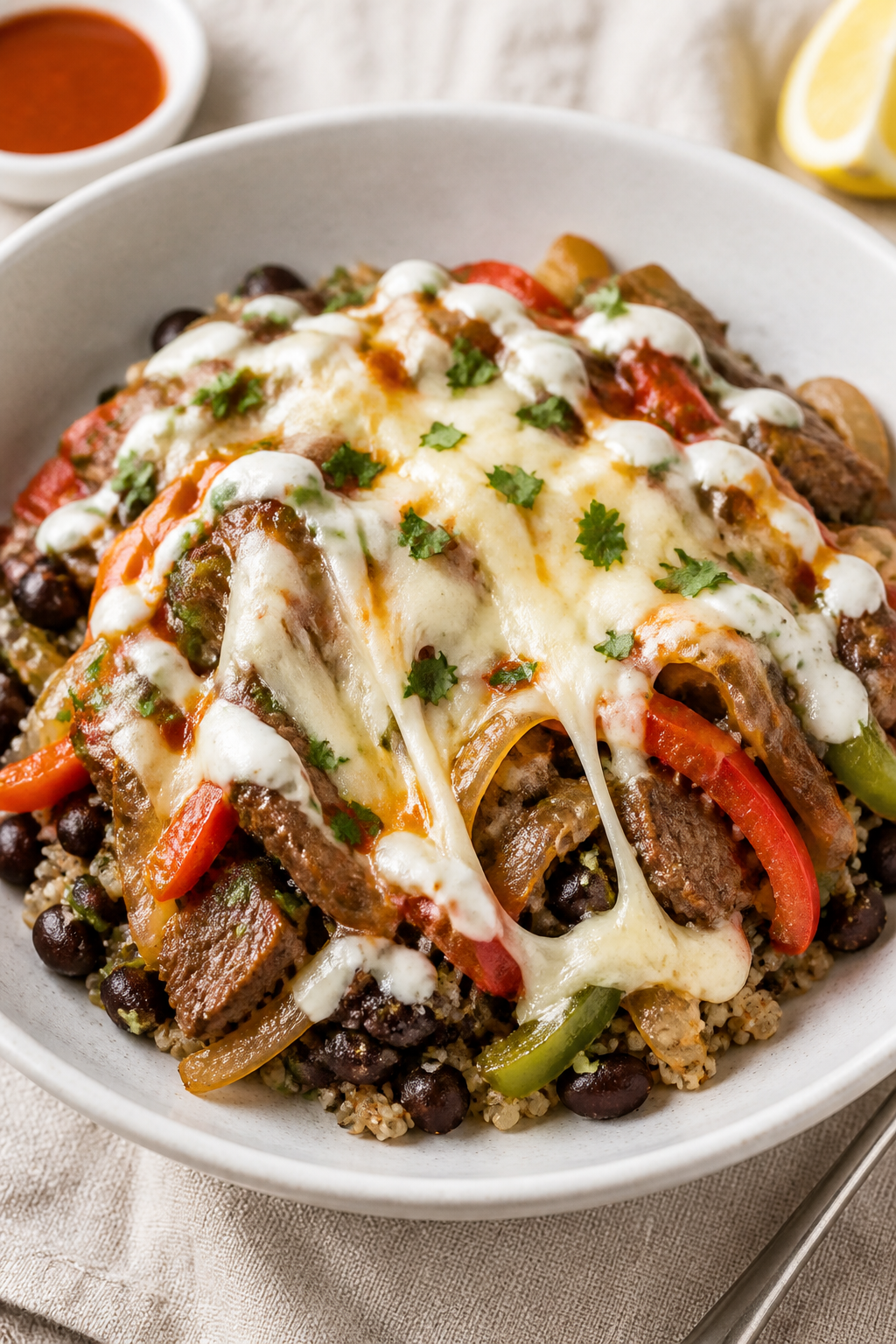
- Assemble the bowls: Spoon your warmed base into bowls. Top generously with the cheesesteak mixture. Finish with chopped parsley or green onions, and add hot sauce or a light yogurt drizzle if you like.
Why This Recipe Works
This bowl keeps the spirit of a classic cheesesteak while leaning into protein and veggies. Instead of a roll, we use a high-protein base like quinoa, cauliflower rice, or beans.
That means more staying power and fewer midday crashes. Thinly sliced steak cooks in minutes, peppers and onions bring sweetness and crunch, and a quick cheese melt ties it all together. It’s a complete meal that’s easy to scale up, customize, and pack for later.
Ingredients
- 1 lb (450 g) thinly sliced sirloin, flank steak, or ribeye (partially frozen beef is easier to slice thin)
- 2 bell peppers (any colors), thinly sliced
- 1 large yellow onion, thinly sliced
- 2 cloves garlic, minced
- 1 tbsp Worcestershire sauce (or coconut aminos for a soy-free option)
- 1 tsp smoked paprika
- 1/2 tsp dried oregano
- 1/2 tsp black pepper, plus more to taste
- 1/2–1 tsp kosher salt, divided
- 2 tbsp olive oil or avocado oil
- 4 slices provolone or 3/4 cup shredded mozzarella (or a mix, to taste)
- Optional add-ins: mushrooms (8 oz, sliced), hot cherry peppers, pickled jalapeños
- Protein base options (choose one or mix):
- 3 cups cooked quinoa
- 3 cups cooked brown rice or cauliflower rice
- 2 cups canned black beans or white beans, rinsed and drained
- 2 cups cooked farro for extra chew
- Optional toppings: chopped parsley, green onions, a drizzle of Greek yogurt or light mayo, hot sauce
Step-by-Step Instructions
- Prep the steak: Pat the sliced beef dry with paper towels.
Toss with 1/2 teaspoon salt, black pepper, smoked paprika, and oregano. If you have time, refrigerate for 15 minutes to help the seasoning sink in.
- Cook the base: Warm your chosen base (quinoa, rice, beans, or cauliflower rice). For cauliflower rice, sauté with a little oil and a pinch of salt until tender and lightly browned, about 5–7 minutes.
Keep warm.
- Sauté the veggies: Heat 1 tablespoon oil in a large skillet over medium-high heat. Add peppers and onions (and mushrooms, if using) with a pinch of salt. Cook, stirring occasionally, until softened and slightly charred at the edges, 7–9 minutes.
Stir in garlic during the last minute until fragrant. Transfer veggies to a bowl.
- Sear the steak: Add the remaining 1 tablespoon oil to the same skillet. Increase heat to high.
Add the steak in a single layer. Cook without moving for 1–2 minutes to get color, then flip and cook another 1–2 minutes. You want browned edges but a tender center.
- Season and deglaze: Reduce heat to medium.
Add Worcestershire sauce to the skillet and scrape up browned bits. Return peppers and onions to the pan and toss to combine. Taste and adjust salt and pepper.
- Melt the cheese: Turn off the heat.
Lay provolone slices over the mixture or sprinkle on mozzarella. Cover the pan for 1–2 minutes until melted and gooey. For extra stretch, add a bit more cheese.
- Assemble the bowls: Spoon your warmed base into bowls.
Top generously with the cheesesteak mixture. Finish with chopped parsley or green onions, and add hot sauce or a light yogurt drizzle if you like.
Keeping It Fresh
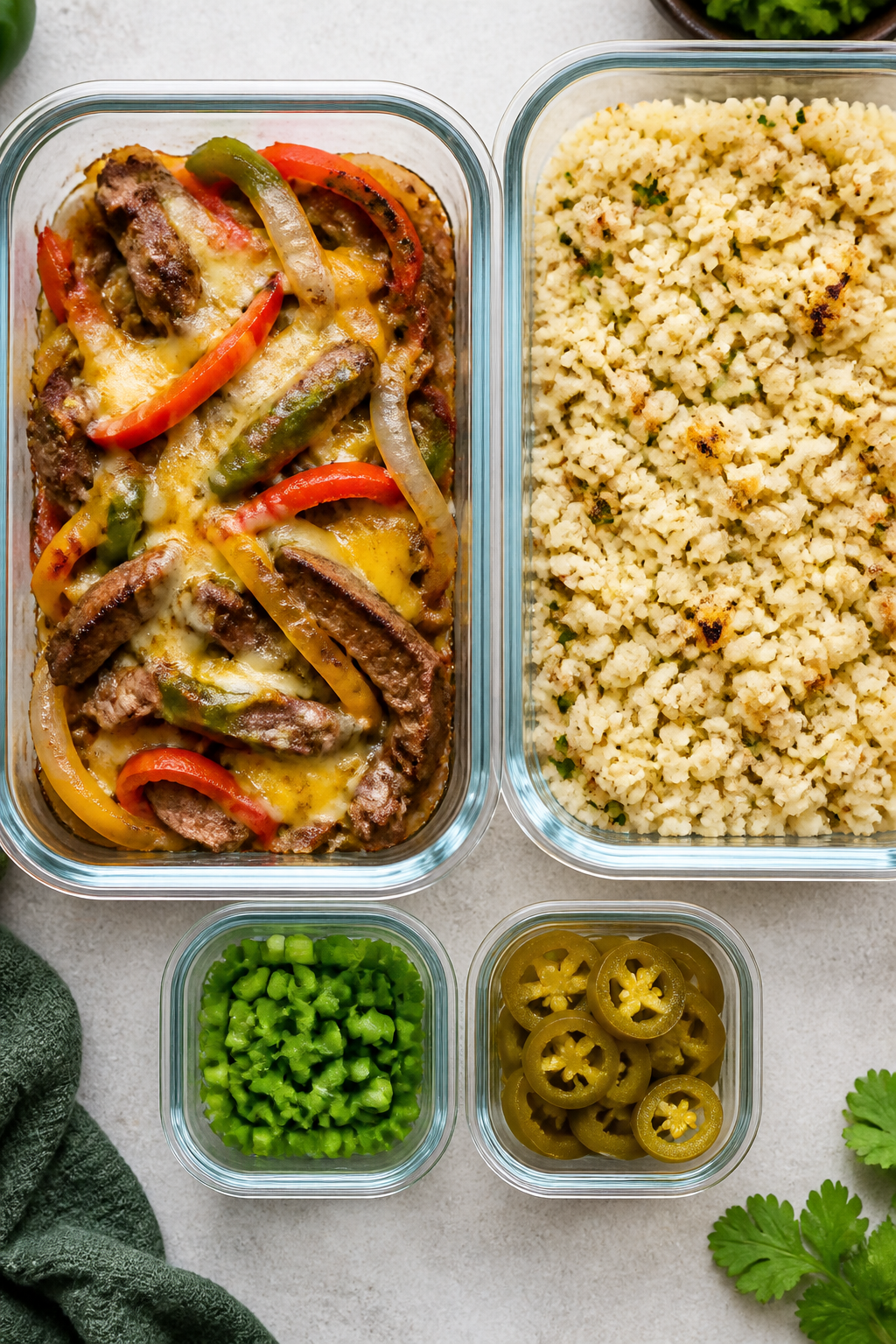
For meal prep, store the steak-and-veggie mixture and the base in separate containers. This keeps textures better and avoids soggy grains or watery cauliflower rice.
Refrigerate for up to 4 days. Reheat the steak mix gently on the stove over medium heat or in the microwave at 50–70% power to avoid overcooking.
If you’re using cauliflower rice, reheat it in a dry skillet to cook off moisture and keep it fluffy. Cheese melts best when added fresh during reheating, so you can hold it back and top as you warm each portion.
For freezing, the steak and veggies freeze well for up to 2 months; thaw overnight in the fridge, then reheat and add cheese.
Why This is Good for You
- High protein, steady energy: Lean steak plus a protein-rich base like quinoa or beans helps you feel full longer and supports muscle recovery.
- Veggie boost: Peppers and onions bring fiber, vitamin C, and antioxidants. Add mushrooms for extra minerals and umami.
- Smart fats: Olive or avocado oil gives you heart-healthy monounsaturated fats, which help with nutrient absorption and satiety.
- Lower refined carbs: Skipping the roll cuts down on refined flour while keeping all the classic cheesesteak flavor.
What Not to Do
- Don’t overcrowd the pan. If the steak steams instead of sears, it turns gray and tough. Cook in batches if needed.
- Don’t skip patting the steak dry. Moisture blocks browning, and browning equals flavor.
- Don’t overcook the beef. Thin slices need just a couple of minutes.
Pull them as soon as they’re browned with a pink center.
- Don’t add cheese too early. Melt it at the end so it stays smooth and stretchy, not greasy.
- Don’t forget to taste and adjust. A pinch of salt and a splash of acid (Worcestershire) at the end can make the whole bowl pop.
Variations You Can Try
- Chicken or turkey: Swap steak for thin-sliced chicken breast or turkey cutlets. Season the same way and cook until just done.
- Lean and mean: Use top sirloin or flank for less fat; slice very thin against the grain for tenderness.
- Mushroom-forward: Double the mushrooms and use half the beef for a lighter option without losing umami.
- Cheese choices: Provolone is classic. Mozzarella brings stretch.
For a creamier vibe, stir in a spoon of whipped cream cheese off heat.
- Spicy kick: Add jalapeños or hot cherry peppers, or drizzle with sriracha or chili crisp.
- Low-carb base: Use cauliflower rice or a bed of shredded, sautéed cabbage for extra crunch.
- High-fiber base: Try quinoa plus black beans for a plant-powered protein bump.
- Philly “wiz” style: Stir in a small amount of cheese sauce at the end for a nostalgic touch.
Save time, eat healthier, and take the stress out of dinner.
Get a full week of easy healthy dinners delivered straight to your inbox.
FAQ
What cut of beef works best?
Ribeye is the most tender and flavorful, but sirloin and flank steak are lean, budget-friendly options. Whatever you choose, slice it very thin against the grain for tenderness. Partially freezing the meat for 30 minutes makes clean, thin cuts easy.
Can I make these bowls dairy-free?
Yes.
Skip the cheese or use your favorite dairy-free melt. To keep the richness, add a dollop of dairy-free yogurt or a little cashew cream when serving.
How do I avoid tough steak?
Use high heat, don’t overcrowd the pan, and cook quickly. Thin slices need just a couple of minutes total.
Rest the meat briefly off heat and toss with the veggies and sauce right before serving.
What’s the best base for extra protein?
Quinoa and beans bring the highest plant-based protein. For low-carb and high-protein overall, use cauliflower rice and add an extra few ounces of steak or some egg whites scrambled into the base.
Can I prep this ahead for lunches?
Absolutely. Portion base and steak mixture separately in airtight containers.
Reheat gently and add cheese fresh for the best texture. It keeps well for up to 4 days.
Do I need a cast-iron skillet?
It helps with browning, but any large, heavy skillet works. Just make sure it’s hot before the steak hits the pan.
What if I don’t have Worcestershire sauce?
Use soy sauce, tamari, or coconut aminos plus a dash of balsamic vinegar.
You want salty, savory depth with a little tang.
How can I make it lower in sodium?
Use low-sodium Worcestershire or coconut aminos, season lightly with salt, and rely on spices, garlic, and pepper for flavor. A squeeze of lemon at the end brightens the dish without added salt.
Final Thoughts
Protein-Packed Philly Cheesesteak Bowls deliver everything you crave in a cheesesteak, minus the heavy crash. They’re flexible, fast, and endlessly customizable, whether you’re cooking for one or feeding a family.
Keep the technique simple: hot pan, quick sear, melty cheese at the end. With a smart base and a pile of peppers and onions, this is comfort food that works hard for you all week long.
Printable Recipe Card
Want just the essential recipe details without scrolling through the article? Get our printable recipe card with just the ingredients and instructions.
Loved This Recipe?
If you're looking for more simple, healthy dinners your family will actually eat, grab my FREE 7-Day Easy Dinner Reset. You'll get 7 easy dinner recipes, simple grocery lists, and a done-for-you plan that takes the stress out of mealtime.