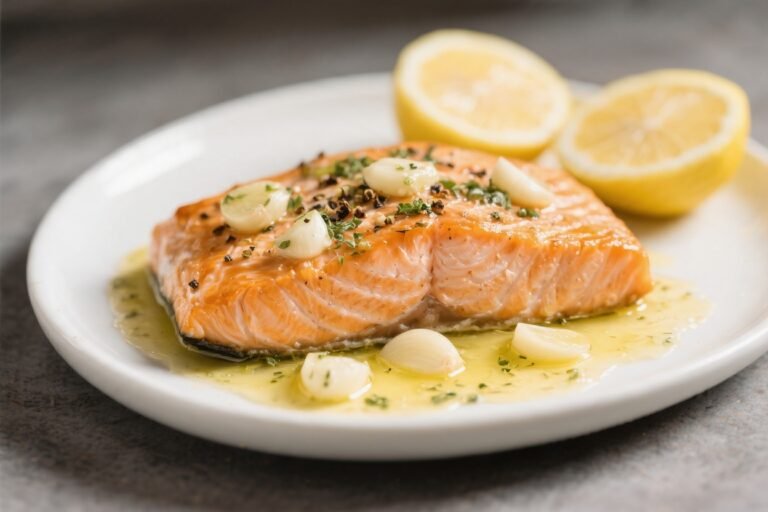
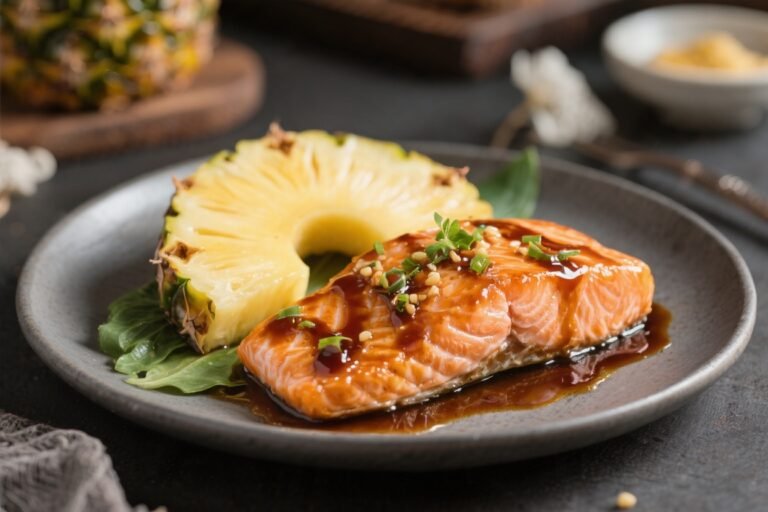
Brown Sugar Glazed Salmon – A Sweet and Savory Weeknight Favorite
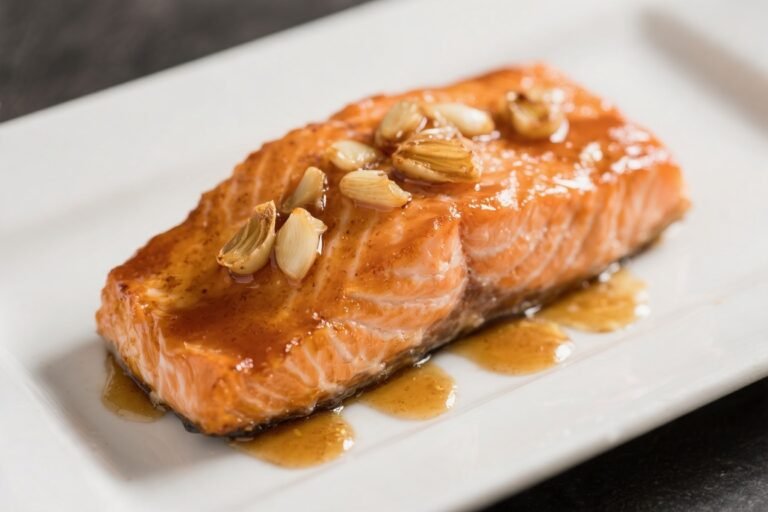
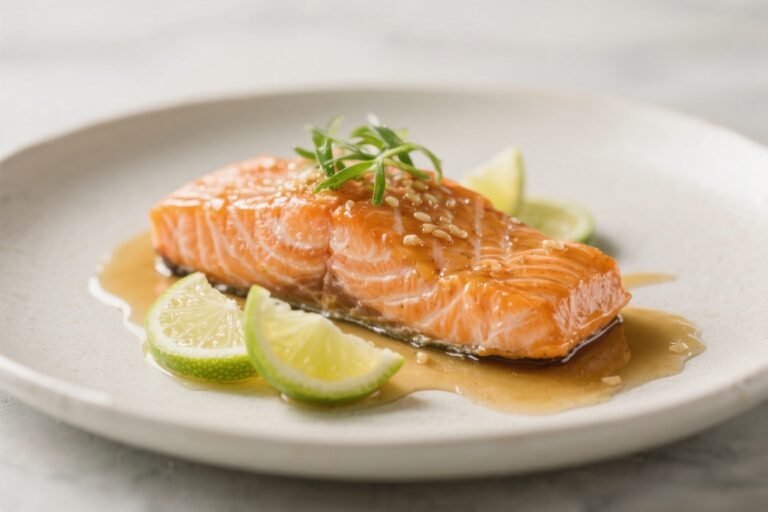
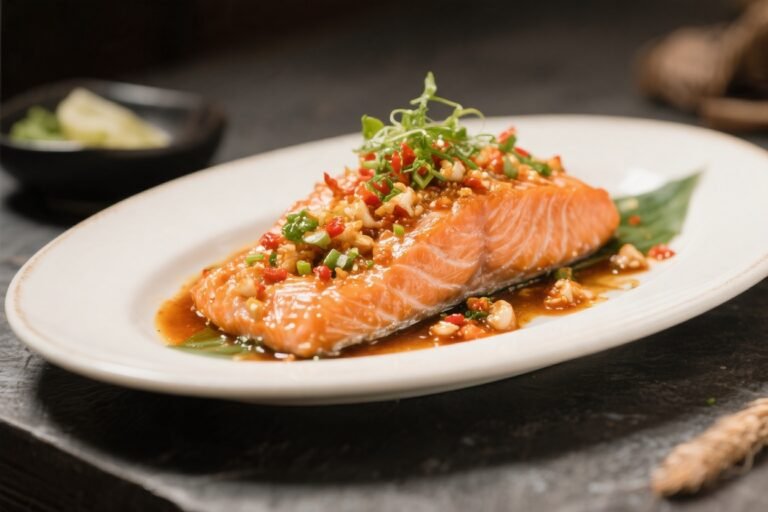
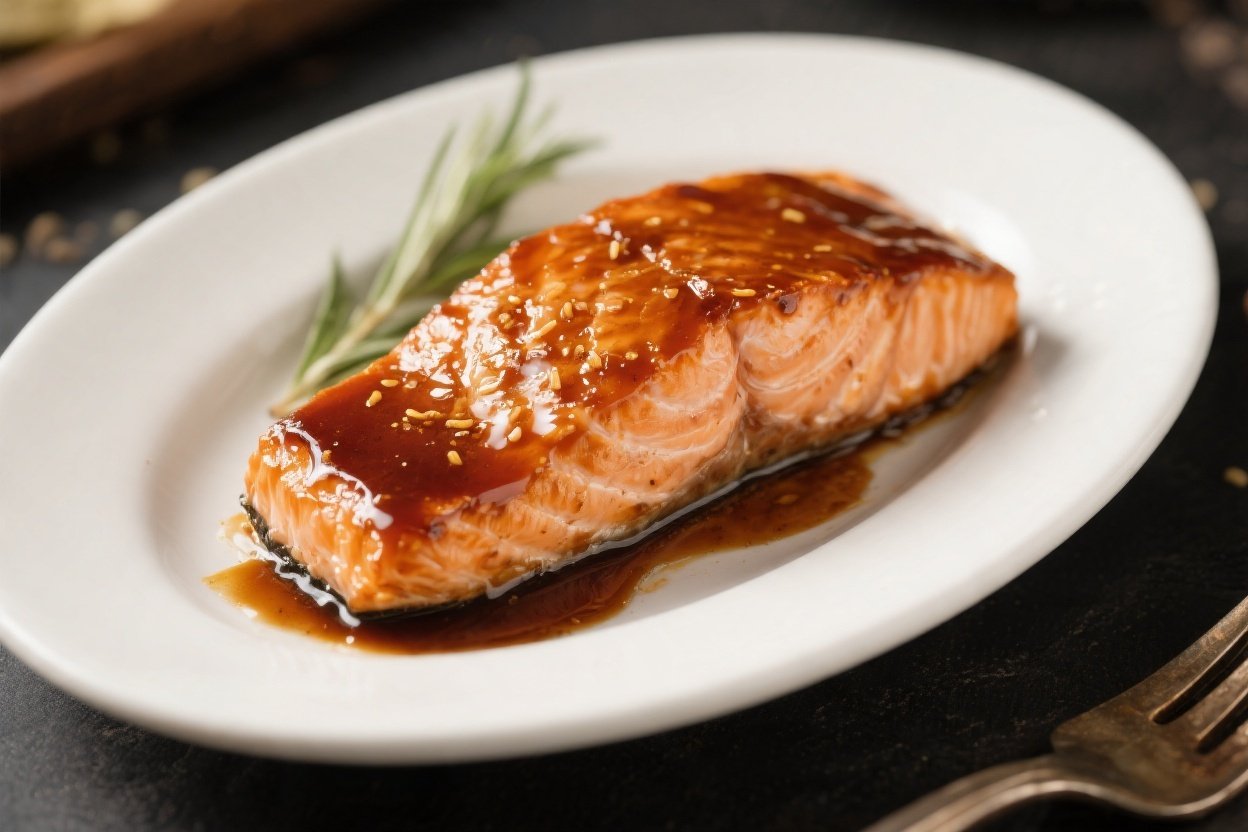
This is the kind of dinner that makes you feel like you put in more effort than you did. Brown sugar glazed salmon is tender, glossy, and full of flavor, yet it comes together in minutes. The glaze caramelizes beautifully, giving you a sweet, lightly sticky crust with a gentle kick.
Stop wondering what's for dinner.
Get 7 healthy, family-friendly dinners complete with recipes and simple meal plans delivered straight to your inbox.
Serve it with rice, greens, or roasted veggies, and you’ve got a balanced meal that tastes like a restaurant dish without the fuss.
Ingredients
Method
- Prep the oven and pan. Heat your oven to 425°F (220°C). Line a sheet pan with foil or parchment for easy cleanup. Lightly oil the surface to prevent sticking.
- Make the glaze. In a small bowl, whisk together brown sugar, soy sauce, Dijon mustard, minced garlic, lemon juice, olive oil, black pepper, and red pepper flakes if using. Stir until the sugar dissolves and the mixture is smooth.
- Pat the salmon dry. Use paper towels to blot excess moisture. This helps the glaze cling and the fish sear nicely.
- Season lightly. If using regular (not low-sodium) soy sauce, skip the salt or go very light. Sprinkle just a pinch of salt and a little pepper on the salmon.
- Glaze generously. Place the salmon skin-side down on the sheet pan. Spoon the glaze over the top and sides. Reserve a tablespoon or two of glaze for brushing at the end, if you like.
- Roast until just done. Bake for 8–12 minutes, depending on thickness. A good rule: about 4–6 minutes per half-inch of thickness. The salmon should flake easily but stay moist in the center.
- Optional broil for caramelization. For extra color, switch to broil for 1–2 minutes at the end. Watch closely. The sugar can go from perfect to burnt fast.
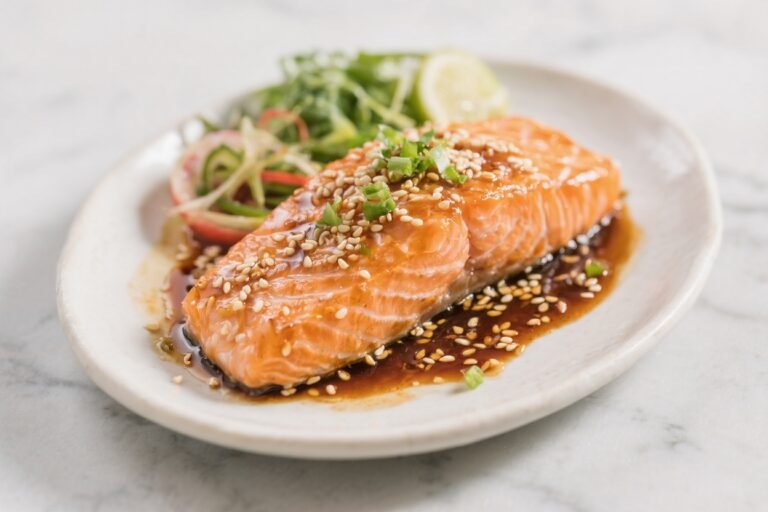
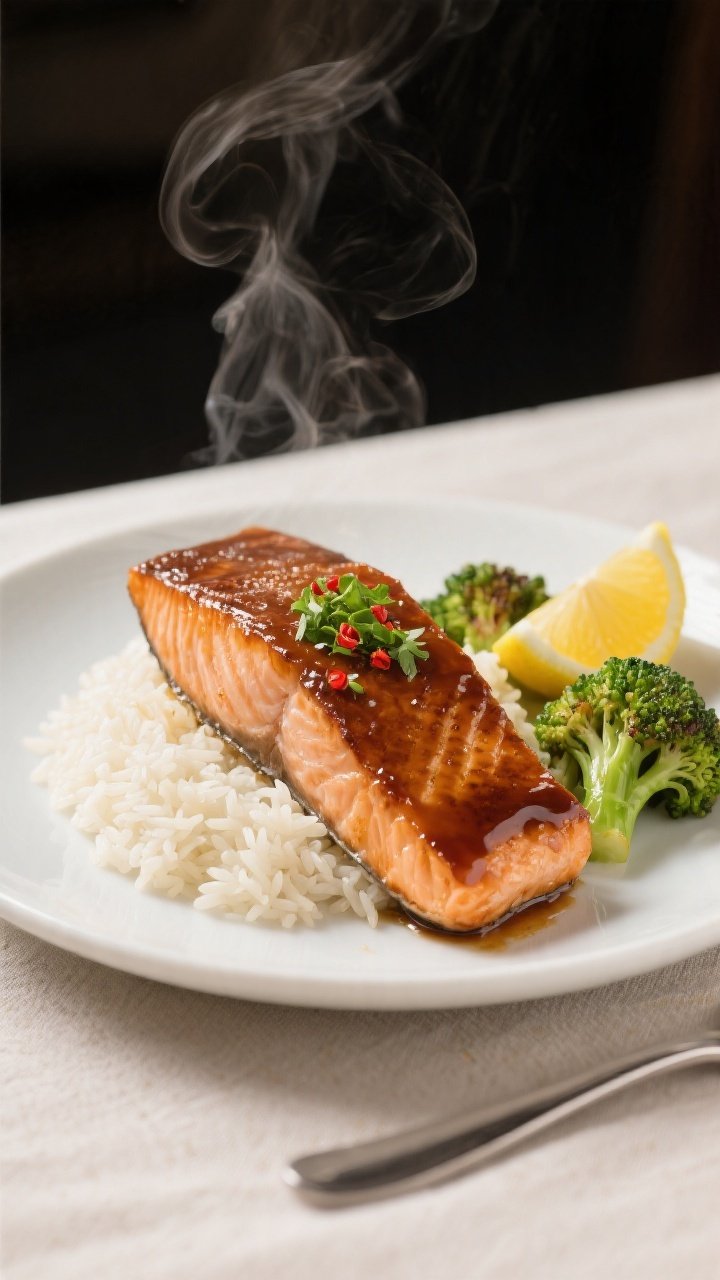
- Finish and serve. Brush with the reserved glaze, if desired. Squeeze a little fresh lemon on top. Garnish with sliced green onions or chopped parsley. Serve hot over rice, quinoa, or with a crisp salad.
Why This Recipe Works
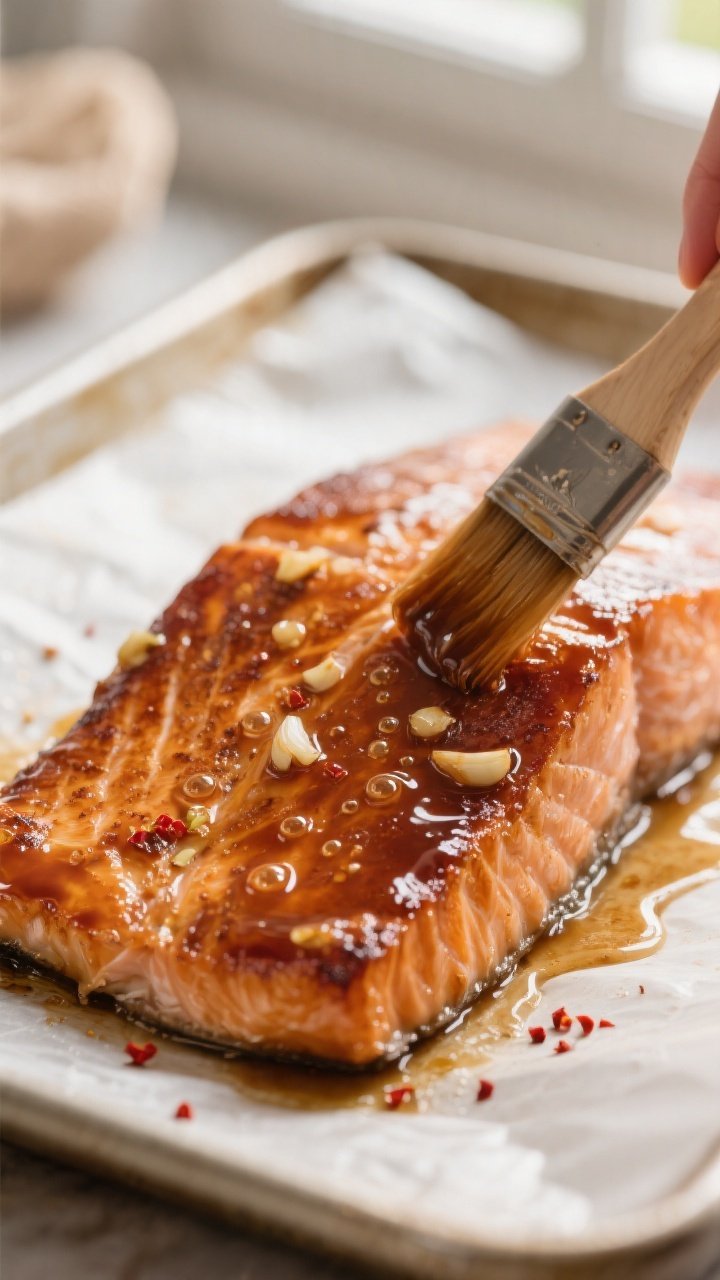
The secret is balance. Brown sugar adds sweetness and helps the glaze caramelize, while soy sauce brings salt and umami. A little garlic and lemon cut through the richness of the salmon, so each bite feels bright and satisfying.
A quick broil or high-heat roast locks in moisture and creates that irresistible, slightly crispy edge. You get bold flavor and a tender texture with very little prep.
What You’ll Need
- Salmon fillets (4 fillets, 5–6 ounces each), skin-on preferred
- Brown sugar (1/4 cup, light or dark)
- Soy sauce (2 tablespoons; use low-sodium if preferred)
- Dijon mustard (1 tablespoon)
- Garlic (2 cloves, finely minced)
- Lemon juice (1 tablespoon, plus extra wedges for serving)
- Olive oil (1 tablespoon)
- Black pepper (to taste)
- Red pepper flakes (optional, a pinch for heat)
- Salt (a light sprinkle, if needed)
- Green onions or parsley (optional, for garnish)
How to Make It
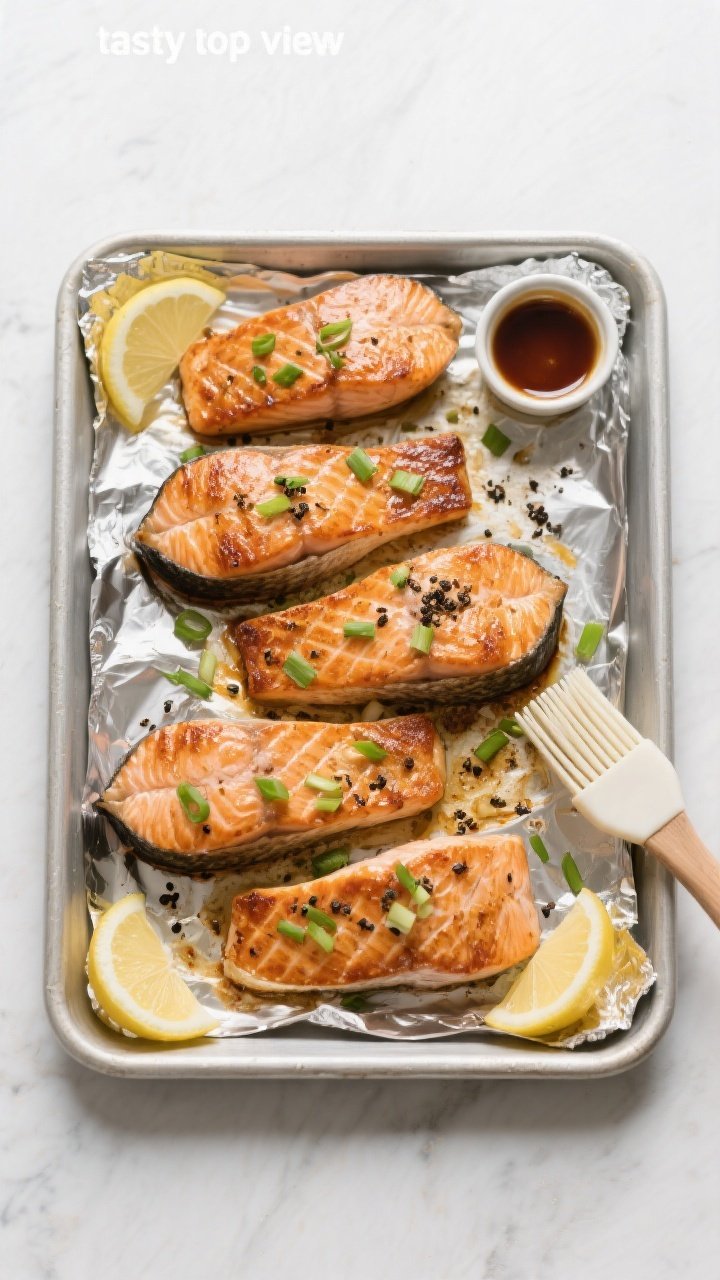
- Prep the oven and pan. Heat your oven to 425°F (220°C). Line a sheet pan with foil or parchment for easy cleanup.
Lightly oil the surface to prevent sticking.
- Make the glaze. In a small bowl, whisk together brown sugar, soy sauce, Dijon mustard, minced garlic, lemon juice, olive oil, black pepper, and red pepper flakes if using. Stir until the sugar dissolves and the mixture is smooth.
- Pat the salmon dry. Use paper towels to blot excess moisture. This helps the glaze cling and the fish sear nicely.
- Season lightly. If using regular (not low-sodium) soy sauce, skip the salt or go very light.
Sprinkle just a pinch of salt and a little pepper on the salmon.
- Glaze generously. Place the salmon skin-side down on the sheet pan. Spoon the glaze over the top and sides. Reserve a tablespoon or two of glaze for brushing at the end, if you like.
- Roast until just done. Bake for 8–12 minutes, depending on thickness.
A good rule: about 4–6 minutes per half-inch of thickness. The salmon should flake easily but stay moist in the center.
- Optional broil for caramelization. For extra color, switch to broil for 1–2 minutes at the end. Watch closely.
The sugar can go from perfect to burnt fast.
- Finish and serve. Brush with the reserved glaze, if desired. Squeeze a little fresh lemon on top. Garnish with sliced green onions or chopped parsley.
Serve hot over rice, quinoa, or with a crisp salad.
How to Store
- Refrigerator: Store leftovers in an airtight container for up to 3 days.
- Reheating: Warm gently at 275°F (135°C) for 10–12 minutes, or microwave in short bursts at 50% power. Avoid high heat to keep it from drying out.
- Freezing: Cooked salmon can be frozen for up to 2 months. Wrap tightly and thaw overnight in the fridge.
Note: the glaze may lose a bit of shine after freezing, but the flavor holds.
Benefits of This Recipe
- Fast and reliable: You can get this on the table in under 30 minutes from start to finish.
- Balanced flavor: Sweet, salty, tangy, and a little garlicky—nothing overwhelms the salmon.
- Nutritious: Salmon is rich in omega-3s and high-quality protein, while the glaze uses pantry staples.
- Versatile sides: Pairs well with rice, couscous, roasted vegetables, or a simple cucumber salad.
- Beginner-friendly: Minimal knife work and a simple cooking method make it hard to mess up.
Pitfalls to Watch Out For
- Overcooking: Salmon dries out quickly. Start checking at 8 minutes and look for slight translucence in the center.
- Burning the glaze: Sugar can scorch under the broiler. Keep the pan 6 inches from the heat and watch closely.
- Over-salting: Soy sauce already adds saltiness.
Taste the glaze and adjust before adding extra salt.
- Wet fish: If the fillets are damp, the glaze slides off and won’t caramelize well. Pat them dry first.
- Uneven thickness: If your fillets vary a lot, consider cutting the thickest one in half or removing thinner pieces earlier.
Alternatives
- No soy sauce: Use coconut aminos or tamari for a gluten-free option. Adjust salt since coconut aminos are sweeter.
- No Dijon: Swap with whole-grain mustard or a half teaspoon of prepared yellow mustard for mild tang.
- Different sweetener: Maple syrup or honey works well.
Reduce the lemon slightly if using honey to keep balance.
- Add aromatics: Grate in a little fresh ginger for warmth. A splash of rice vinegar can brighten the glaze.
- Pan-seared method: Cook salmon skin-side down in a hot skillet with a bit of oil for 4–5 minutes, flip, then spoon in the glaze and let it bubble and thicken for 1–2 minutes.
- Air fryer: Air fry at 390°F (200°C) for 7–10 minutes, brushing with glaze halfway through. Line the basket to catch drips.
FAQ
How do I know when salmon is cooked?
It should flake easily with a fork and appear opaque around the edges with a slightly translucent center.
If you use a thermometer, aim for 125–130°F (52–54°C) for medium, or up to 135°F (57°C) if you prefer it more done.
Save time, eat healthier, and take the stress out of dinner.
Get a full week of easy healthy dinners delivered straight to your inbox.
Can I use frozen salmon?
Yes. Thaw it fully in the fridge overnight or under cold running water. Pat it very dry before adding the glaze to help it caramelize.
What sides go best with this?
Steamed jasmine rice, roasted broccoli, sautéed green beans, or a simple arugula salad are all great.
The sweet-savory glaze pairs nicely with citrusy sides or anything with a little crunch.
Will this work with salmon steaks or a whole side?
It will. For a whole side, spread the glaze over the top and roast 12–18 minutes depending on thickness. For steaks, watch the bones and cook time closely, as they can vary.
How can I reduce the sugar?
Cut the brown sugar to 2 tablespoons and increase Dijon by 1 teaspoon.
You’ll get less caramelization but still a tasty, balanced glaze.
Can I make the glaze ahead?
Yes. Mix it up to 3 days in advance and refrigerate in a sealed container. Whisk before using, as the sugar may settle.
Is skin-on or skinless better?
Skin-on helps keep the salmon moist and releases cleanly from the pan once cooked.
If you prefer skinless, line the pan well and oil it to prevent sticking.
What if I don’t like lemon?
Use a teaspoon of apple cider vinegar or rice vinegar. You still need a little acidity to balance the sweetness.
Can I grill it?
Yes. Grill skin-side down over medium heat with the lid closed for 6–10 minutes.
Brush with glaze during the last few minutes to avoid burning.
How do I make it spicier?
Add more red pepper flakes, a squirt of sriracha, or a teaspoon of gochujang to the glaze for a deeper heat.
In Conclusion
Brown sugar glazed salmon hits that sweet spot between simple and special. The glaze takes minutes to mix, and the oven does the rest. With tender fish, a glossy caramelized top, and a bright finish of lemon, this recipe delivers big flavor with little effort.
Keep it in your weeknight rotation, and you’ll have a reliable, crowd-pleasing dinner any time you need it.
Printable Recipe Card
Want just the essential recipe details without scrolling through the article? Get our printable recipe card with just the ingredients and instructions.
Loved This Recipe?
If you're looking for more simple, healthy dinners your family will actually eat, grab my FREE 7-Day Easy Dinner Reset. You'll get 7 easy dinner recipes, simple grocery lists, and a done-for-you plan that takes the stress out of mealtime.