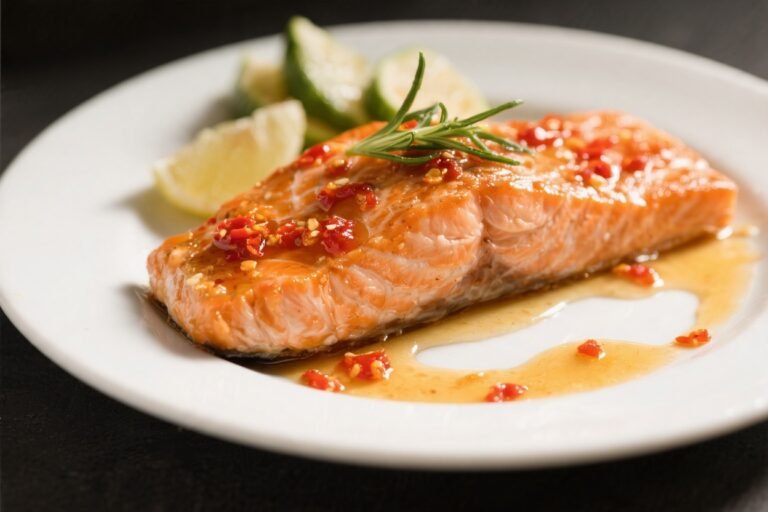
Garlic Butter Salmon & Asparagus – A Simple, Flavor-Packed Weeknight Dinner
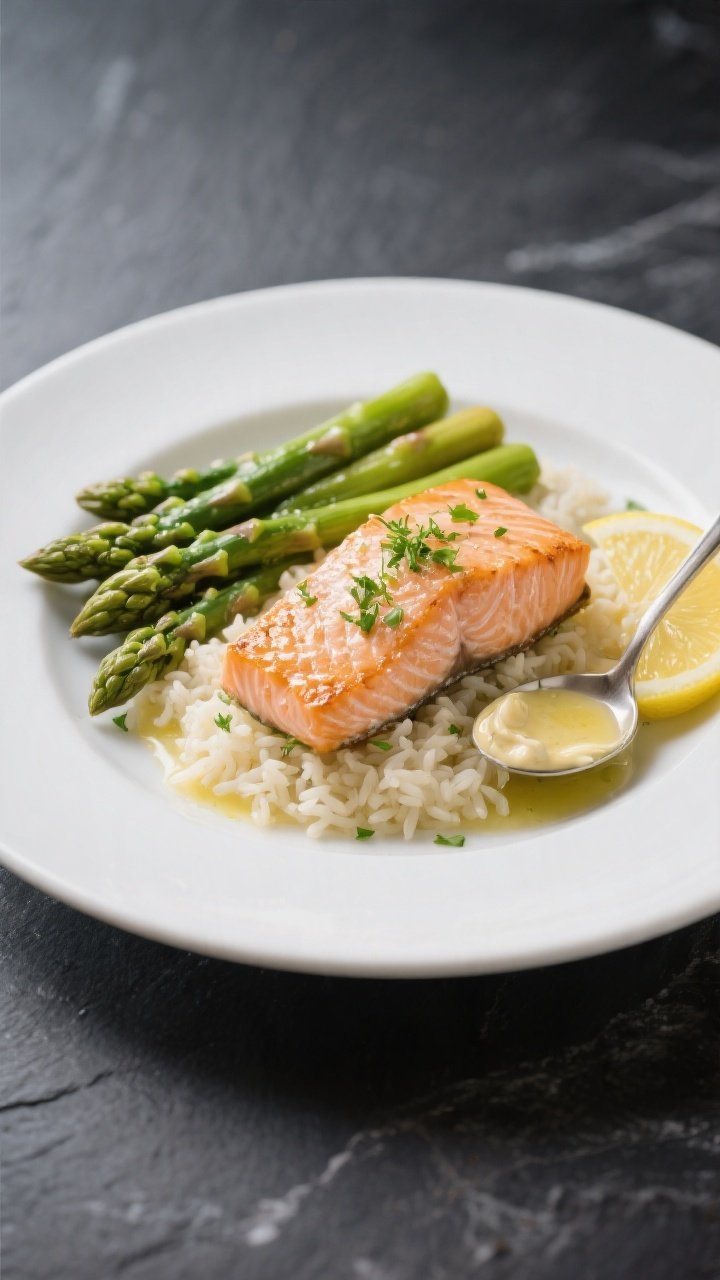
This is the kind of dinner you make when you want something fast, fresh, and seriously satisfying. Tender salmon, crisp-tender asparagus, and a rich garlic butter sauce come together in one pan with minimal fuss. It smells amazing, tastes even better, and cleans up easily.
Stop wondering what's for dinner.
Get 7 healthy, family-friendly dinners complete with recipes and simple meal plans delivered straight to your inbox.
Whether you’re cooking for one or feeding a family, this recipe hits that sweet spot between comfort and freshness.
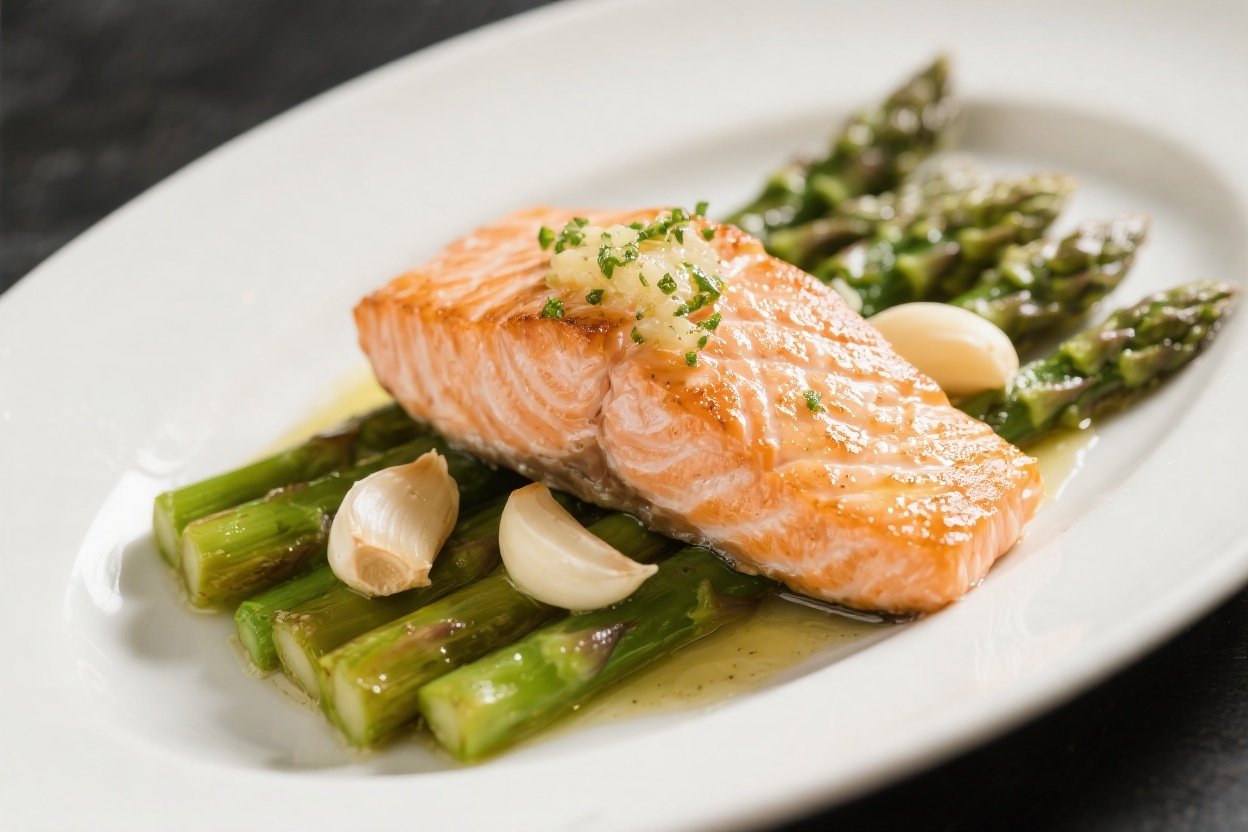
Ingredients
Method
- Preheat and prep: Heat your oven to 400°F (200°C). Pat the salmon dry with paper towels. Season both sides with salt, pepper, and paprika if using. Trim the asparagus ends.
- Make the garlic butter: In a small saucepan or microwave-safe bowl, melt the butter. Stir in the minced garlic, lemon zest, a squeeze of lemon juice, and red pepper flakes if using. Set aside.
- Set up the pan: Line a large sheet pan with parchment or lightly oil it. Toss the asparagus with a drizzle of olive oil, a pinch of salt, and pepper. Spread it to the edges, leaving space in the center for the salmon.
- Add the salmon: Place the salmon fillets skin-side down in the center of the pan. Spoon about half of the garlic butter over the salmon and drizzle a little over the asparagus.
- Roast: Bake for 10–12 minutes, depending on thickness. Salmon is done when it flakes easily and reaches an internal temperature of about 125–130°F (52–54°C) for medium. Thicker fillets may need another 2–3 minutes.
- Finish under the broiler (optional): For light browning, switch to broil for 1–2 minutes. Watch closely so the garlic doesn’t burn.
- Add fresh lemon and herbs: Remove from the oven. Spoon the remaining garlic butter over the salmon and asparagus. Squeeze more lemon juice on top and sprinkle with parsley or dill.
- Serve: Plate with extra lemon wedges. Pair with rice, mashed potatoes, or crusty bread to catch the sauce.
Why This Recipe Works
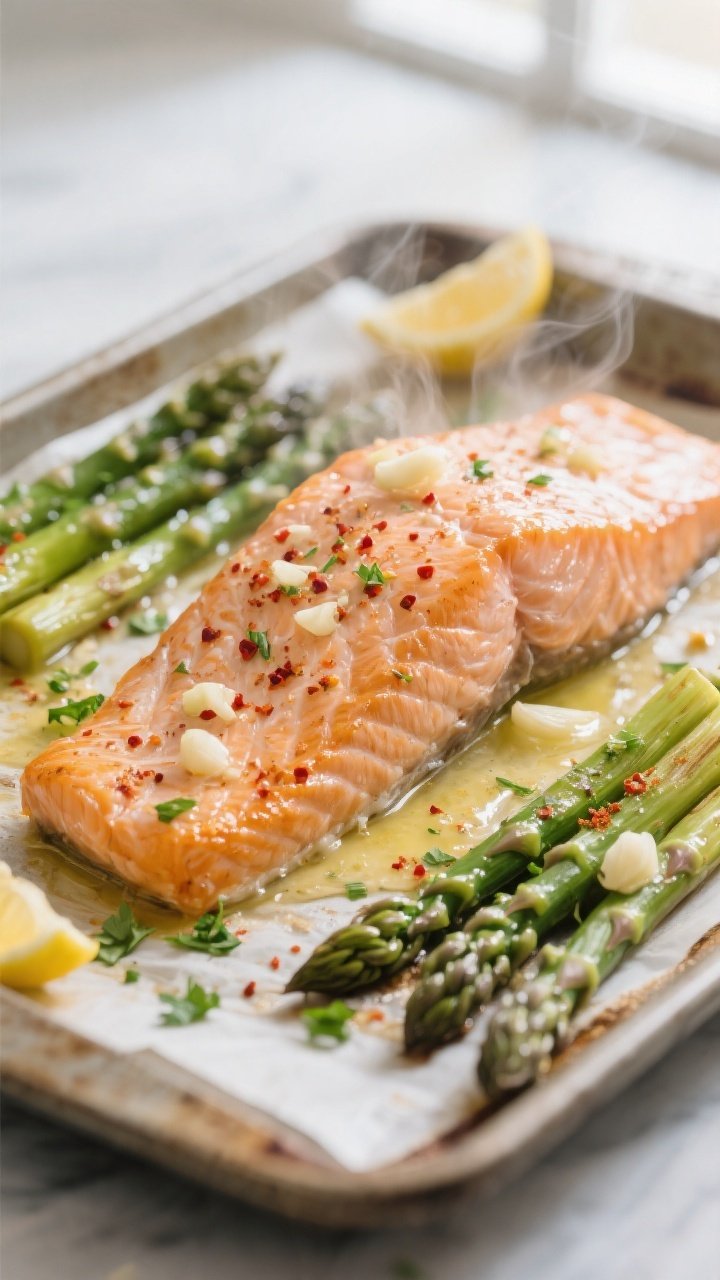
Salmon and asparagus cook at similar speeds, so they’re perfect partners for a one-pan meal. The garlic butter adds richness and moisture, helping the salmon stay tender while giving the asparagus a glossy, flavorful finish. A splash of lemon brightens the entire dish, balancing the butter and enhancing the natural sweetness of the fish.
Best of all, it’s ready in under 30 minutes with simple, everyday ingredients.
What You’ll Need
- Salmon fillets: 4 fillets (about 5–6 ounces each), skin-on if possible
- Asparagus: 1 large bunch, woody ends trimmed
- Butter: 4 tablespoons, unsalted
- Garlic: 3–4 cloves, minced
- Lemon: 1 lemon (zest and juice)
- Olive oil: 1–2 tablespoons
- Fresh herbs: 2 tablespoons chopped parsley or dill (optional but recommended)
- Salt and black pepper: To taste
- Red pepper flakes: A pinch for gentle heat (optional)
- Paprika: 1/2 teaspoon for color and warmth (optional)
How to Make It
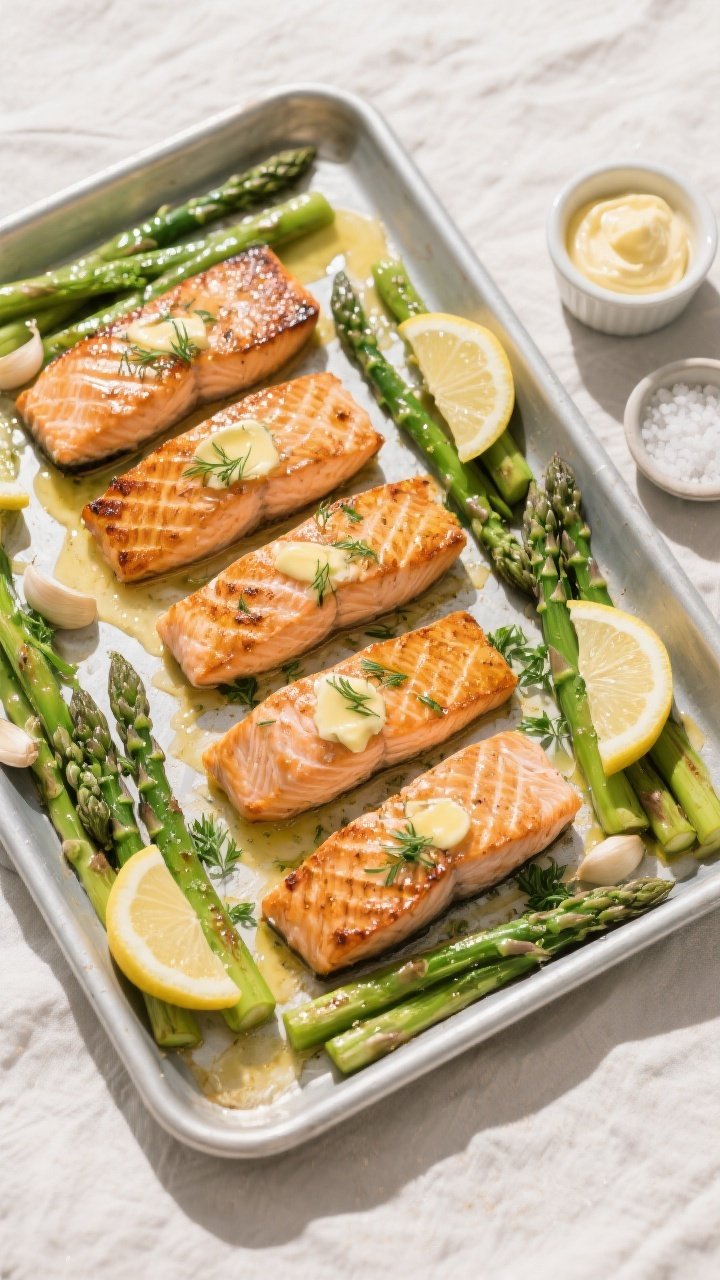
- Preheat and prep: Heat your oven to 400°F (200°C). Pat the salmon dry with paper towels. Season both sides with salt, pepper, and paprika if using.
Trim the asparagus ends.
- Make the garlic butter: In a small saucepan or microwave-safe bowl, melt the butter. Stir in the minced garlic, lemon zest, a squeeze of lemon juice, and red pepper flakes if using. Set aside.
- Set up the pan: Line a large sheet pan with parchment or lightly oil it.
Toss the asparagus with a drizzle of olive oil, a pinch of salt, and pepper. Spread it to the edges, leaving space in the center for the salmon.
- Add the salmon: Place the salmon fillets skin-side down in the center of the pan. Spoon about half of the garlic butter over the salmon and drizzle a little over the asparagus.
- Roast: Bake for 10–12 minutes, depending on thickness.
Salmon is done when it flakes easily and reaches an internal temperature of about 125–130°F (52–54°C) for medium. Thicker fillets may need another 2–3 minutes.
- Finish under the broiler (optional): For light browning, switch to broil for 1–2 minutes. Watch closely so the garlic doesn’t burn.
- Add fresh lemon and herbs: Remove from the oven.
Spoon the remaining garlic butter over the salmon and asparagus. Squeeze more lemon juice on top and sprinkle with parsley or dill.
- Serve: Plate with extra lemon wedges. Pair with rice, mashed potatoes, or crusty bread to catch the sauce.
Storage Instructions
Let leftovers cool, then store them in an airtight container in the fridge for up to 3 days.
Reheat gently in a skillet over low heat with a splash of water or broth, or warm in the oven at 300°F (150°C) until just heated through. Avoid microwaving too long; it can dry out the salmon. Asparagus will soften slightly after storage, but it will still taste great.
Why This is Good for You
Salmon is rich in omega-3 fatty acids, which support heart and brain health.
It also brings high-quality protein and vitamin D. Asparagus adds fiber, folate, and antioxidants while keeping the meal light and colorful. Cooking with olive oil and a modest amount of butter keeps the dish balanced and satisfying without feeling heavy.
What Not to Do
- Don’t overcook the salmon: Dry, chalky salmon is a common mistake.
Pull it when it looks slightly translucent in the center; it will finish cooking off-heat.
- Don’t skip drying the fillets: Patting them dry helps them sear and roast better, preventing steaming.
- Don’t crowd the pan: If everything is piled up, the asparagus will steam and turn soggy. Use a large sheet pan or two smaller ones.
- Don’t burn the garlic: If broiling, keep a close eye on the pan. Burnt garlic turns bitter quickly.
- Don’t forget the acid: Lemon is essential.
It lifts the flavors and keeps the butter sauce from tasting flat.
Recipe Variations
- Skillet method: Sear salmon fillets flesh-side down in a hot skillet with olive oil for 2–3 minutes, flip, add asparagus and garlic butter, and cook covered over medium heat until done.
- Foil packets: Place salmon and asparagus on a sheet of foil, top with garlic butter and lemon, seal, and bake at 400°F (200°C) for 12–15 minutes. Easy cleanup and very moist results.
- Herb swap: Try dill and chives for a fresh, bright finish, or rosemary and thyme for a more earthy note.
- Citrus twist: Use orange zest and juice instead of lemon for a softer, slightly sweet finish.
- Spicy kick: Add a teaspoon of harissa or a drizzle of hot honey to the butter for sweet heat.
- Dairy-free: Replace butter with a high-quality olive oil or vegan butter. Add a little extra lemon and herbs for richness.
- Add carbs on the pan: Par-cook small baby potatoes for 5–7 minutes, then add them to the sheet pan with the asparagus for a full one-pan dinner.
- Panko finish: Mix panko with a bit of melted butter, garlic, lemon zest, salt, and parsley.
Press onto the salmon before baking for a crisp top.
FAQ
How do I know when salmon is done without a thermometer?
Gently press the thickest part with a fork. If it flakes easily and the center is just opaque with a hint of translucency, it’s ready. It should feel tender, not firm and dry.
Save time, eat healthier, and take the stress out of dinner.
Get a full week of easy healthy dinners delivered straight to your inbox.
Can I use frozen salmon?
Yes.
Thaw it overnight in the fridge or under cold running water while sealed. Pat very dry before seasoning to avoid excess moisture and uneven cooking.
What can I use instead of asparagus?
Broccolini, green beans, or thin carrot sticks work well. Adjust timing slightly—broccolini and green beans are similar, while carrots may need a few extra minutes.
Is skin-on or skinless salmon better?
Skin-on helps keep the fillets moist and provides a little protective barrier in the oven.
You can slide the skin off easily after cooking if you prefer not to eat it.
Can I make the garlic butter ahead of time?
Absolutely. Mix and chill it for up to a week or freeze for a month. Melt before using, or dot it over the salmon and let it melt in the oven.
What sides go well with this?
Try lemon rice, herbed couscous, roasted potatoes, or a simple arugula salad.
Crusty bread is great for soaking up the extra sauce.
How do I avoid a fishy smell?
Buy fresh, high-quality salmon and cook it the day you purchase it if possible. Lemon, garlic, and fresh herbs also help keep the aroma clean and inviting.
Can I grill this instead of baking?
Yes. Grill the salmon skin-side down over medium heat for 6–8 minutes, then finish briefly on the other side.
Grill asparagus alongside, tossing with oil, salt, and pepper. Brush with garlic butter at the end.
What if my asparagus stalks are very thick?
Peel the lower third with a vegetable peeler and add 2–3 extra minutes of cook time. You want them crisp-tender, not mushy.
How can I make it extra saucy?
Double the garlic butter and whisk in a tablespoon of white wine or a splash of chicken broth.
Simmer for 1–2 minutes before drizzling over the finished dish.
Wrapping Up
Garlic Butter Salmon & Asparagus is the weeknight win that never gets old. It’s simple, fast, and full of fresh flavor with just a handful of ingredients. Keep a lemon, a stick of butter, and a couple of salmon fillets on hand, and dinner practically makes itself.
Once you try it, you’ll add it to your regular rotation—no question.
Printable Recipe Card
Want just the essential recipe details without scrolling through the article? Get our printable recipe card with just the ingredients and instructions.
Loved This Recipe?
If you're looking for more simple, healthy dinners your family will actually eat, grab my FREE 7-Day Easy Dinner Reset. You'll get 7 easy dinner recipes, simple grocery lists, and a done-for-you plan that takes the stress out of mealtime.