Pesto Crusted Salmon – Simple, Flavorful, and Weeknight-Friendly
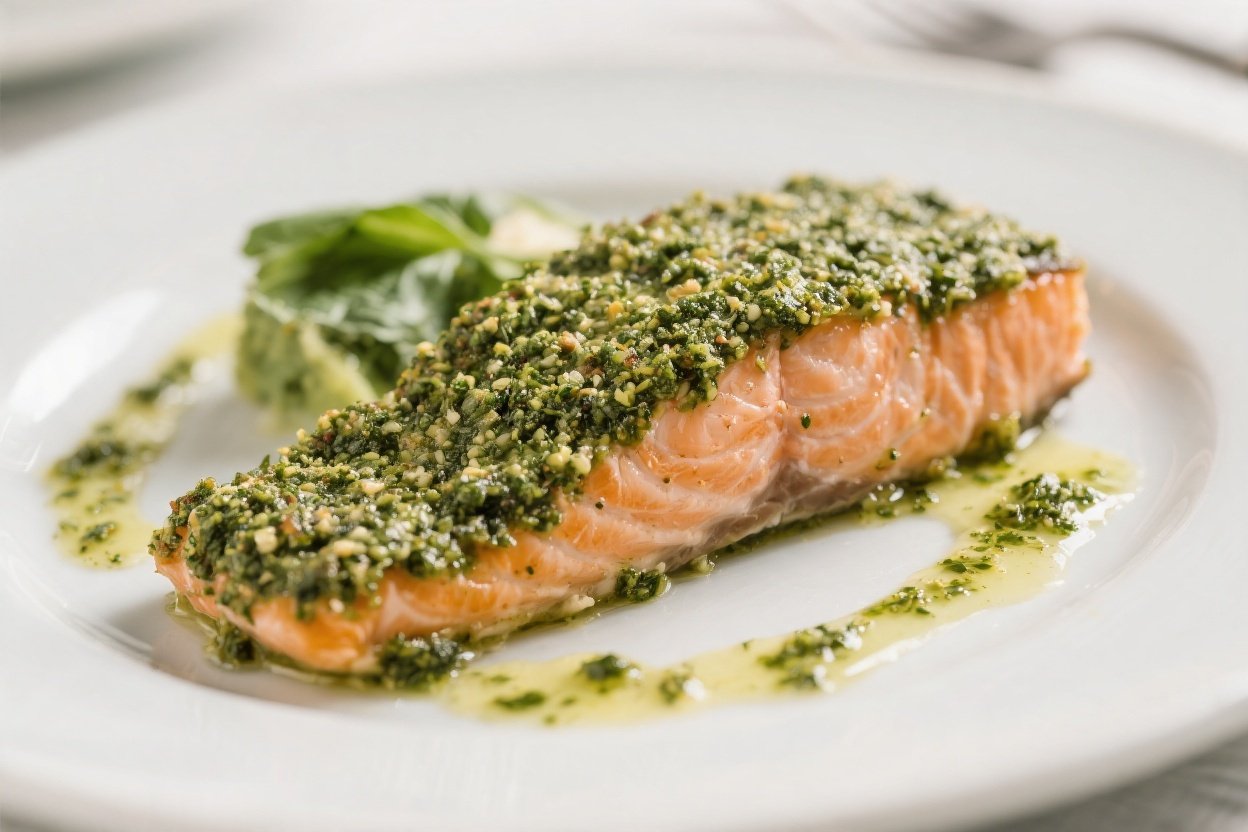
Pesto crusted salmon is the kind of meal that feels special without being fussy. It’s bright, herby, and rich—all in under 30 minutes. The pesto bakes into a savory crust that keeps the salmon juicy, while a quick squeeze of lemon wakes everything up at the end.
Stop wondering what's for dinner.
Get 7 healthy, family-friendly dinners complete with recipes and simple meal plans delivered straight to your inbox.
Whether you’re feeding guests or just hungry after work, this recipe hits that sweet spot of easy and impressive.
Ingredients
Method
- Prep the oven. Heat your oven to 400°F (200°C). Line a baking sheet with parchment paper for easy cleanup.
- Pat the salmon dry. Dry fish roasts better. Blot the fillets with paper towels and set them skin-side down on the baking sheet.
- Season simply. Sprinkle each fillet with salt and pepper. Don’t overdo it—pesto is already seasoned.
- Check your pesto consistency. If it’s very thick, stir in a teaspoon or two of olive oil. You want it spreadable, not runny.
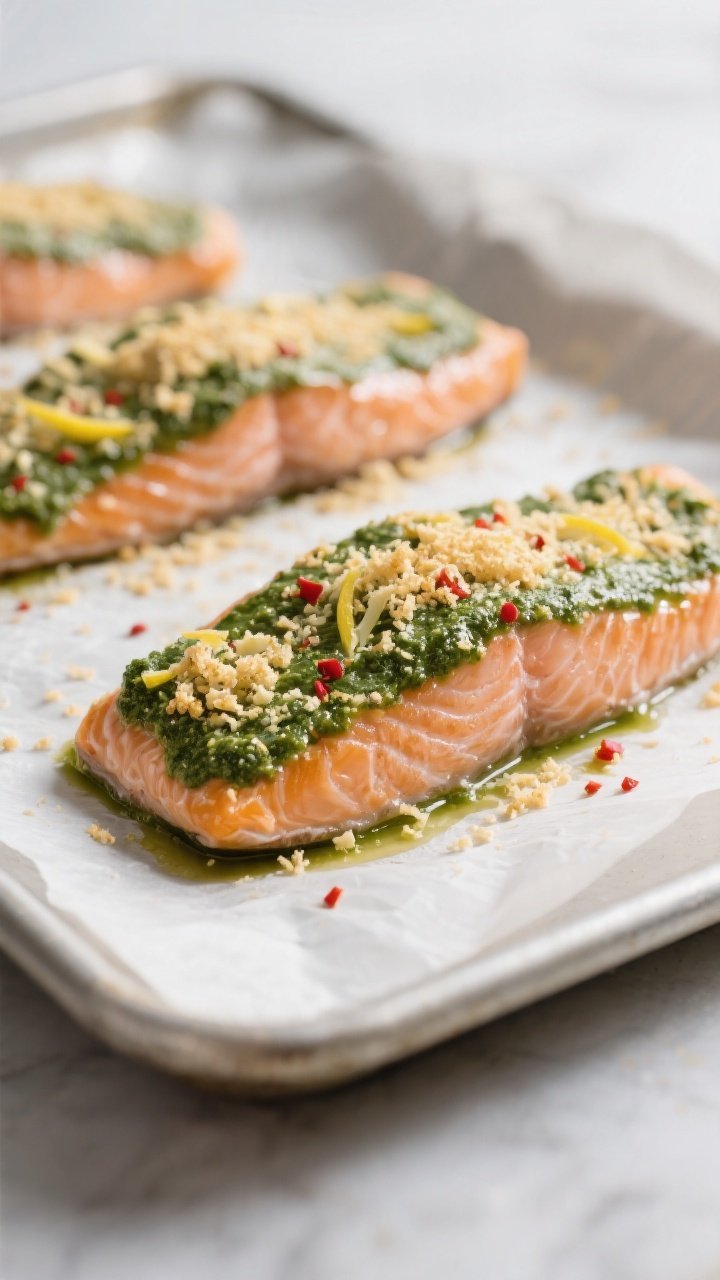
- Spread the pesto. Use the back of a spoon to coat the top of each fillet with a generous layer of pesto, about 1 to 1.5 tablespoons each. Cover the surface but avoid the sides to keep the crust intact.
- Add the crunch. Mix panko with Parmesan and a pinch of salt. Sprinkle over the pesto and gently press so it adheres. For extra zing, add a little lemon zest or a pinch of red pepper flakes.
- Bake. Roast for 10–14 minutes, depending on thickness. Salmon is done when it flakes easily and reaches 125–130°F (52–54°C) in the center for medium. Thicker center-cut fillets may need a couple extra minutes.
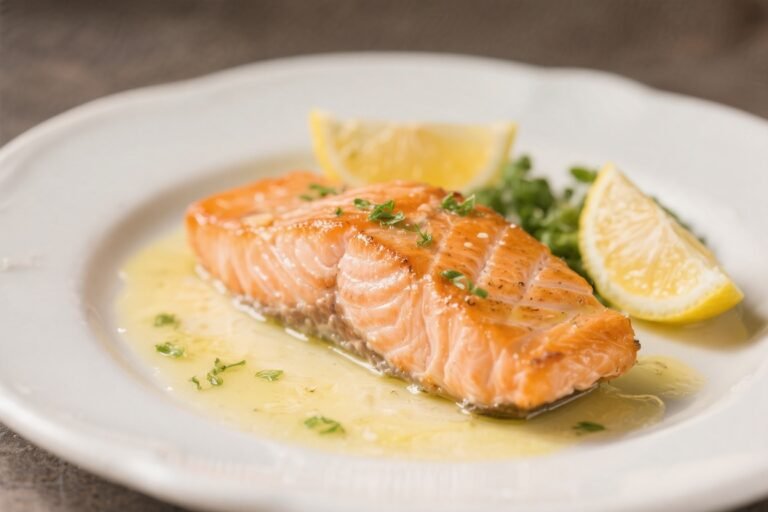
- Finish with lemon. Rest the salmon for 2 minutes, then squeeze fresh lemon over the top. Garnish with basil if you like.
- Serve. Pair with roasted potatoes, a simple green salad, or sautéed asparagus. A side of rice or couscous also works well.
Why This Recipe Works
The magic here is in the contrast. The oily richness of salmon loves basil, garlic, and parmesan, and pesto brings all three in one swipe. As it bakes, the pesto forms a light crust that locks in moisture. A small layer of breadcrumbs adds texture without making the fish heavy.
Best of all, the method is straightforward and flexible—use store-bought pesto on a busy night or homemade when you have time.
What You’ll Need
- 4 salmon fillets (about 6 ounces each), skin-on or skinless
- Salt and freshly ground black pepper
- 2–3 tablespoons olive oil (only if needed, depending on pesto consistency)
- 1/2 cup basil pesto (store-bought or homemade)
- 1/4 cup panko breadcrumbs (optional but recommended for crunch)
- 2 tablespoons grated Parmesan (optional, for extra savory flavor)
- 1 lemon, cut into wedges
- Optional extras: red pepper flakes, lemon zest, fresh basil for garnish
Instructions
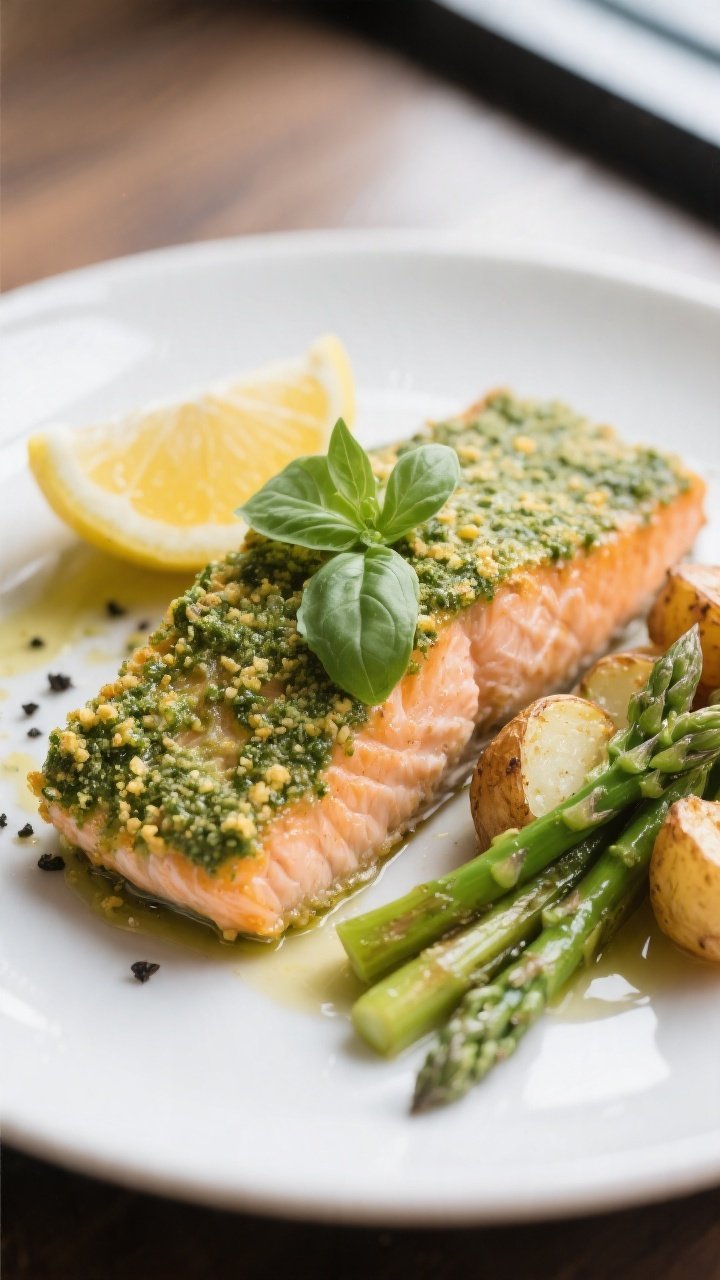
- Prep the oven. Heat your oven to 400°F (200°C). Line a baking sheet with parchment paper for easy cleanup.
- Pat the salmon dry. Dry fish roasts better. Blot the fillets with paper towels and set them skin-side down on the baking sheet.
- Season simply. Sprinkle each fillet with salt and pepper.
Don’t overdo it—pesto is already seasoned.
- Check your pesto consistency. If it’s very thick, stir in a teaspoon or two of olive oil. You want it spreadable, not runny.
- Spread the pesto. Use the back of a spoon to coat the top of each fillet with a generous layer of pesto, about 1 to 1.5 tablespoons each. Cover the surface but avoid the sides to keep the crust intact.
- Add the crunch. Mix panko with Parmesan and a pinch of salt. Sprinkle over the pesto and gently press so it adheres.
For extra zing, add a little lemon zest or a pinch of red pepper flakes.
- Bake. Roast for 10–14 minutes, depending on thickness. Salmon is done when it flakes easily and reaches 125–130°F (52–54°C) in the center for medium. Thicker center-cut fillets may need a couple extra minutes.
- Finish with lemon. Rest the salmon for 2 minutes, then squeeze fresh lemon over the top.
Garnish with basil if you like.
- Serve. Pair with roasted potatoes, a simple green salad, or sautéed asparagus. A side of rice or couscous also works well.
Keeping It Fresh
Salmon tastes best right after cooking, but leftovers can still shine. Store in an airtight container in the fridge for up to 2 days. Reheat gently in a 300°F (150°C) oven for 8–10 minutes, or enjoy it cold flaked over greens with a squeeze of lemon.
If freezing, skip the breadcrumb topping until you’re ready to bake, then add it fresh for better texture.
Health Benefits
Salmon is rich in omega-3 fatty acids, which support heart and brain health. It’s also a great source of high-quality protein and essential nutrients like B12, selenium, and vitamin D. Pesto brings in healthy fats from olive oil and nuts, plus antioxidants from basil and garlic.
With minimal added sugar and customizable sodium, this meal fits into a balanced eating plan.
Pitfalls to Watch Out For
- Overcooking the salmon: This is the biggest mistake. Start checking at 10 minutes. Remember it keeps cooking slightly after you pull it out.
- Soggy topping: Too much pesto or watery salmon prevents crisping.
Pat the fish dry and keep the pesto layer even and modest.
- Too salty: Pesto and Parmesan can be salty. Season the salmon lightly and taste your pesto first.
- Bland flavor: Finish with lemon. That acid is what makes everything pop.
- Uneven cooking: If fillets vary in size, pull the thinner ones earlier so nothing dries out.
Alternatives
- Fish swaps: Try cod, halibut, trout, or Arctic char.
Oily fish like trout and char pair especially well with pesto. Adjust baking time for thinner fillets.
- Pesto variations: Use kale, arugula, or spinach pesto. Swap pine nuts for walnuts, almonds, or pistachios.
For nut-free, use pumpkin seeds or skip nuts entirely.
- Dairy-free: Make or buy dairy-free pesto and skip the Parmesan in the topping. Add nutritional yeast for a cheesy note.
- Low-carb or gluten-free: Omit the breadcrumbs or use almond flour or crushed pork rinds for crunch. Many store-bought pestos are naturally low-carb—check labels.
- Grill or air fry: Grill over medium heat on oiled foil for 8–12 minutes with the lid closed.
In an air fryer, cook at 375°F (190°C) for 8–10 minutes, checking early to avoid overcooking.
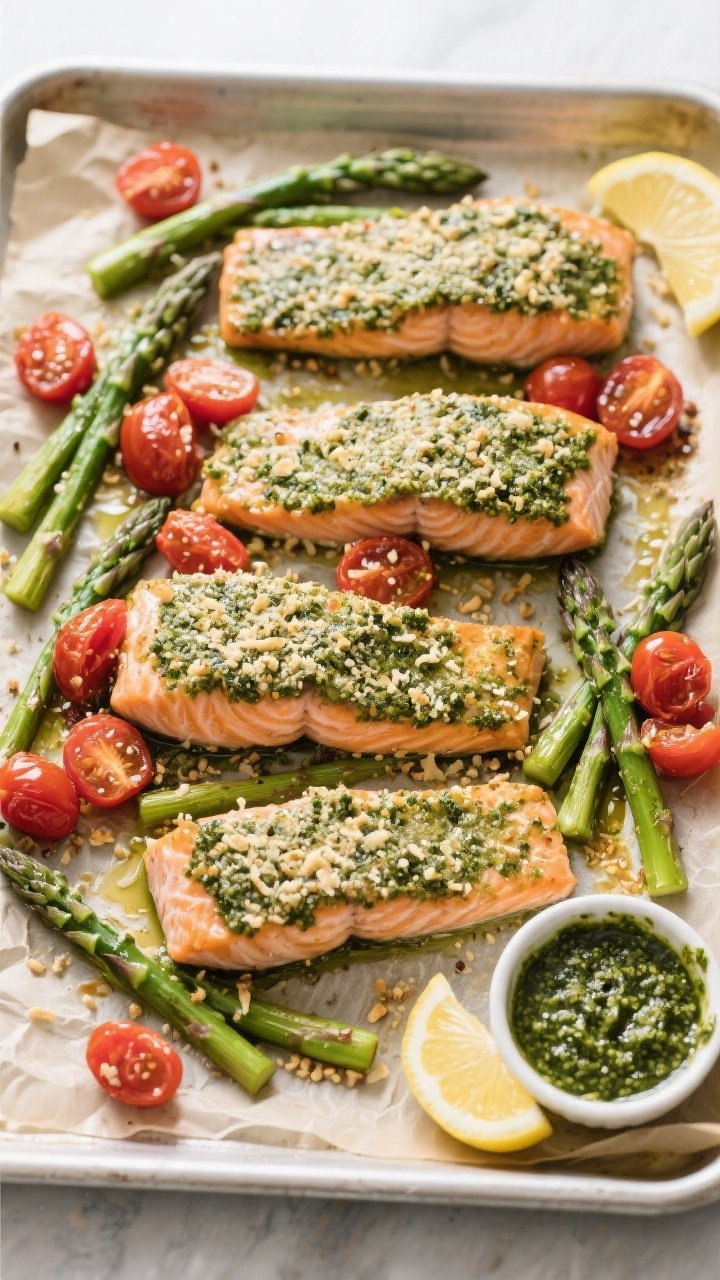
- Sheet pan dinner: Add asparagus, cherry tomatoes, or sliced zucchini to the pan. Toss with olive oil, salt, and pepper, and start them 5 minutes before adding the salmon.
FAQ
Can I use frozen salmon?
Yes. Thaw it overnight in the fridge or under cold running water, then pat very dry.
Save time, eat healthier, and take the stress out of dinner.
Get a full week of easy healthy dinners delivered straight to your inbox.
Frozen fillets can release extra moisture, so drying them well helps the topping crisp.
Do I need to remove the skin?
No. Skin-on fillets are easier to handle and stay juicier. After baking, the flesh lifts right off the skin with a spatula.
What if I don’t have panko?
Use regular breadcrumbs, crushed crackers, or skip the crumbs entirely.
The pesto alone still makes a great crust—just slightly softer.
How do I make quick homemade pesto?
Blend 2 cups basil, 1/3 cup grated Parmesan, 1/3 cup nuts (pine nuts or walnuts), 1 small garlic clove, a squeeze of lemon, salt, and 1/2 cup olive oil. Adjust to taste. If it’s thick, add a splash more oil.
What internal temperature is best for salmon?
For moist, tender salmon, aim for 125–130°F (52–54°C) at the thickest part.
If you like it more done, go up to 135°F (57°C), but try not to pass that to avoid dryness.
Can I prepare it ahead?
You can spread the pesto on the salmon and refrigerate for up to 4 hours. Add the breadcrumb topping just before baking to keep it crisp.
What sides go best with pesto salmon?
Light, fresh sides shine: arugula salad with lemon vinaigrette, roasted baby potatoes, steamed green beans, or a simple tomato-cucumber salad. Rice, couscous, or quinoa also pair well.
How do I keep the pesto from burning?
Bake at 400°F and avoid broiling the top. If your oven runs hot or the crumbs brown too fast, tent loosely with foil for the last few minutes.
Is this recipe kid-friendly?
Often yes.
If garlic is a concern, pick a milder pesto or mix pesto with a little mayo to soften the flavor. Serve with lemon on the side so each person can adjust.
Can I make it without breadcrumbs?
Absolutely. The pesto alone makes a flavorful coating.
For crunch without crumbs, sprinkle toasted chopped nuts over the finished fish.
Wrapping Up
Pesto crusted salmon is a no-drama dinner that still feels special. With a few simple ingredients and a smart method, you get crisp edges, tender fish, and bright flavors in minutes. Keep a jar of pesto on hand, grab a couple of fillets, and you’re set for a weeknight win or a low-effort dinner party main.
Add lemon, your favorite sides, and call it done.
Printable Recipe Card
Want just the essential recipe details without scrolling through the article? Get our printable recipe card with just the ingredients and instructions.
Loved This Recipe?
If you're looking for more simple, healthy dinners your family will actually eat, grab my FREE 7-Day Easy Dinner Reset. You'll get 7 easy dinner recipes, simple grocery lists, and a done-for-you plan that takes the stress out of mealtime.