Easy Honey Garlic Salmon Meal Prep Bowls – Simple, Flavorful, and Ready for the Week
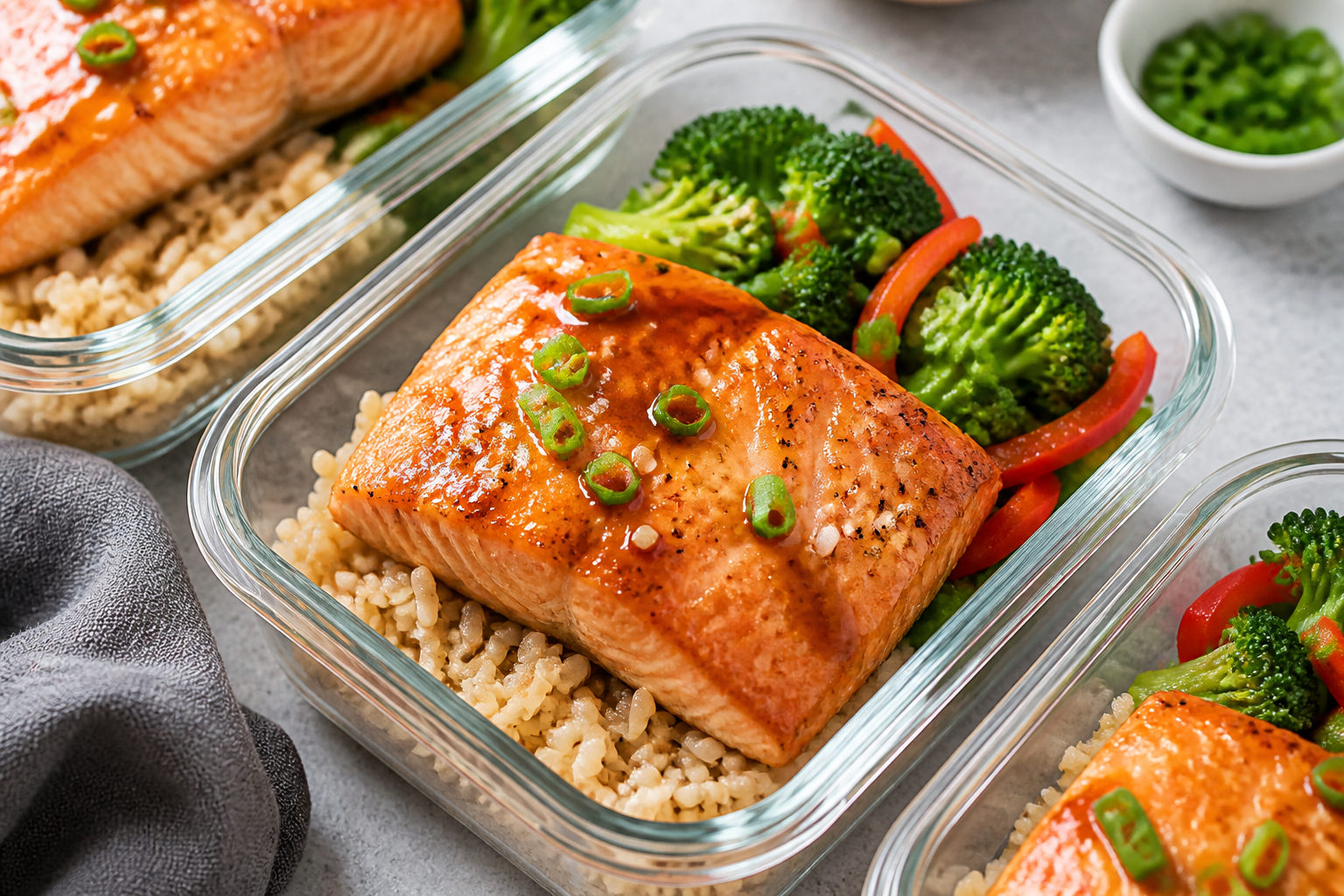
This is the kind of meal prep that feels like a treat, not a chore. Tender salmon coated in a sticky honey garlic glaze, fluffy rice, and crisp veggies come together in bowls that reheat beautifully. It’s quick to make, easy to portion, and full of bold, balanced flavor.
Stop wondering what's for dinner.
Get 7 healthy, family-friendly dinners complete with recipes and simple meal plans delivered straight to your inbox.
If you’re trying to eat well without spending hours in the kitchen, these bowls are a win. You’ll love how simple the prep is and how satisfying each bite feels.
Easy Honey Garlic Salmon Meal Prep Bowls - Simple, Flavorful, and Ready for the Week
Ingredients
Method
- Cook the base: Rinse the rice or quinoa under cold water. Cook according to package directions. Fluff and set aside. For extra flavor, add a pinch of salt and a squeeze of lime while it rests.
- Prep the veggies: Chop broccoli into bite-size florets, slice the bell pepper, and trim snap peas. Mince the garlic and grate the ginger.
- Make the honey garlic sauce: In a small bowl, whisk soy sauce, honey, rice vinegar, minced garlic, ginger, and sriracha (if using). For a thicker glaze, stir in cornstarch until smooth.
- Season the salmon: Pat the fillets dry. Sprinkle lightly with salt and pepper. Dry fish browns better and takes on the glaze beautifully.
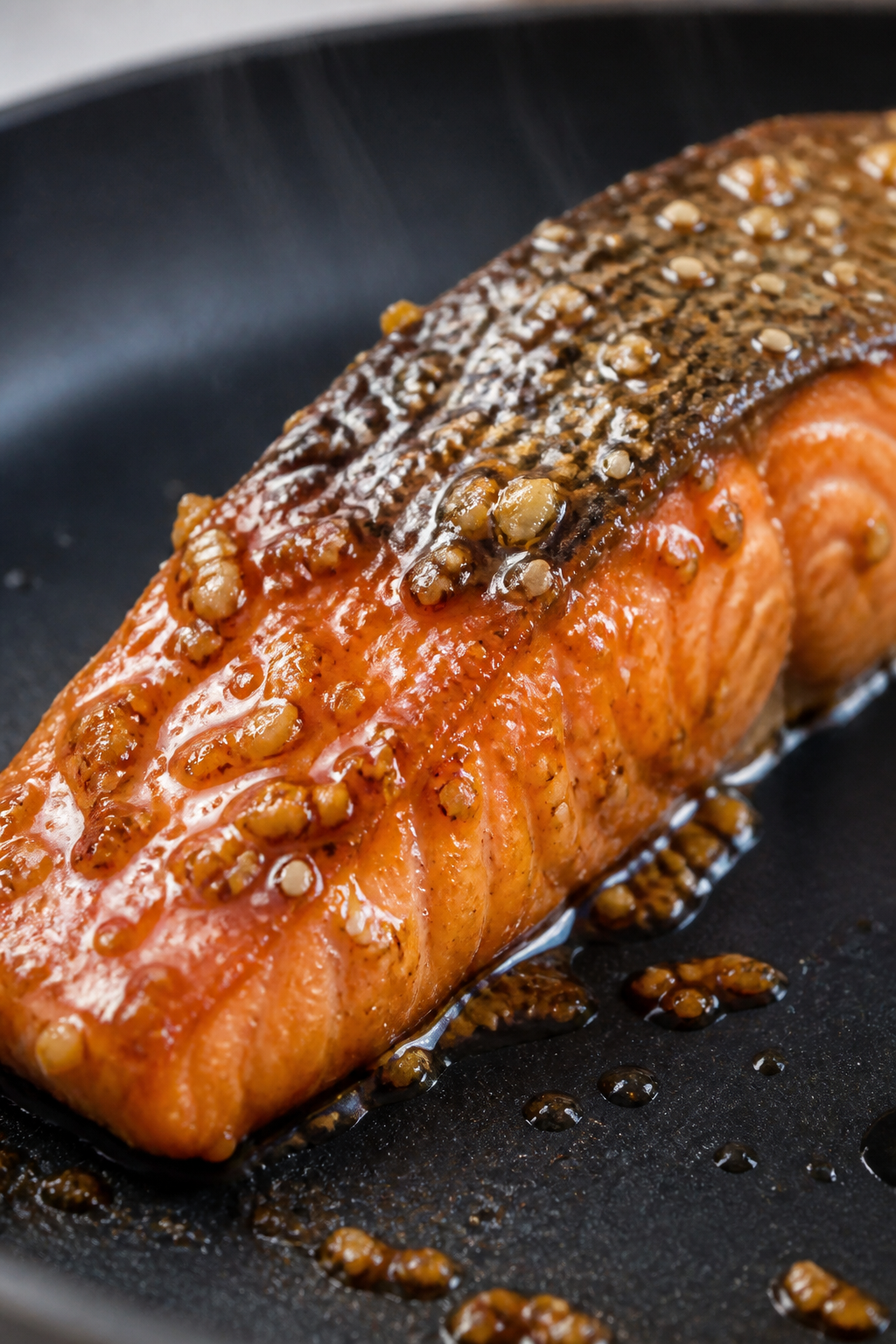
- Sear or bake the salmon: Pan method: Heat oil in a large nonstick skillet over medium-high. Place salmon skin-side down and cook 3 to 4 minutes. Flip, pour in half the sauce, and cook 2 to 4 more minutes, spooning sauce over the top until just cooked through.
- Bake method: Heat oven to 400°F (200°C). Place salmon on a lined sheet pan, brush with half the sauce, and bake 10 to 12 minutes, or until flakes easily.
- Cook the veggies: While the salmon rests, sauté or steam the vegetables. In a hot skillet with a little oil, cook broccoli 3 to 4 minutes, add bell pepper and snap peas, and sauté 2 to 3 more minutes until crisp-tender. Season with salt and a splash of the remaining sauce.
- Glaze and finish: If you used the pan method, the sauce should be glossy. If baking, warm the remaining sauce in a small pan 1 to 2 minutes until slightly thick, then brush or drizzle it over the salmon.
- Assemble bowls: Portion cooked rice into 4 containers. Add vegetables, then top with salmon. Spoon any extra sauce over each portion.
- Garnish: Sprinkle with sesame seeds, sliced green onions, and an optional squeeze of lime.
What Makes This Recipe So Good
- Fast and fuss-free: The salmon cooks in under 15 minutes, and the sauce is just a few pantry staples whisked together.
- Meal-prep friendly: The flavors deepen as they rest, so leftovers taste even better on day two or three.
- Balanced plate: Protein-rich salmon, complex carbs from rice or quinoa, and colorful veggies for fiber and crunch.
- Flexible: Swap the grain, change up the veggies, or dial the spice level to fit your taste.
- Budget-smart: A small amount of salmon goes far when you pair it with grains and vegetables.
Shopping List
- Salmon: 1.5 to 2 pounds skin-on salmon fillets, cut into 4 portions
- Rice or grain: 2 cups uncooked jasmine rice, brown rice, or quinoa
- Vegetables: 2 cups broccoli florets, 1 red bell pepper, 1 cup snap peas (or any mix you like)
- Aromatics: 4 cloves garlic, 1-inch piece fresh ginger (optional but great)
- Sauce base: 1/3 cup low-sodium soy sauce or tamari, 1/3 cup honey, 2 tablespoons rice vinegar or lime juice
- Heat: 1 to 2 teaspoons sriracha or red pepper flakes (optional)
- Oil: 1 to 2 tablespoons avocado oil or olive oil
- Thickener: 1 teaspoon cornstarch (optional, for a thicker glaze)
- Garnishes: Sesame seeds, green onions, lime wedges
- Seasoning: Salt, black pepper
How to Make It
- Cook the base: Rinse the rice or quinoa under cold water. Cook according to package directions.
Fluff and set aside. For extra flavor, add a pinch of salt and a squeeze of lime while it rests.
- Prep the veggies: Chop broccoli into bite-size florets, slice the bell pepper, and trim snap peas. Mince the garlic and grate the ginger.
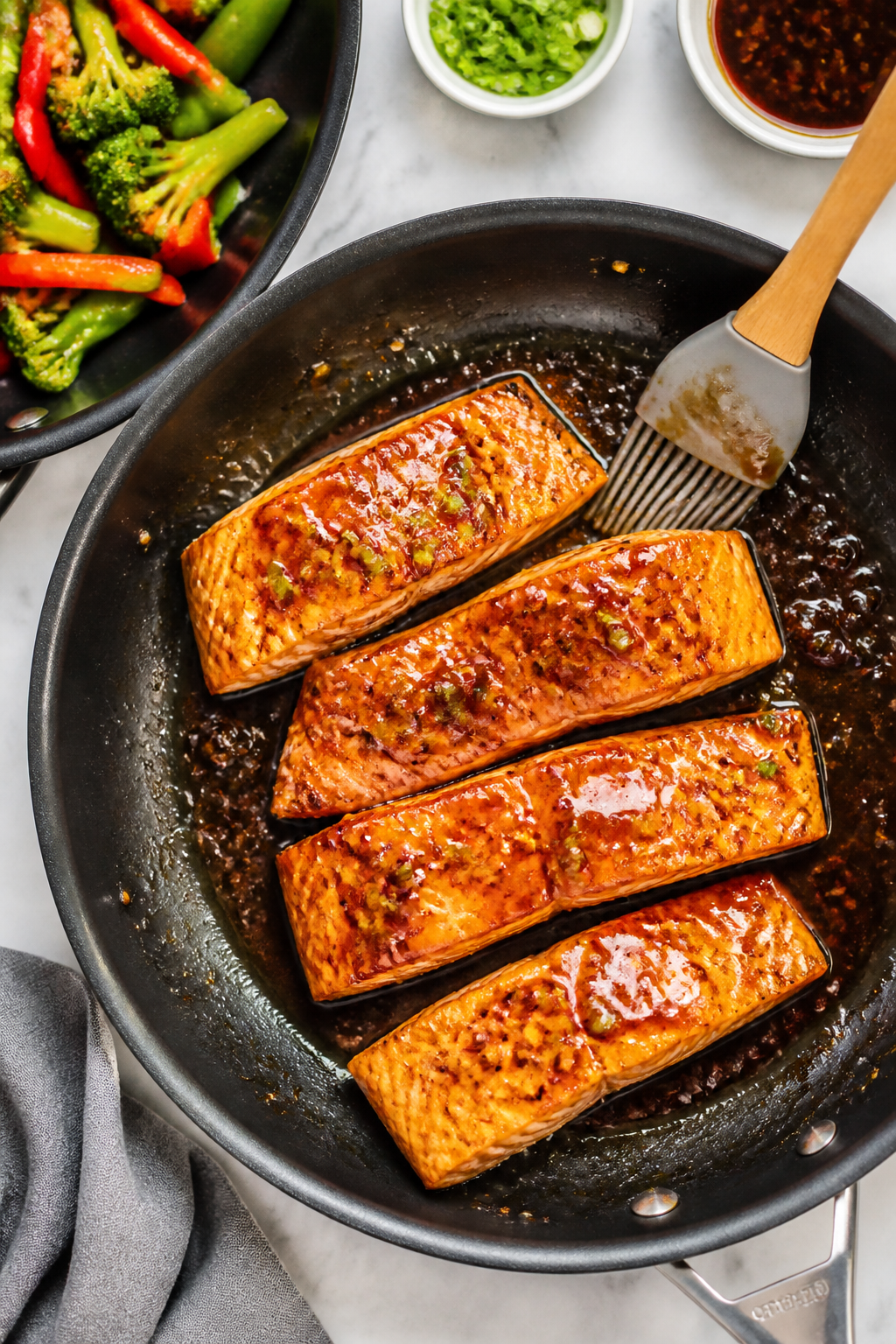
- Make the honey garlic sauce: In a small bowl, whisk soy sauce, honey, rice vinegar, minced garlic, ginger, and sriracha (if using).
For a thicker glaze, stir in cornstarch until smooth.
- Season the salmon: Pat the fillets dry. Sprinkle lightly with salt and pepper. Dry fish browns better and takes on the glaze beautifully.
- Sear or bake the salmon:
- Pan method: Heat oil in a large nonstick skillet over medium-high.
Place salmon skin-side down and cook 3 to 4 minutes. Flip, pour in half the sauce, and cook 2 to 4 more minutes, spooning sauce over the top until just cooked through.
- Bake method: Heat oven to 400°F (200°C). Place salmon on a lined sheet pan, brush with half the sauce, and bake 10 to 12 minutes, or until flakes easily.
- Pan method: Heat oil in a large nonstick skillet over medium-high.
- Cook the veggies: While the salmon rests, sauté or steam the vegetables.
In a hot skillet with a little oil, cook broccoli 3 to 4 minutes, add bell pepper and snap peas, and sauté 2 to 3 more minutes until crisp-tender. Season with salt and a splash of the remaining sauce.
- Glaze and finish: If you used the pan method, the sauce should be glossy. If baking, warm the remaining sauce in a small pan 1 to 2 minutes until slightly thick, then brush or drizzle it over the salmon.
- Assemble bowls: Portion cooked rice into 4 containers.
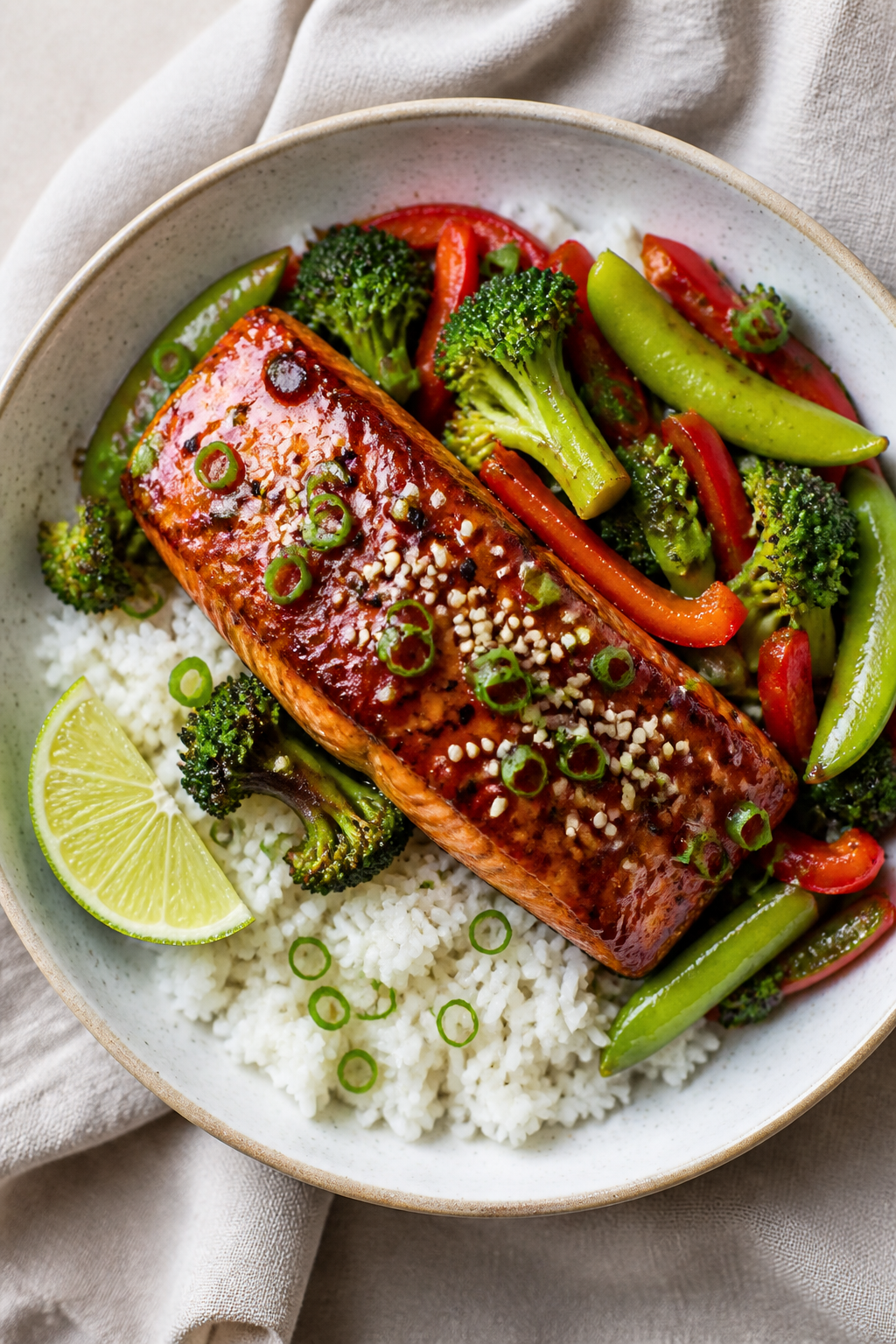
Add vegetables, then top with salmon. Spoon any extra sauce over each portion.
- Garnish: Sprinkle with sesame seeds, sliced green onions, and an optional squeeze of lime.
Keeping It Fresh
- Cool first: Let everything cool to room temperature before sealing. This prevents steam from making the rice soggy.
- Storage: Store bowls in airtight containers in the fridge for up to 3 to 4 days.
- Reheat gently: Microwave 60 to 90 seconds, covered but vented.
Add a splash of water to the rice to bring back moisture. Avoid overcooking the salmon.
- Freeze tips: Salmon can be frozen for up to 2 months, but the texture is best fresh. If freezing, skip delicate veggies and add fresh ones after reheating.
Why This is Good for You
- Omega-3s for brain and heart: Salmon is rich in EPA and DHA, which support heart health and help reduce inflammation.
- Protein that satisfies: A portion of salmon delivers high-quality protein to keep you full longer.
- Smart carbs and fiber: Pairing salmon with whole grains and veggies gives you steady energy and supports digestion.
- Lower-sodium option: Using low-sodium soy sauce keeps the flavor big without going heavy on salt.
Pitfalls to Watch Out For
- Overcooking the salmon: Pull it when it’s just opaque and flakes easily.
Residual heat finishes the job.
- Watery sauce: If you like a sticky glaze, use a little cornstarch and simmer 1 to 2 minutes until glossy.
- Soggy veggies: Cook them until crisp-tender. They’ll soften slightly when reheated, so keep some bite.
- Uneven portions: Weigh or eyeball even amounts of rice, veggies, and salmon so every bowl is balanced.
- Not cooling before sealing: Trapped steam can waterlog your meal. Cool for 10 to 15 minutes first.
Variations You Can Try
- Grain swap: Try brown rice, quinoa, farro, or cauliflower rice for a low-carb option.
- Veggie mix: Roasted carrots, green beans, asparagus, or a quick cabbage slaw all work well.
- Citrus twist: Add orange zest and juice to the sauce for a brighter, slightly sweeter flavor.
- Extra heat: Stir in gochujang, chili crisp, or more sriracha for a spicy kick.
- Different protein: Use shrimp, chicken thighs, or tofu with the same sauce and method.
- Sesame-forward: Add 1 teaspoon toasted sesame oil to the sauce for nutty depth.
Save time, eat healthier, and take the stress out of dinner.
Get a full week of easy healthy dinners delivered straight to your inbox.
FAQ
Can I use frozen salmon?
Yes.
Thaw it in the fridge overnight or under cold running water sealed in its package. Pat very dry before cooking so it sears and glazes well.
How do I know when the salmon is done?
It should be opaque and flake easily with a fork. If you use a thermometer, aim for about 125°F to 130°F in the thickest part for moist, medium doneness.
What can I use instead of soy sauce?
Use tamari for gluten-free or coconut aminos for a slightly sweeter, lower-sodium option.
Adjust honey and salt to taste since coconut aminos are milder.
Is there a way to cut the sugar?
Reduce the honey to 2 tablespoons and add a little extra ginger and lime for brightness. The sauce will be less sticky but still flavorful.
Can I make this without a nonstick pan?
Yes. A well-oiled stainless steel or cast-iron skillet works.
Let the salmon sear undisturbed until it naturally releases before flipping.
How should I reheat without drying out the salmon?
Reheat gently at 50% power in the microwave or warm in a covered skillet with a splash of water. Stop as soon as the salmon is hot.
What’s a good make-ahead timeline?
Cook on Sunday, store in airtight containers, and enjoy through Wednesday. If you need longer, freeze the salmon separately and add fresh veggies later.
In Conclusion
Easy Honey Garlic Salmon Meal Prep Bowls make weekday eating feel effortless and a little special.
You get a sticky-sweet, garlicky glaze, tender salmon, and crisp veggies over a comforting base of rice or grains. The steps are simple, the ingredients are flexible, and the results hold up well in the fridge. Prep a batch once, and enjoy balanced, satisfying meals all week without overthinking it.
Printable Recipe Card
Want just the essential recipe details without scrolling through the article? Get our printable recipe card with just the ingredients and instructions.
Loved This Recipe?
If you're looking for more simple, healthy dinners your family will actually eat, grab my FREE 7-Day Easy Dinner Reset. You'll get 7 easy dinner recipes, simple grocery lists, and a done-for-you plan that takes the stress out of mealtime.