High-Protein Chicken Stir Fry Meal Prep – Easy, Colorful, and Satisfying
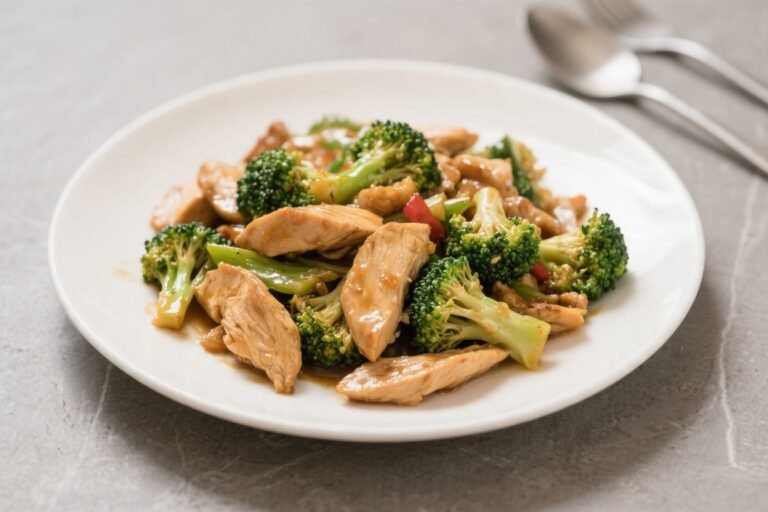
A good meal prep should be simple to make, easy to store, and satisfying enough to carry you through a busy week. This high-protein chicken stir fry checks all those boxes and then some. It’s loaded with lean chicken, crunchy vegetables, and a savory sauce that ties everything together.
Stop wondering what's for dinner.
Get 7 healthy, family-friendly dinners complete with recipes and simple meal plans delivered straight to your inbox.
You’ll get balanced nutrition without spending hours in the kitchen. Make a big batch on Sunday, and you’re set for quick lunches or dinners that taste like fresh takeout.
Ingredients
Method
- Prep the chicken: Pat the sliced chicken dry with paper towels. Toss with 2 tablespoons cornstarch and a pinch of salt and pepper. This helps the chicken brown and stay tender.
- Mix the sauce: In a bowl or measuring cup, whisk soy sauce, oyster sauce, rice vinegar, honey, sesame oil, sriracha, broth, and 2 teaspoons cornstarch. Set aside.
- Heat the pan: Place a large skillet or wok over medium-high heat. Add 1 tablespoon oil and swirl to coat.
- Sear the chicken: Add chicken in a single layer. Cook 3–4 minutes per side until lightly browned and cooked through. Work in batches to avoid steaming. Transfer to a plate.
- Stir-fry the veggies: Add a small splash of oil if the pan is dry. Cook onion, bell peppers, carrot, and broccoli for 3–4 minutes, stirring often. Add snap peas, garlic, and ginger. Cook 1–2 more minutes until crisp-tender.
- Combine and sauce: Return chicken to the pan. Whisk the sauce again, then pour it in. Stir constantly for 1–2 minutes until the sauce thickens and coats everything.
- Taste and adjust: Add more soy for salt, vinegar for brightness, or honey for sweetness. Sprinkle sesame seeds if using.
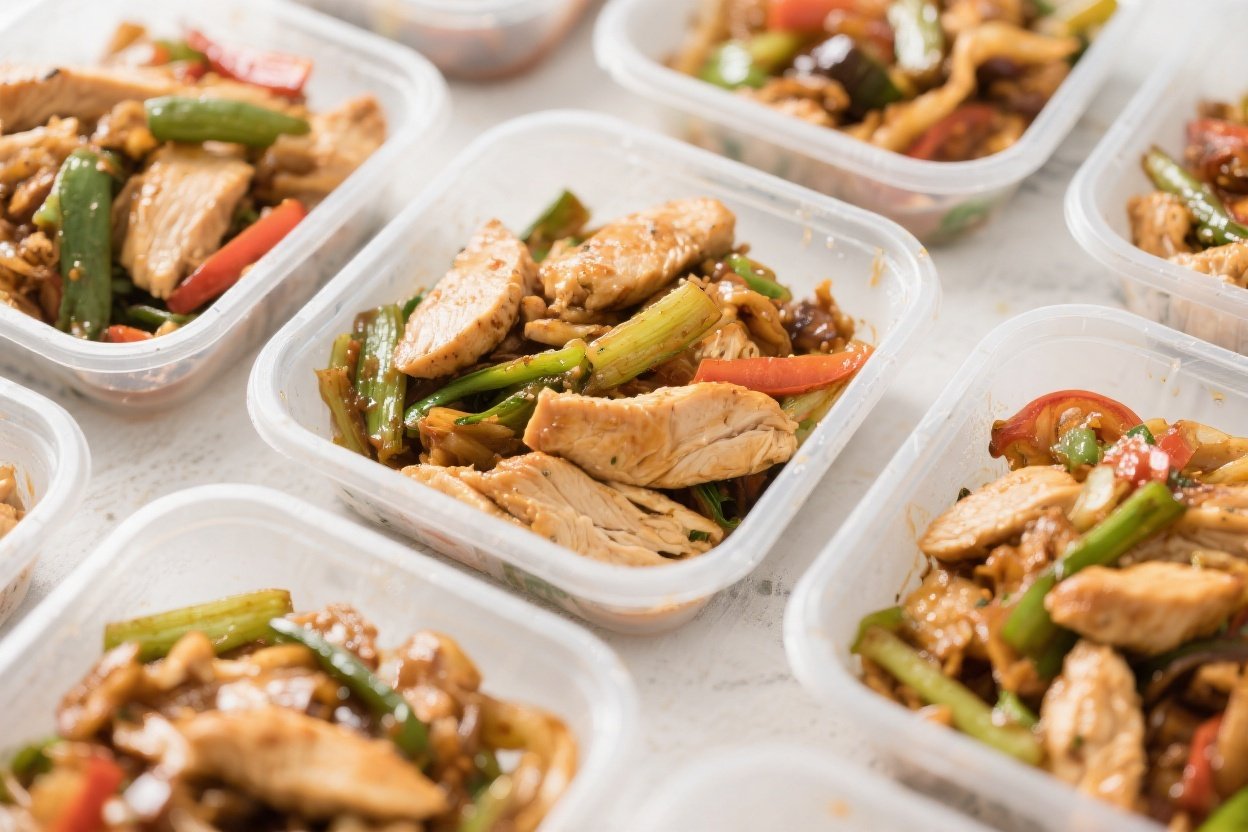
- Portion for meal prep: Divide rice or cauliflower rice into 4–5 containers. Top with stir fry. Let cool uncovered for 10–15 minutes before sealing.
What Makes This Recipe So Good
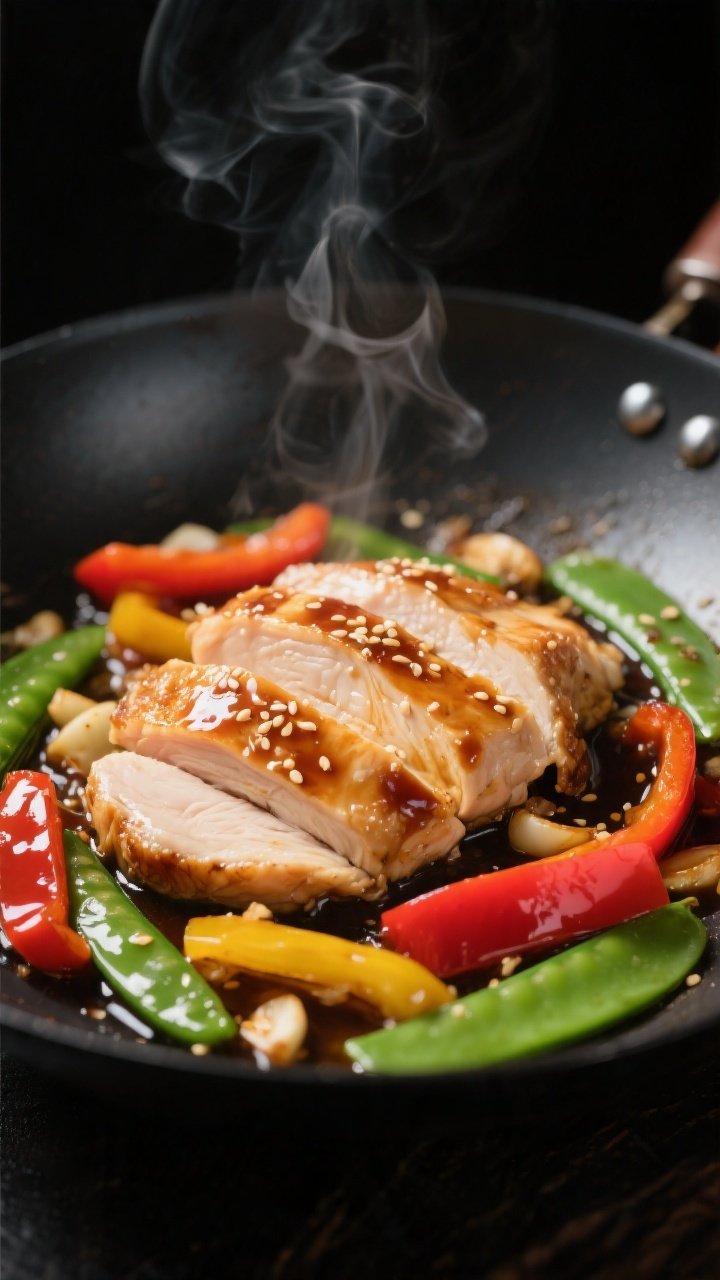
- High protein, low fuss: Chicken breast keeps the protein high while staying lean. Paired with veggies and a light sauce, it’s filling without feeling heavy.
- Great for meal prep: The texture holds up well in the fridge, and the flavors deepen after a day or two.
- Fast cooking: Once everything is chopped, the stir fry comes together in under 20 minutes.
- Customizable: Swap in your favorite vegetables or use what’s already in your fridge.
It’s a flexible base recipe.
- Balanced and bright: A mix of sweet, salty, and garlicky flavors makes it craveable, not boring “health food.”
Ingredients
- 1.5–2 pounds boneless, skinless chicken breast, thinly sliced
- 2 tablespoons cornstarch (for coating chicken)
- 1 tablespoon neutral oil (avocado, canola, or grapeseed), plus more as needed
- 1 red bell pepper, sliced
- 1 yellow bell pepper, sliced
- 1 medium broccoli crown, cut into small florets
- 1 medium carrot, thinly sliced
- 1 small red onion, sliced (or 4 green onions, chopped)
- 1 cup sugar snap peas or snow peas
- 3 cloves garlic, minced
- 1 tablespoon fresh ginger, minced (or 1 teaspoon ground ginger)
- 2–3 cups cooked brown rice or cauliflower rice (for serving)
For the sauce:
- 1/3 cup low-sodium soy sauce or tamari
- 2 tablespoons oyster sauce or hoisin (optional for richness)
- 1 tablespoon rice vinegar or lime juice
- 1 tablespoon honey or maple syrup
- 1 tablespoon sesame oil
- 1–2 teaspoons sriracha or chili-garlic sauce (optional for heat)
- 1/2 cup low-sodium chicken broth or water
- 2 teaspoons cornstarch (to thicken)
- Optional: 1 tablespoon toasted sesame seeds, for garnish
How to Make It
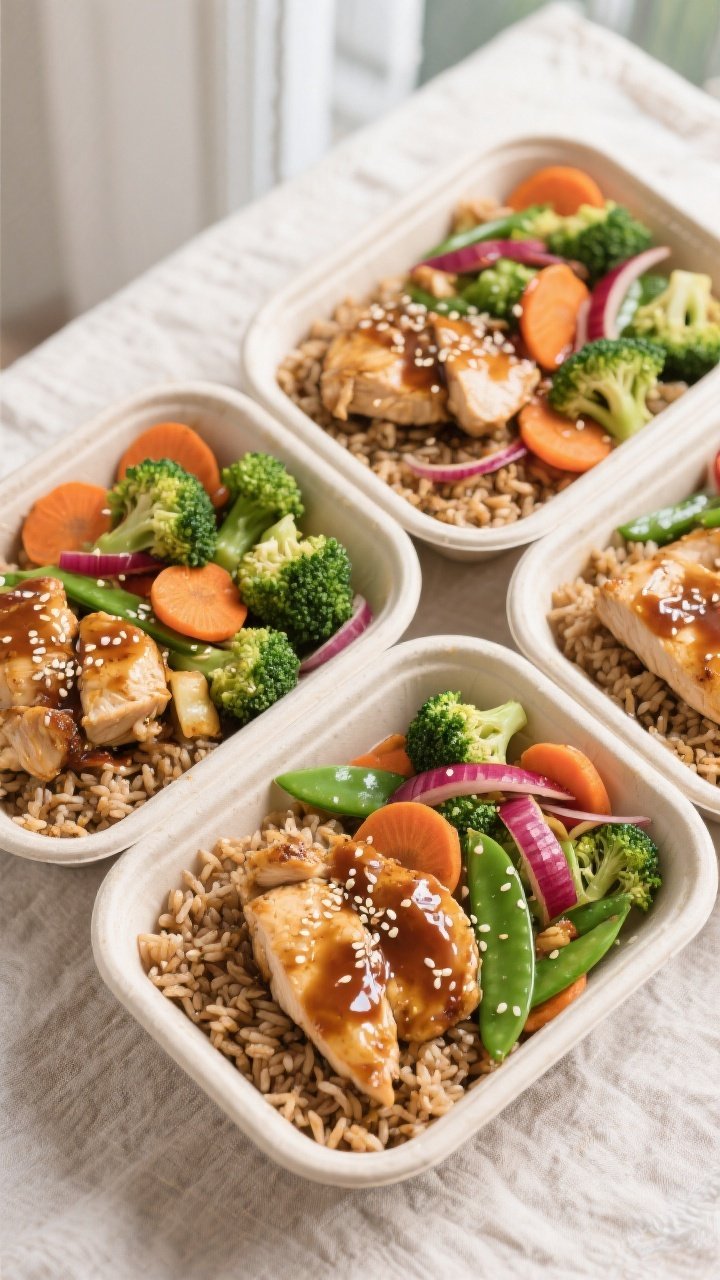
- Prep the chicken: Pat the sliced chicken dry with paper towels. Toss with 2 tablespoons cornstarch and a pinch of salt and pepper. This helps the chicken brown and stay tender.
- Mix the sauce: In a bowl or measuring cup, whisk soy sauce, oyster sauce, rice vinegar, honey, sesame oil, sriracha, broth, and 2 teaspoons cornstarch.
Set aside.
- Heat the pan: Place a large skillet or wok over medium-high heat. Add 1 tablespoon oil and swirl to coat.
- Sear the chicken: Add chicken in a single layer. Cook 3–4 minutes per side until lightly browned and cooked through.
Work in batches to avoid steaming. Transfer to a plate.
- Stir-fry the veggies: Add a small splash of oil if the pan is dry. Cook onion, bell peppers, carrot, and broccoli for 3–4 minutes, stirring often.
Add snap peas, garlic, and ginger. Cook 1–2 more minutes until crisp-tender.
- Combine and sauce: Return chicken to the pan. Whisk the sauce again, then pour it in.
Stir constantly for 1–2 minutes until the sauce thickens and coats everything.
- Taste and adjust: Add more soy for salt, vinegar for brightness, or honey for sweetness. Sprinkle sesame seeds if using.
- Portion for meal prep: Divide rice or cauliflower rice into 4–5 containers. Top with stir fry.
Let cool uncovered for 10–15 minutes before sealing.
How to Store
- Refrigerator: Store in airtight containers for up to 4 days.
- Freezer: Freeze portions for up to 2 months. The vegetables will soften slightly after thawing but still taste great.
- Reheating: Microwave 2–3 minutes, stirring halfway. Or reheat in a skillet over medium heat with a splash of water to loosen the sauce.
- Thawing: For frozen portions, thaw overnight in the fridge for best texture.
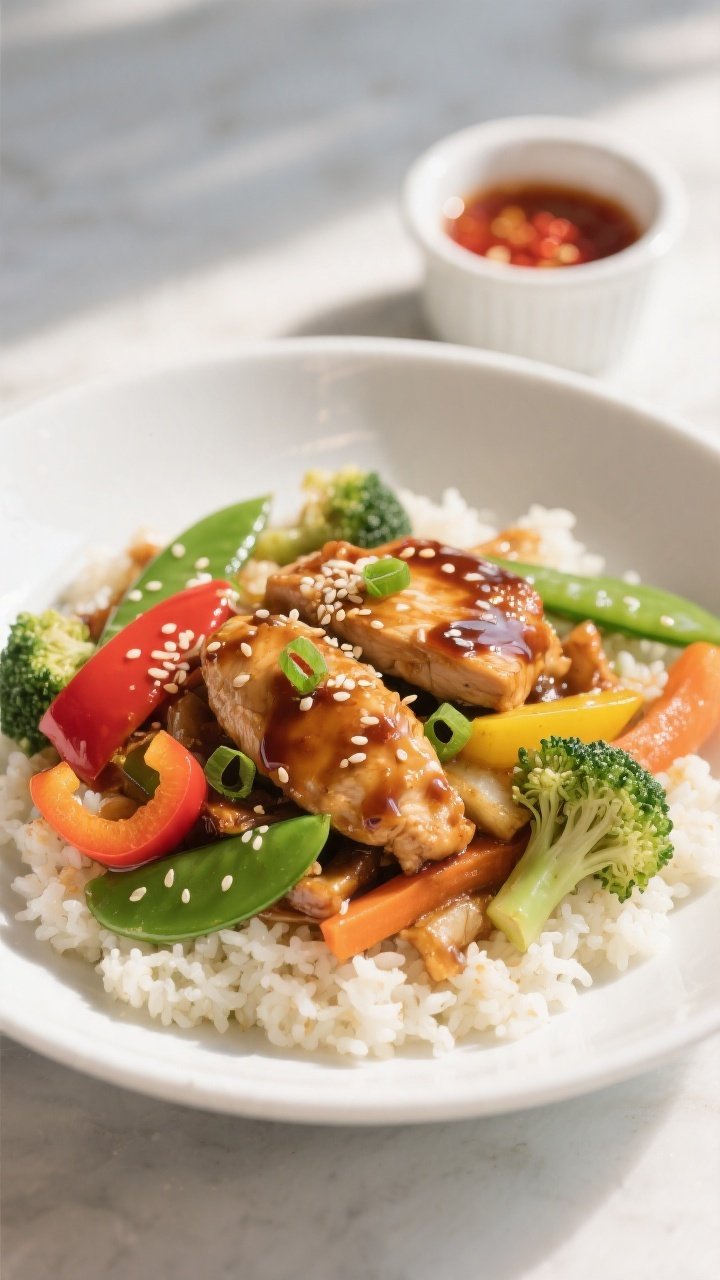
Benefits of This Recipe
- High protein for satiety: Lean chicken helps keep you full and supports muscle recovery after workouts.
- Veggie-packed: A colorful mix adds fiber, vitamins, and antioxidants without many extra calories.
- Balanced macros: With rice or cauliflower rice, you control carbs while keeping protein front and center.
- Budget-friendly: Chicken breast and seasonal vegetables stretch into several meals with minimal waste.
- Weeknight easy: Short ingredient list, minimal cleanup, and quick cooking time.
Pitfalls to Watch Out For
- Overcrowding the pan: Too much chicken at once causes steaming, not searing.
Cook in batches for good browning.
- Overcooking veggies: Stir fries should be crisp-tender. Pull them off the heat while they still have some bite.
- Skipping the cornstarch: Lightly coating chicken improves texture and helps the sauce cling. Don’t skip it unless you need to avoid starch.
- Using high-sodium sauces: Choose low-sodium soy and add salt at the end if needed.
This keeps the flavor balanced.
- Packaging hot food: Seal containers only after the food cools slightly to avoid condensation and soggy textures.
Recipe Variations
- Extra-lean protein: Swap chicken breast for chicken tenderloins or turkey breast. For even more protein variety, add tofu cubes.
- Low-carb: Use cauliflower rice or shirataki noodles. Add extra non-starchy veg like mushrooms or zucchini.
- Spicy garlic: Double the garlic and add chili crisp or extra sriracha for heat and depth.
- Citrus-ginger: Stir in orange zest and a splash of orange juice with the sauce for a bright, tangy twist.
- Peanut or almond: Whisk 1–2 tablespoons natural peanut or almond butter into the sauce.
Thin with a bit more broth if needed.
- Gluten-free: Use tamari instead of soy sauce and a gluten-free oyster sauce or omit it.
- Batch size: Double the recipe if you have a large wok. Just sear meat and veggies in stages to maintain high heat.
Save time, eat healthier, and take the stress out of dinner.
Get a full week of easy healthy dinners delivered straight to your inbox.
FAQ
How much protein is in a serving?
A typical serving with chicken breast and vegetables provides roughly 35–45 grams of protein, depending on portion size. Pairing with brown rice or cauliflower rice won’t change protein much, but it will affect total calories and carbs.
Can I use frozen vegetables?
Yes.
Use a stir-fry blend and add it straight from the freezer to a hot pan. Cook off excess moisture before adding the sauce so it doesn’t get watery.
What’s the best way to keep chicken juicy?
Slice it thinly, pat it dry, and sear over medium-high heat without moving it too much. The light cornstarch coating also helps seal in moisture.
Is there a good substitute for oyster sauce?
Hoisin works well for sweetness and depth.
If you want to skip both, add a bit more soy sauce plus a teaspoon of fish sauce for umami.
Can I make this without cornstarch?
You can. The sauce will be thinner, and the chicken won’t crisp as much. As an alternative, use arrowroot or tapioca starch in the same amount.
How do I prevent soggy leftovers?
Cool the stir fry slightly before sealing, store sauce-coated food apart from rice if you can, and reheat briefly.
Overheating breaks down the veggies.
What oil is best for stir frying?
Use a high-heat neutral oil like avocado, canola, or grapeseed. Save extra-virgin olive oil for drizzling after cooking if you like its flavor.
In Conclusion
This High-Protein Chicken Stir Fry Meal Prep is simple, flexible, and satisfying. With lean chicken, crisp veggies, and a quick sauce, it turns a Sunday prep session into four or five solid meals.
It’s easy to customize, reheats well, and keeps your week fueled without fuss. Keep it in your rotation for a reliable, tasty staple you won’t get tired of.
Printable Recipe Card
Want just the essential recipe details without scrolling through the article? Get our printable recipe card with just the ingredients and instructions.
Loved This Recipe?
If you're looking for more simple, healthy dinners your family will actually eat, grab my FREE 7-Day Easy Dinner Reset. You'll get 7 easy dinner recipes, simple grocery lists, and a done-for-you plan that takes the stress out of mealtime.