High-Protein Lemon Herb Salmon & Asparagus – Bright, Fresh, and Satisfying
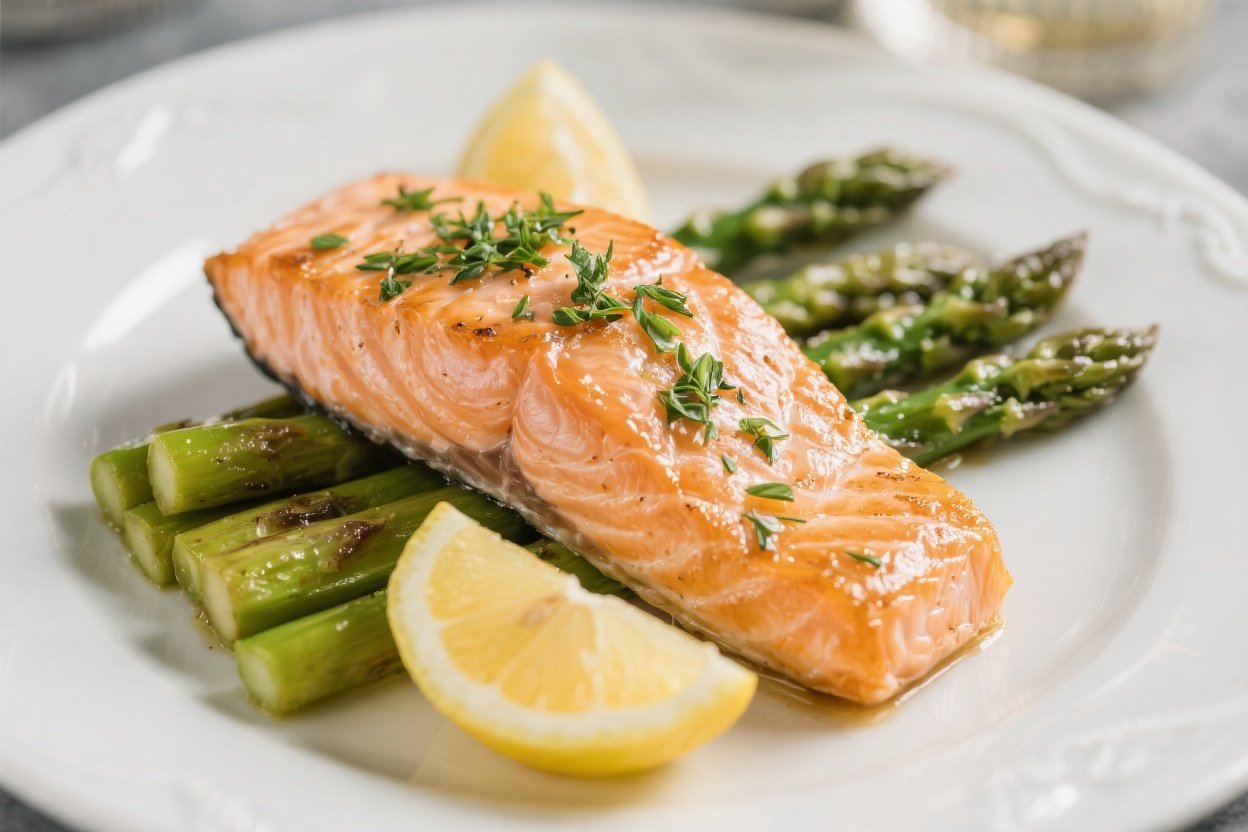
This High-Protein Lemon Herb Salmon & Asparagus is weeknight-easy but special enough for guests. It’s bright, zesty, and built around clean flavors that let the salmon shine. The asparagus roasts alongside the fish, so everything’s ready at the same time with minimal fuss.
Stop wondering what's for dinner.
Get 7 healthy, family-friendly dinners complete with recipes and simple meal plans delivered straight to your inbox.
You’ll get a big protein boost, a hit of fiber, and a plate that looks as good as it tastes. If you want a meal that feels light yet filling, this one delivers without any heavy sauces or complicated steps.
Ingredients
Method
- Preheat the oven to 425°F (220°C). Line a sheet pan with parchment paper or lightly grease it.
- Pat the salmon dry with paper towels. This helps the surface brown and prevents steaming.
- Trim the woody ends from the asparagus. Toss asparagus on the pan with 1 tbsp olive oil, a pinch of salt, and black pepper. Spread into a single layer along the sides.
- Place the salmon portions in the center of the pan, skin-side down if using skin-on fillets.
- In a small bowl, mix 1 tbsp olive oil, lemon zest, juice of half the lemon, minced garlic, parsley, dill, thyme, and red pepper flakes (if using). Season with 1/2 tsp salt and a few grinds of pepper.
- Spoon the herb mixture over the salmon. Drizzle any remaining over the asparagus. Nestle a few thin lemon slices on top of the fish.
- Roast for 10–14 minutes, depending on thickness. Salmon is done when it flakes easily with a fork and is just opaque in the center. Asparagus should be crisp-tender with lightly charred tips.
- Rest 2 minutes. Squeeze the remaining half lemon over the pan just before serving for a bright finish.
- Serve with extra lemon wedges. Add a sprinkle of fresh herbs and a pinch of flaky salt for a clean, restaurant-style touch.
Why This Recipe Works
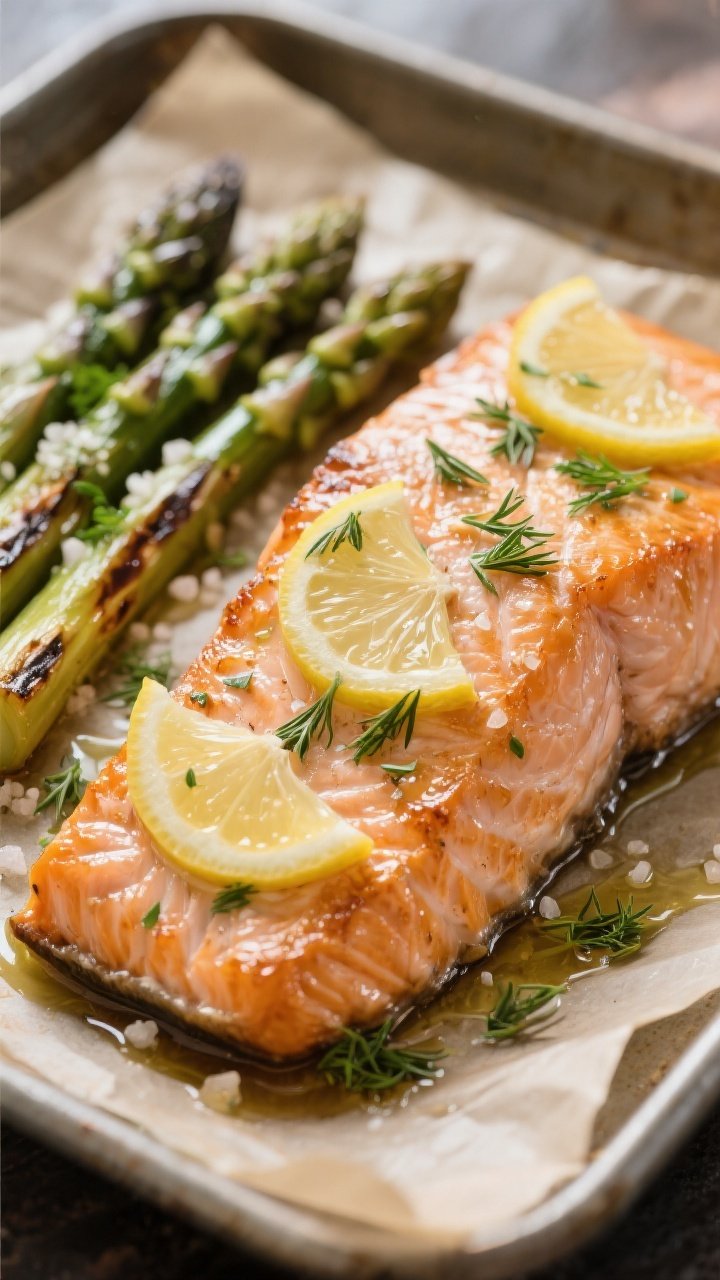
- Simple, balanced flavors: Lemon, garlic, and herbs enhance salmon’s natural richness without overpowering it.
- One-pan efficiency: Roasting the salmon and asparagus together saves time and cleanup, while keeping textures on point.
- High-protein focus: Salmon packs around 22–25 grams of protein per 4 ounces, making it a smart main for recovery and satiety.
- Moist, flaky fish: A quick roast at high heat keeps the salmon tender with crisp edges.
- Customizable: You can swap herbs, adjust citrus, or add a touch of heat to match your taste.
Ingredients
- 1 to 1.5 lbs salmon fillet, skin-on if possible, cut into 4 portions
- 1 lb asparagus, trimmed
- 1 large lemon (zest and juice), plus extra slices for garnish
- 2–3 cloves garlic, minced
- 2 tbsp extra-virgin olive oil
- 1 tbsp fresh parsley, finely chopped
- 1 tbsp fresh dill, finely chopped (or 1 tsp dried dill)
- 1 tsp fresh thyme leaves (or 1/2 tsp dried thyme)
- 1/2 tsp crushed red pepper flakes (optional, for gentle heat)
- Salt and black pepper, to taste
- Lemon wedges, to serve
Instructions
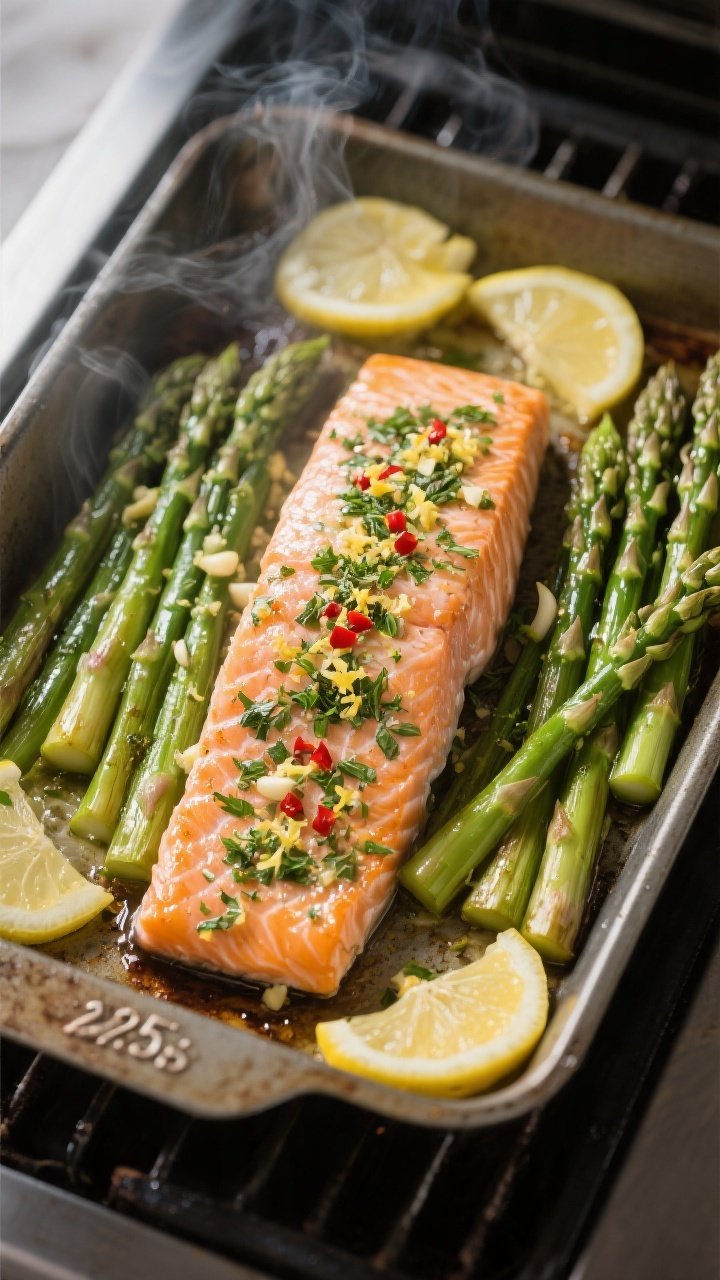
- Preheat the oven to 425°F (220°C). Line a sheet pan with parchment paper or lightly grease it.
- Pat the salmon dry with paper towels.
This helps the surface brown and prevents steaming.
- Trim the woody ends from the asparagus. Toss asparagus on the pan with 1 tbsp olive oil, a pinch of salt, and black pepper. Spread into a single layer along the sides.
- Place the salmon portions in the center of the pan, skin-side down if using skin-on fillets.
- In a small bowl, mix 1 tbsp olive oil, lemon zest, juice of half the lemon, minced garlic, parsley, dill, thyme, and red pepper flakes (if using).
Season with 1/2 tsp salt and a few grinds of pepper.
- Spoon the herb mixture over the salmon. Drizzle any remaining over the asparagus. Nestle a few thin lemon slices on top of the fish.
- Roast for 10–14 minutes, depending on thickness.
Salmon is done when it flakes easily with a fork and is just opaque in the center. Asparagus should be crisp-tender with lightly charred tips.
- Rest 2 minutes. Squeeze the remaining half lemon over the pan just before serving for a bright finish.
- Serve with extra lemon wedges.
Add a sprinkle of fresh herbs and a pinch of flaky salt for a clean, restaurant-style touch.
Storage Instructions
- Refrigeration: Store leftovers in an airtight container for up to 3 days. Keep salmon and asparagus together if you plan to reheat, or separate if you prefer the asparagus cooler and crisper.
- Reheating: Warm gently in a 275°F (135°C) oven for 10–12 minutes, or in a skillet over low heat with a splash of water and a lid. Avoid microwaving at high power to prevent drying.
- Freezing: You can freeze cooked salmon for up to 2 months.
Wrap tightly. Asparagus doesn’t freeze well; it will get soft, so enjoy that fresh.
- Meal prep tip: Flake leftover salmon over grains or salad and add a squeeze of lemon to refresh the flavor.
Why This is Good for You
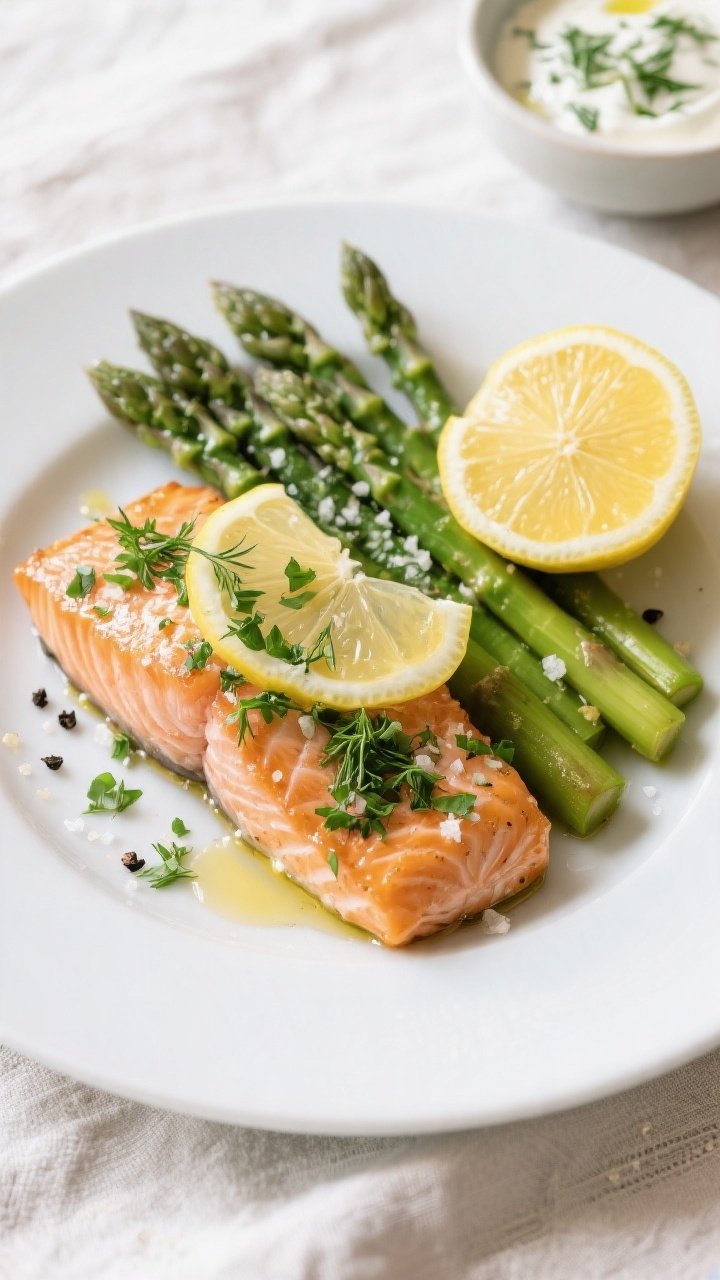
- High-quality protein: Salmon supports muscle repair and keeps you fuller longer, which can help with weight management.
- Omega-3 fats: Salmon is rich in EPA and DHA, which support heart, brain, and joint health.
- Micronutrient boost: Asparagus brings fiber, folate, and vitamins A, C, and K. Lemon adds vitamin C to help with iron absorption and brightness of flavor.
- Balanced plate: Protein, healthy fats, and fiber work together for steady energy and fewer cravings.
Pitfalls to Watch Out For
- Overcooking the salmon: It can go from perfect to dry quickly.
Start checking at 10 minutes, especially for thinner fillets.
- Skipping the pat-dry step: Extra surface moisture stops browning and can make the fish taste bland.
- Under-seasoning: Salmon needs enough salt to pop. Taste the lemon-herb mix and adjust before brushing it on.
- Crowding the pan: Give space for airflow. If needed, use two pans to keep asparagus crisp.
- Old fish: Freshness matters.
Choose salmon that smells clean and looks vibrant, not dull or mushy.
Alternatives
- Protein swaps: Try trout, Arctic char, cod, or chicken thighs. For cod, roast 12–15 minutes; for chicken thighs, cook longer at 425°F until 165°F internal.
- Herb variations: Use basil and chives in summer, or rosemary and oregano for a deeper, woodsy note. Dried herbs work too—use about one-third the amount of fresh.
- Citrus twist: Mix lemon with orange or grapefruit zest for a sweeter edge.
Lime gives a sharper, tangy profile.
- Low-oil option: Reduce olive oil to 1 tbsp total; the salmon’s natural fats will still keep it moist.
- Spice it up: Add smoked paprika, cumin, or a pinch of cayenne for warmth and color.
- Veggie swap: Broccolini, green beans, or zucchini roast well at the same temp. Keep pieces similar in size for even cooking.
- Carb add-ons: Serve over quinoa, farro, roasted potatoes, or a warm couscous salad for a fuller meal.
FAQ
How do I know when salmon is done?
Salmon is ready when it flakes easily with a fork and the center is just opaque. For precision, aim for an internal temperature of 125–130°F for moist, medium doneness (carryover heat will bring it up a bit).
Can I use frozen salmon?
Yes.
Save time, eat healthier, and take the stress out of dinner.
Get a full week of easy healthy dinners delivered straight to your inbox.
Thaw it overnight in the fridge or under cold running water in its packaging. Pat dry thoroughly before seasoning to avoid excess moisture.
What if my asparagus is thick?
Thicker spears may need an extra 2–3 minutes. You can start them in the oven while you prep the salmon, or peel the bottom third to help them cook evenly.
Do I need to remove the salmon skin?
No.
Skin helps keep the fish moist and adds flavor. After roasting, the flesh will lift off the skin easily if you prefer not to eat it.
Can I make this on the stovetop?
Absolutely. Sear salmon skin-side down in a hot skillet with oil for 4–6 minutes, flip for 1–3 minutes, and sauté asparagus separately until crisp-tender.
Spoon the lemon-herb mixture over before serving.
Is this recipe good for meal prep?
Yes, with a caveat. Salmon is best fresh, but it reheats gently. For meal prep, cook slightly under and reheat low and slow.
Add fresh lemon after reheating to brighten it up.
What sides go well with this?
Try a simple arugula salad, garlicky couscous, lemony quinoa, roasted baby potatoes, or a light yogurt-dill sauce on the side.
How much salt should I use?
Start with about 3/4 to 1 tsp kosher salt for the full recipe, split between salmon and asparagus. Adjust to taste, especially if using fine salt, which is denser.
Can I grill it instead?
Yes. Grill salmon over medium heat, 3–5 minutes per side depending on thickness.
Toss asparagus with oil and grill perpendicular to the grates until charred and tender. Add lemon-herb mix after grilling or in the last minute.
What if I don’t like dill?
Swap with more parsley, chives, or a little tarragon. Keep the lemon and garlic as your base and build from there.
Wrapping Up
High-Protein Lemon Herb Salmon & Asparagus is the kind of meal you’ll keep on repeat.
It’s fast, flavorful, and naturally nutritious, with bright citrus and herby freshness in every bite. With a single pan and a few pantry staples, you get a restaurant-quality plate at home. Keep the method, swap the herbs or sides, and make it yours.
Printable Recipe Card
Want just the essential recipe details without scrolling through the article? Get our printable recipe card with just the ingredients and instructions.
Loved This Recipe?
If you're looking for more simple, healthy dinners your family will actually eat, grab my FREE 7-Day Easy Dinner Reset. You'll get 7 easy dinner recipes, simple grocery lists, and a done-for-you plan that takes the stress out of mealtime.