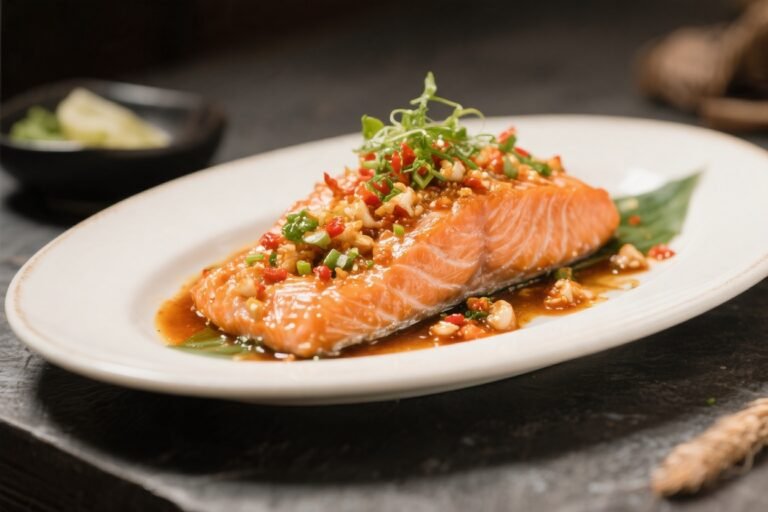
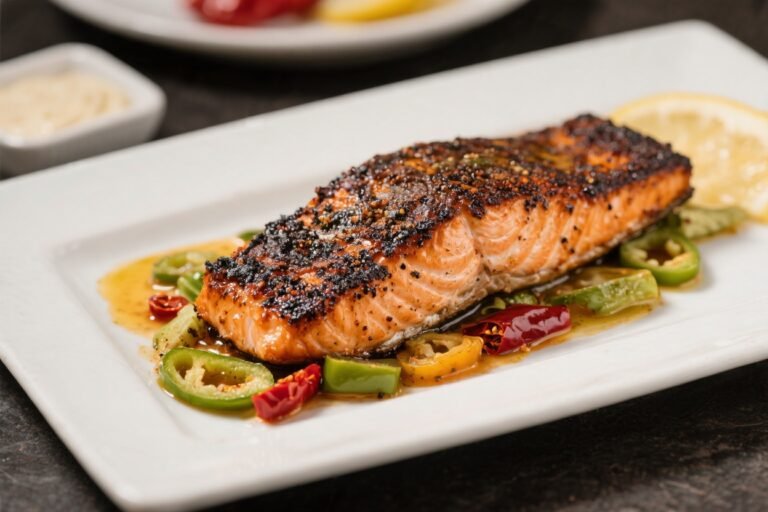
Pineapple Teriyaki Salmon – Sweet, Savory, and Weeknight Easy
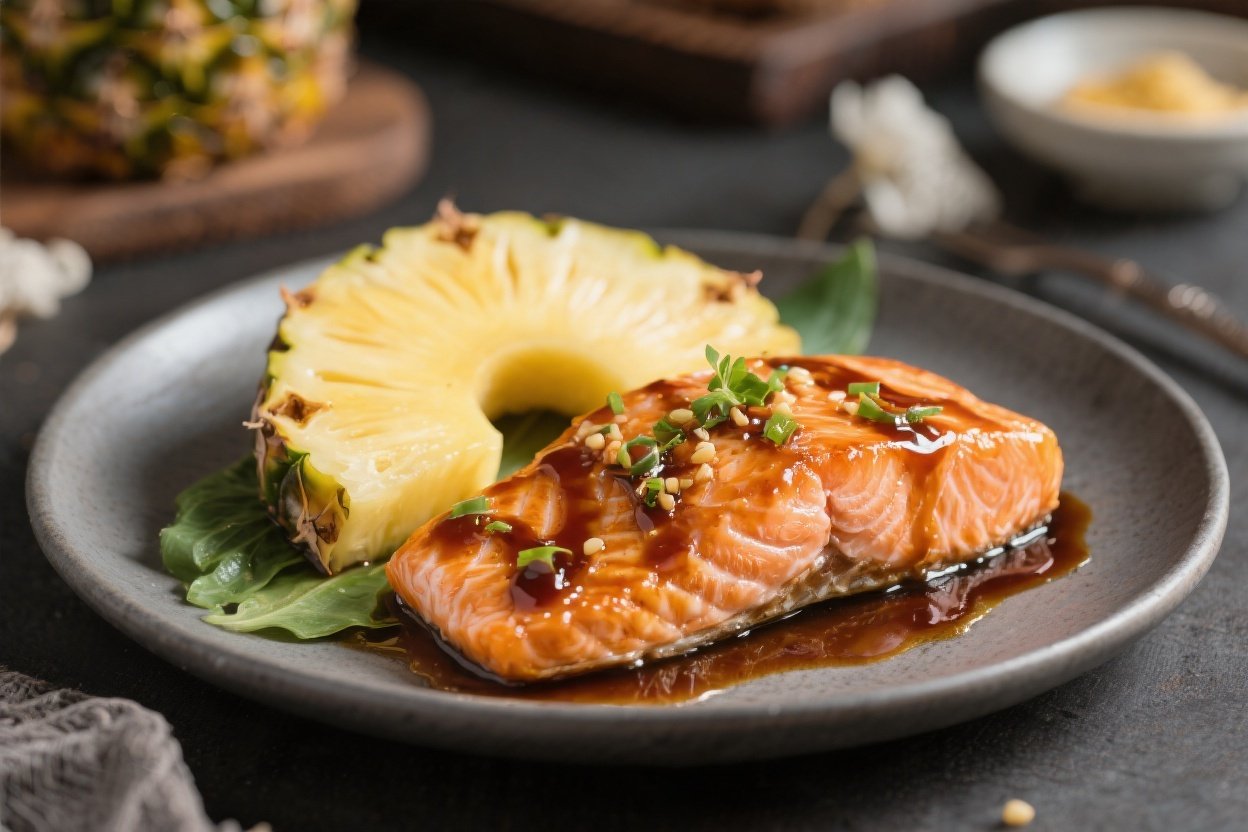
This recipe brings bold flavor with almost no fuss. Think tender salmon glazed in a glossy, garlicky teriyaki sauce, brightened with juicy pineapple. It’s a simple dinner that feels special, and it comes together fast—perfect for a weeknight or a low-stress dinner with friends.
Stop wondering what's for dinner.
Get 7 healthy, family-friendly dinners complete with recipes and simple meal plans delivered straight to your inbox.
You’ll get that craveable sweet-salty balance, plus a little tang and a touch of heat. Serve it over rice or greens and you’re set.
Ingredients
Method
- Preheat and prep: Heat your oven to 400°F (200°C). Pat the salmon dry with paper towels and set on a parchment-lined sheet pan. Season lightly with salt and pepper.
- Make the teriyaki base: In a small saucepan, combine soy sauce, pineapple juice, brown sugar (or honey), rice vinegar, garlic, ginger, and sesame oil. Bring to a gentle simmer over medium heat, stirring to dissolve the sugar.
- Thicken the sauce: Mix cornstarch with water to make a slurry. Stir it into the simmering sauce and cook 1–2 minutes, until glossy and thick enough to coat a spoon. Remove from heat.
- Sear the pineapple (optional but tasty): Heat the neutral oil in a skillet over medium-high. Add pineapple chunks and cook 2–3 minutes until lightly caramelized. This deepens the flavor and reduces extra moisture. Set aside.
- Glaze the salmon: Spoon about half the teriyaki sauce over the salmon, coating the tops evenly. Reserve the rest for finishing.
- Bake: Roast the salmon for 8–12 minutes, depending on thickness. Aim for 125–130°F (52–54°C) in the center for moist, medium doneness. The flesh should flake easily but remain glossy.
- Finish under the broiler (optional): For extra caramelization, switch to broil for 1–2 minutes. Watch closely to avoid burning the sugars.
- Glaze again and add pineapple: Brush the cooked salmon with some of the remaining sauce. Spoon the seared pineapple over and around the fillets. Drizzle with a little more sauce.
- Garnish and serve: Top with green onions and sesame seeds. Add lime wedges for a bright squeeze. Serve with rice, quinoa, or steamed greens.
Why This Recipe Works
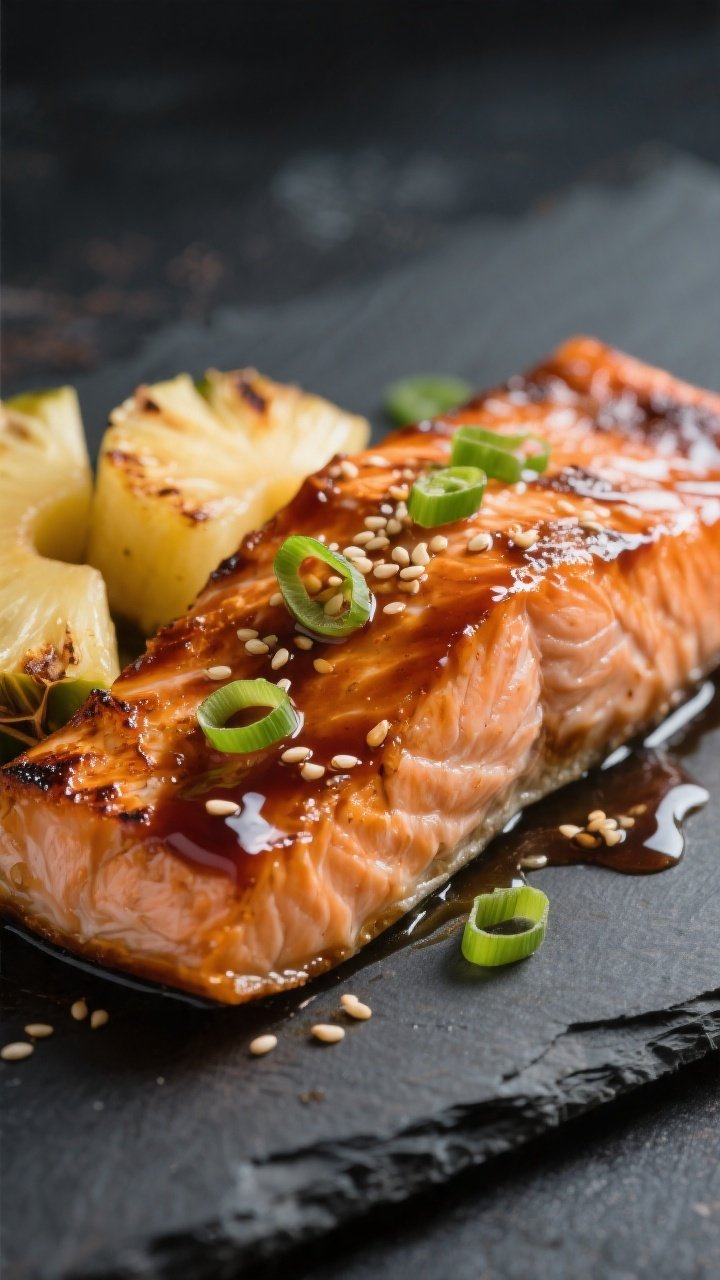
Sweet balances savory: Pineapple adds natural sweetness and acidity that make the soy-based teriyaki shine. It keeps the sauce from tasting flat or too salty.
Quick cooking, big payoff: Salmon cooks in under 15 minutes, so you can reduce the sauce while the oven preheats.
It’s efficient and fast without cutting corners on flavor.
Sticky, glossy glaze: A cornstarch slurry helps the teriyaki cling to the salmon. You get a lacquered finish that looks restaurant-ready and tastes even better.
Flexible prep: Fresh or canned pineapple both work. Skin-on or skinless salmon, fillets or a single side—this recipe adapts to what you have.
Shopping List
- Salmon: 4 fillets (about 6 ounces each), skin-on or skinless
- Fresh pineapple: 1 cup small chunks (or 1 cup well-drained canned pineapple tidbits)
- Soy sauce: 1/3 cup (use low-sodium to control salt)
- Pineapple juice: 1/2 cup (from the fresh fruit or can)
- Brown sugar or honey: 2–3 tablespoons
- Rice vinegar: 1 tablespoon (or apple cider vinegar)
- Garlic: 3 cloves, minced
- Ginger: 1 tablespoon fresh grated (or 1 teaspoon ground, if needed)
- Sesame oil: 1 teaspoon
- Cornstarch: 2 teaspoons
- Water: 2 teaspoons (for the slurry)
- Neutral oil: 1 tablespoon (avocado, canola, or grapeseed)
- Green onions: 2, thinly sliced (optional garnish)
- Sesame seeds: 1 teaspoon (optional garnish)
- Lime: 1, cut into wedges (optional)
- Cooked rice or quinoa: for serving (optional)
Instructions
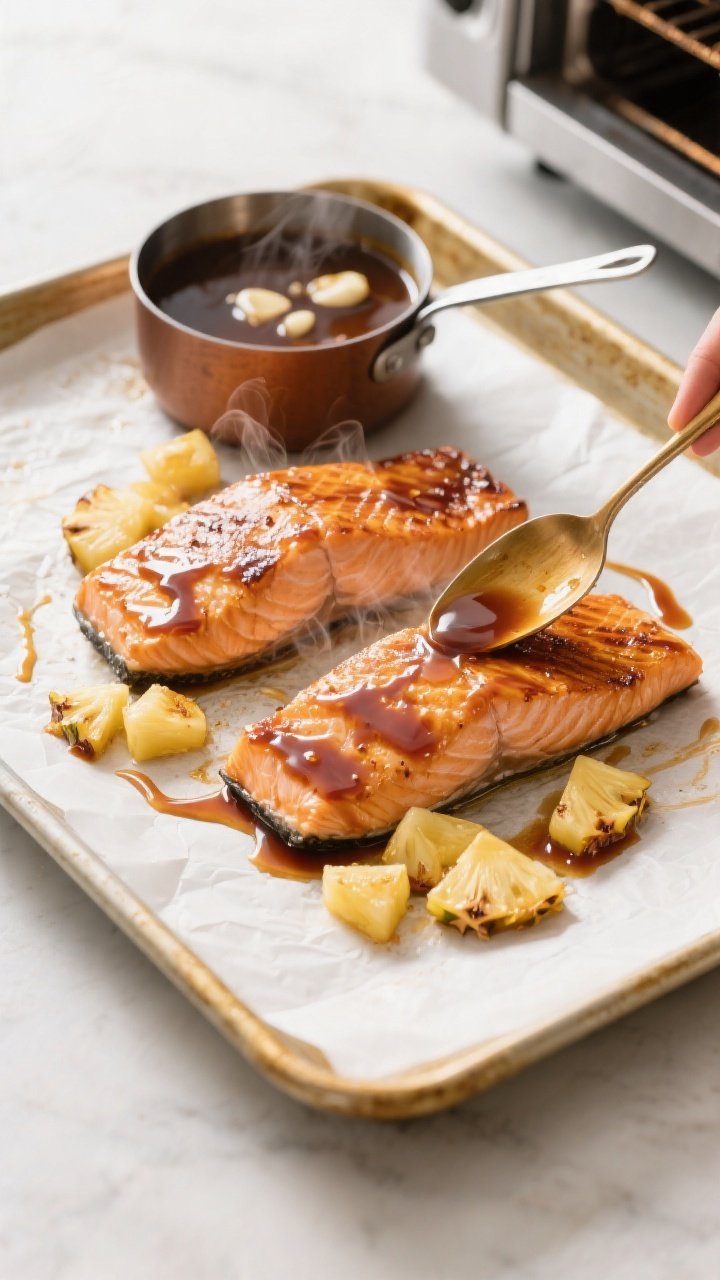
- Preheat and prep: Heat your oven to 400°F (200°C).
Pat the salmon dry with paper towels and set on a parchment-lined sheet pan. Season lightly with salt and pepper.
- Make the teriyaki base: In a small saucepan, combine soy sauce, pineapple juice, brown sugar (or honey), rice vinegar, garlic, ginger, and sesame oil. Bring to a gentle simmer over medium heat, stirring to dissolve the sugar.
- Thicken the sauce: Mix cornstarch with water to make a slurry.
Stir it into the simmering sauce and cook 1–2 minutes, until glossy and thick enough to coat a spoon. Remove from heat.
- Sear the pineapple (optional but tasty): Heat the neutral oil in a skillet over medium-high. Add pineapple chunks and cook 2–3 minutes until lightly caramelized.
This deepens the flavor and reduces extra moisture. Set aside.
- Glaze the salmon: Spoon about half the teriyaki sauce over the salmon, coating the tops evenly. Reserve the rest for finishing.
- Bake: Roast the salmon for 8–12 minutes, depending on thickness.
Aim for 125–130°F (52–54°C) in the center for moist, medium doneness. The flesh should flake easily but remain glossy.
- Finish under the broiler (optional): For extra caramelization, switch to broil for 1–2 minutes. Watch closely to avoid burning the sugars.
- Glaze again and add pineapple: Brush the cooked salmon with some of the remaining sauce.
Spoon the seared pineapple over and around the fillets. Drizzle with a little more sauce.
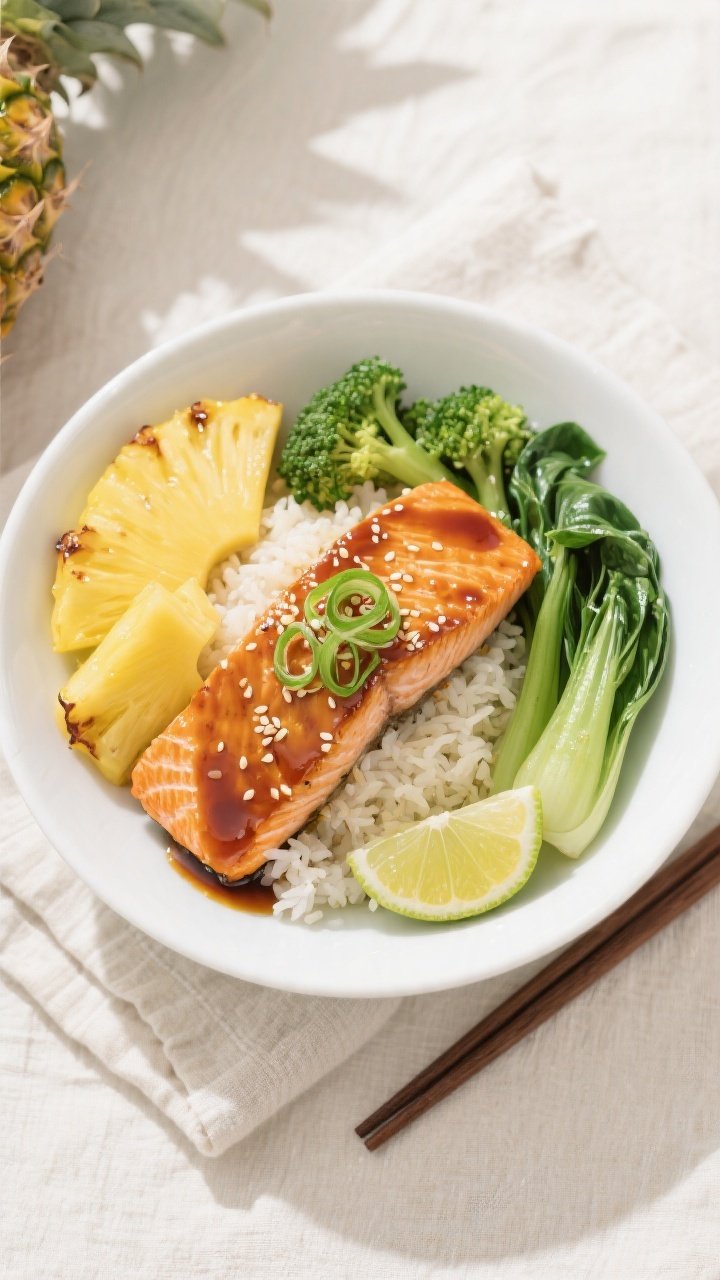
- Garnish and serve: Top with green onions and sesame seeds. Add lime wedges for a bright squeeze.
Serve with rice, quinoa, or steamed greens.
Keeping It Fresh
Storage: Cool leftovers, then store in an airtight container in the fridge for up to 3 days. Keep the sauce separate if possible for the best texture.
Reheating: Warm gently in a 275°F (135°C) oven for 8–10 minutes, or microwave on 50% power in short bursts. Avoid high heat, which can dry the salmon.
Meal prep tip: Cook extra rice and portion it with steamed veggies.
Add the salmon and a small container of extra sauce. Reheat gently for a quick, balanced lunch.
Freezing: Cooked salmon can be frozen up to 2 months. Thaw overnight in the fridge, then reheat low and slow.
Fresh pineapple chunks don’t freeze as well, so add those fresh if you can.
Why This is Good for You
Omega-3s for heart and brain: Salmon is rich in EPA and DHA, which support heart health and may reduce inflammation. It’s a smart protein choice for regular meals.
Lean protein, steady energy: Each serving provides quality protein that keeps you fuller longer. Pairing it with fiber-rich sides like brown rice or broccoli helps balance blood sugar.
Vitamin C boost: Pineapple brings vitamin C and bromelain, a natural enzyme that may support digestion.
It also adds brightness without heavy sauces or creams.
Lower-sodium tweaks: Using low-sodium soy sauce and controlling added sugar keeps the dish flavorful without going overboard on salt or sweetness.
Save time, eat healthier, and take the stress out of dinner.
Get a full week of easy healthy dinners delivered straight to your inbox.
What Not to Do
- Don’t overcook the salmon. Dry fish loses its buttery texture. Pull it a little early; it will continue to cook off heat.
- Don’t skip thickening the sauce. A thin sauce slides off and tastes watery. The slurry gives that classic teriyaki cling.
- Don’t drown the fish. Too much sauce can overwhelm the salmon’s flavor and turn the pan soupy.
Glaze lightly, then finish with more at the end.
- Don’t use overly tart pineapple juice. Taste first. If it’s very sour, add a touch more sugar or honey to balance.
- Don’t broil unattended. Sugars burn fast. Keep the oven door cracked and your eye on it.
Recipe Variations
- Sheet-pan dinner: Add broccoli florets, snap peas, or bell peppers to the pan.
Toss with a little oil and salt, then roast alongside the salmon.
- Grilled version: Grill salmon over medium heat, basting with thickened sauce in the last 2 minutes. Grill pineapple rings until charred and juicy.
- Spicy kick: Stir in 1–2 teaspoons sriracha or chili-garlic sauce to the teriyaki. A pinch of red pepper flakes works too.
- Ginger-lime twist: Add lime zest to the sauce and finish with a big squeeze of lime instead of sesame oil.
- Coconut rice base: Cook rice with half water, half light coconut milk.
The subtle richness pairs perfectly with the sweet-salty glaze.
- Gluten-free: Use tamari or coconut aminos instead of soy sauce. Check labels on vinegar and cornstarch to be safe.
- Air fryer: Cook salmon at 380°F (193°C) for 8–10 minutes, brushing with sauce halfway. Warm remaining sauce on the stove and drizzle to finish.
FAQ
Can I use frozen salmon?
Yes.
Thaw it in the fridge overnight or under cold running water in its packaging. Pat very dry before glazing so the sauce adheres and the fish roasts instead of steaming.
Is canned pineapple okay?
Absolutely. Choose pineapple packed in juice, not syrup.
Drain it well, and use some of the juice in the sauce to keep the flavors cohesive.
How do I know when the salmon is done?
Look for a slightly translucent center that flakes with gentle pressure. An instant-read thermometer should read 125–130°F (52–54°C) in the thickest part for moist, medium doneness.
What can I use instead of cornstarch?
Arrowroot or potato starch works the same way. Use the same amount and mix with cool water before adding to the simmering sauce.
Can I make the sauce ahead?
Yes.
Cook and thicken the sauce up to 5 days ahead. Store it covered in the fridge and warm gently before using. If it’s too thick, whisk in a splash of water or juice.
What sides go best with this?
Steamed rice, coconut rice, quinoa, or cauliflower rice are great bases.
Add a crisp veg like roasted broccoli, bok choy, or a simple cucumber salad for contrast.
How do I keep the skin crispy?
If using skin-on salmon, sear it skin-side down in a hot skillet for 2–3 minutes, then transfer to the oven to finish. Brush sauce mostly on the flesh side so the skin stays crisp.
Can I use this sauce on other proteins?
Yes. It’s excellent on chicken thighs, tofu, shrimp, or pork tenderloin.
Adjust cooking times accordingly and glaze near the end to prevent burning.
Final Thoughts
Pineapple Teriyaki Salmon is one of those meals that punches above its weight. It’s quick, colorful, and packed with flavor you’ll want again next week. Keep the sauce ratio handy, grab a ripe pineapple or a can from the pantry, and dinner practically makes itself.
Simple steps, bright flavors, and a little gloss on top—hard to beat for an easy, feel-good dinner.
Printable Recipe Card
Want just the essential recipe details without scrolling through the article? Get our printable recipe card with just the ingredients and instructions.
Loved This Recipe?
If you're looking for more simple, healthy dinners your family will actually eat, grab my FREE 7-Day Easy Dinner Reset. You'll get 7 easy dinner recipes, simple grocery lists, and a done-for-you plan that takes the stress out of mealtime.