Teriyaki Salmon Rice Bowls – A Bright, Flavor-Packed Weeknight Favorite
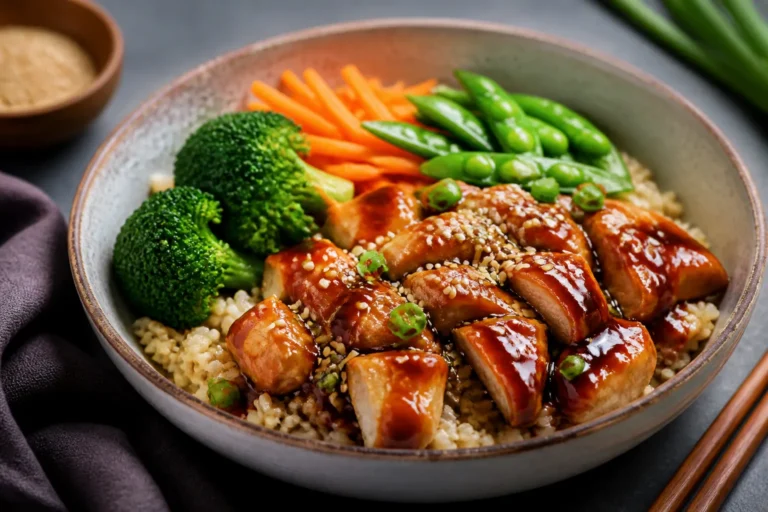
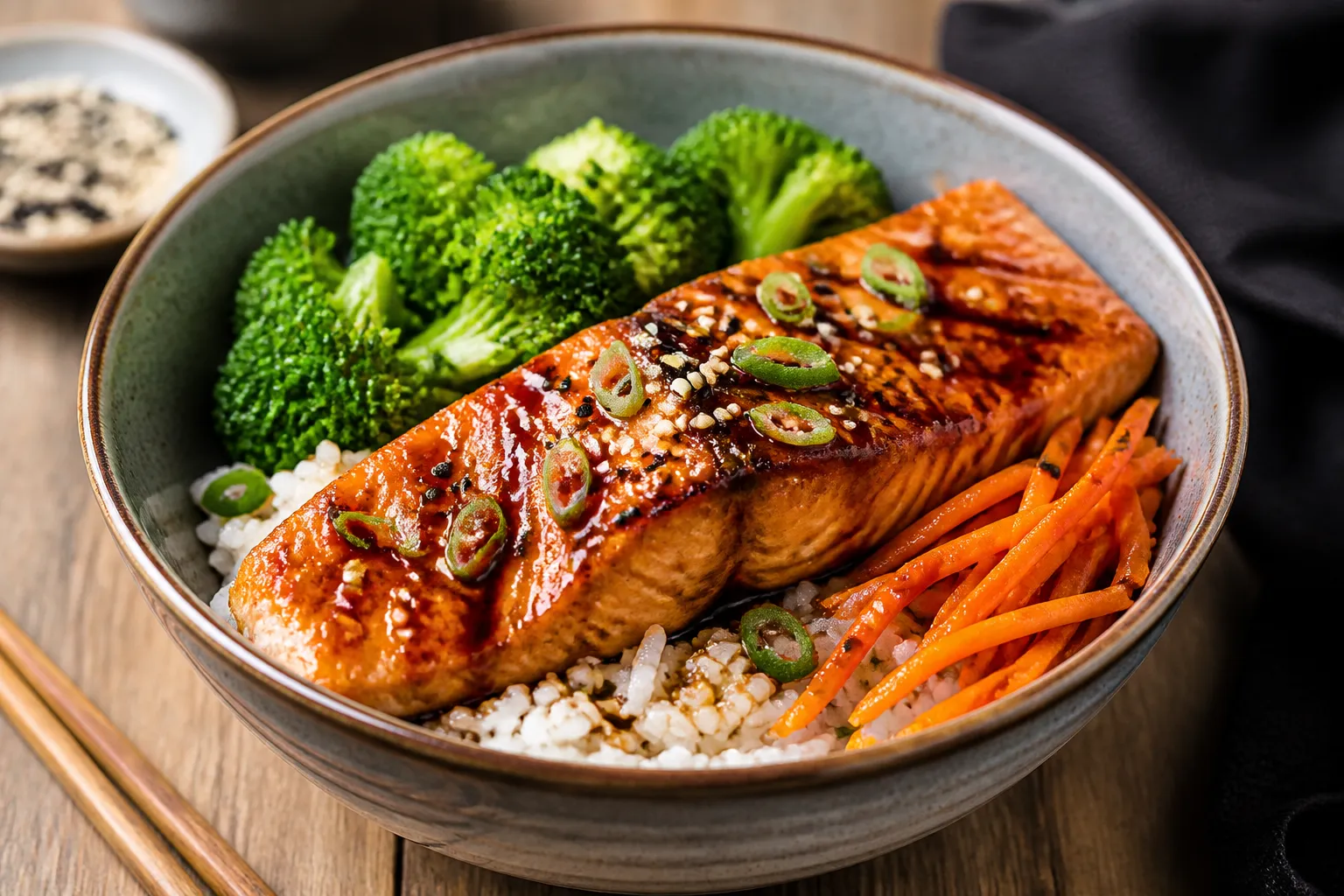
Teriyaki salmon rice bowls bring together sweet-savory glaze, flaky fish, and steamy rice in a way that feels both comforting and fresh. They’re fast enough for busy nights but feel special enough for a weekend dinner. The ingredients are easy to find, and the method is straightforward.
Stop wondering what's for dinner.
Get 7 healthy, family-friendly dinners complete with recipes and simple meal plans delivered straight to your inbox.
You’ll get crisp edges on the salmon, glossy sauce, and colorful toppings that make each bite balanced and satisfying. If you like meals that hit salty, sweet, and tangy all at once, this one ticks every box.
Ingredients
Method
- Cook the rice. Make your preferred rice according to package directions. Keep it warm and fluffy. If you’re using leftover rice, reheat it with a splash of water to soften it.
- Whisk the teriyaki sauce. In a small bowl, combine soy sauce, mirin, honey, rice vinegar, sesame oil, ginger, and garlic. Set aside the cornstarch slurry for later.
- Season the salmon. Pat the salmon dry. Sprinkle both sides with a light pinch of salt and pepper. Dry fish sears better, so don’t skip this step.
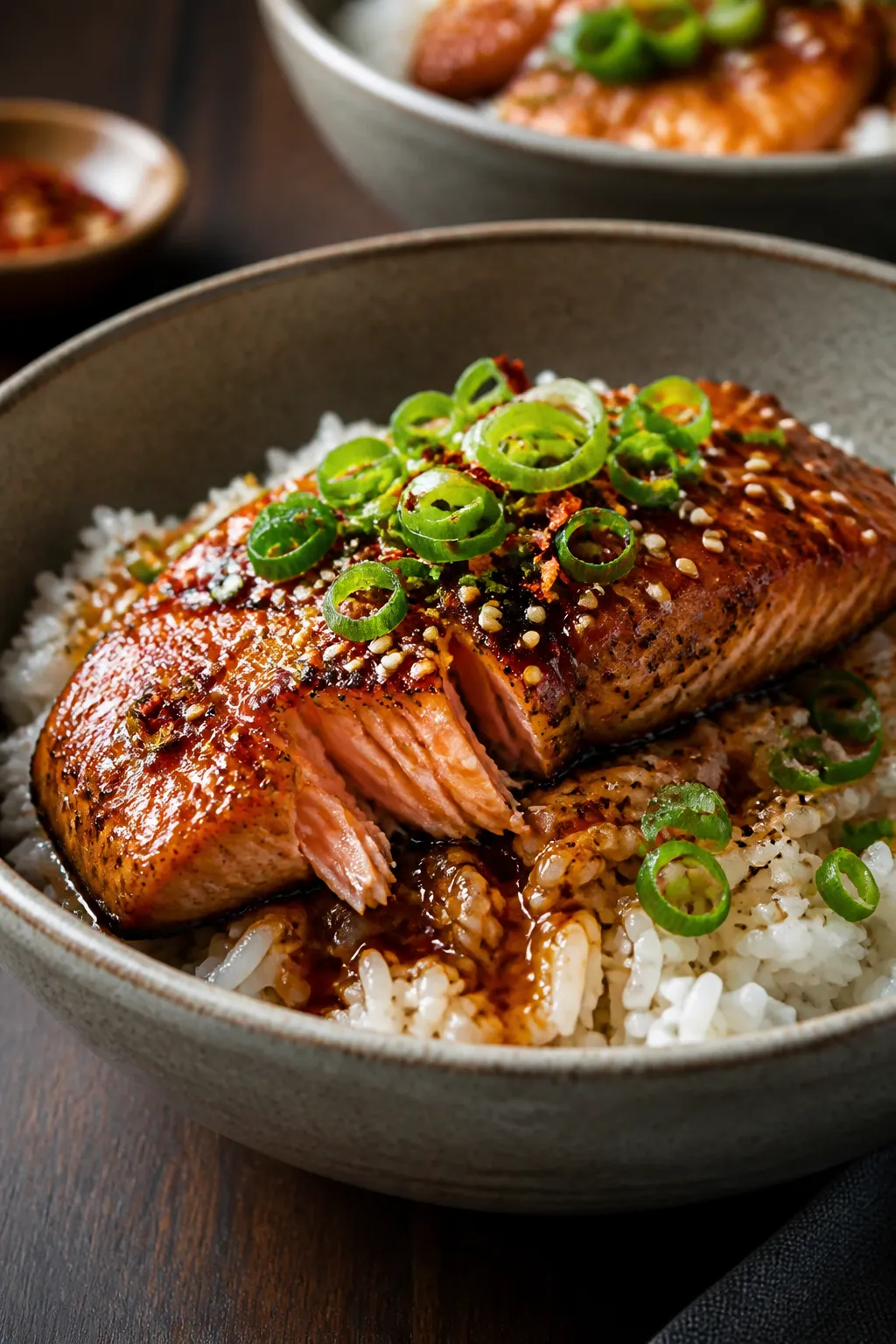
- Pan-sear the salmon. Heat the oil in a large skillet over medium-high. Place salmon in the pan, presentation side down. Cook 3–4 minutes until golden, then flip and cook 2–4 minutes more, depending on thickness. The fish should flake easily and still look moist in the center.
- Make the glaze. Lower the heat to medium-low. Pour the teriyaki mixture around the salmon. Simmer 30 seconds, then stir in the cornstarch slurry. Cook 30–60 seconds until glossy and slightly thickened, spooning it over the fish.
- Prep the toppings. While the sauce thickens, slice cucumber, julienne the carrot, and cut the scallions. Have your garnishes ready so you can build the bowls while the salmon is hot.
- Assemble the bowls. Add a scoop of warm rice to each bowl. Top with a salmon portion. Spoon extra teriyaki sauce over the rice and fish so every bite gets flavor.
- Add crunch and freshness. Arrange cucumber, carrot, and scallions around the salmon. Sprinkle with toasted sesame seeds. Add pickled ginger for a bright bite and a squeeze of lime if you like.
- Heat lovers, add a kick. Finish with chili flakes or a drizzle of sriracha for gentle heat that plays well with the sweet-savory glaze.
Why This Recipe Works
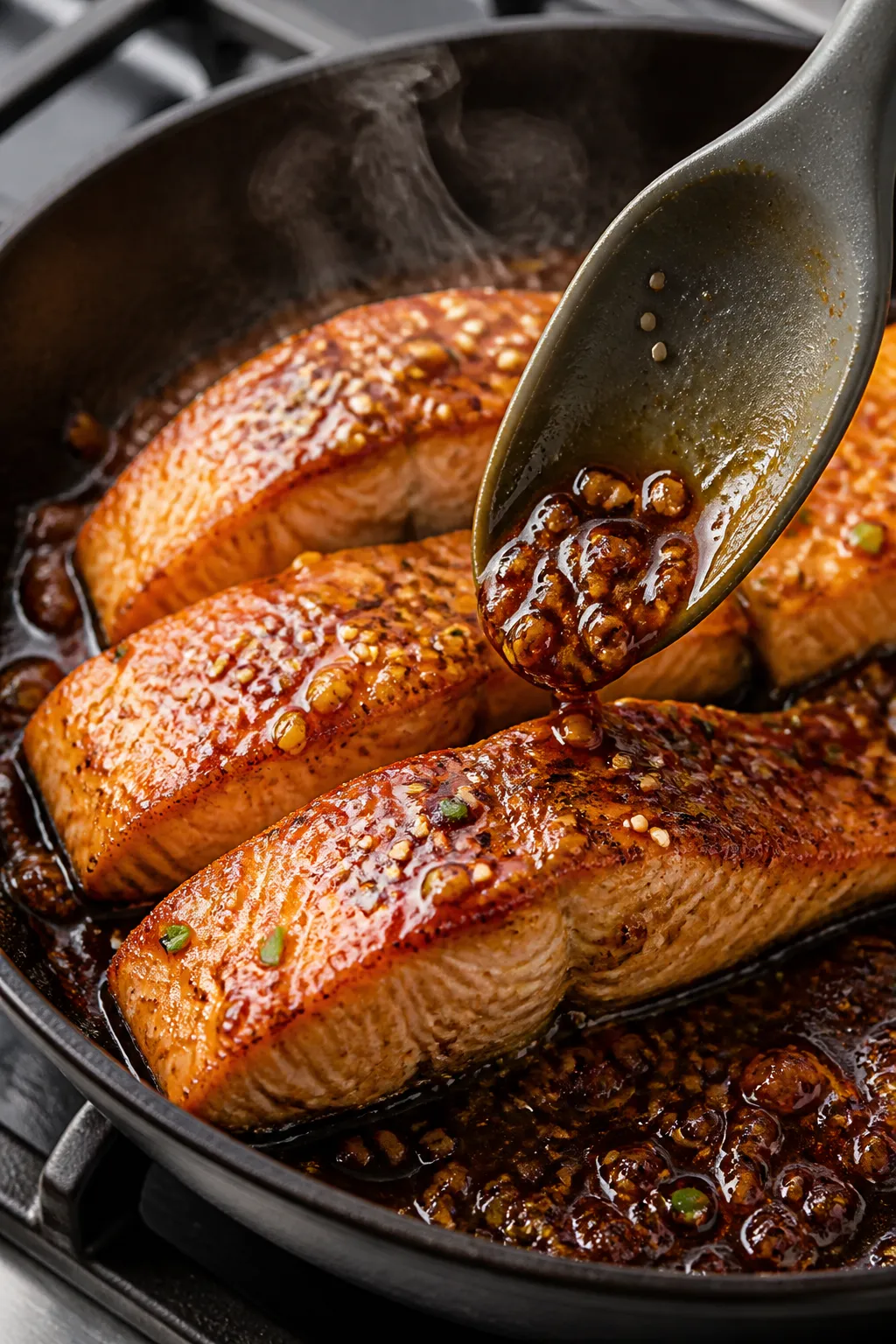
This bowl leans on a simple homemade teriyaki sauce that coats the salmon without overpowering it. A quick pan-sear locks in moisture and gives the fish a light crust.
The rice soaks up extra sauce, which keeps every forkful flavorful from start to finish. Fresh add-ins like cucumber, scallions, and pickled ginger brighten things up so the dish never feels heavy.
Ingredients
- For the Salmon and Rice:
- 1 1/2 pounds salmon fillets, skin-on or skinless, cut into 4 portions
- 2 cups cooked rice (white jasmine, sushi rice, or brown rice)
- 1 tablespoon neutral oil (avocado, canola, or grapeseed)
- Salt and black pepper, to taste
- For the Teriyaki Sauce:
- 1/3 cup low-sodium soy sauce (or tamari for gluten-free)
- 3 tablespoons mirin
- 2 tablespoons honey or maple syrup
- 1 tablespoon rice vinegar
- 1 teaspoon toasted sesame oil
- 1 tablespoon fresh grated ginger
- 2 cloves garlic, finely minced
- 1 teaspoon cornstarch mixed with 2 teaspoons water (slurry)
- For Toppings and Garnish:
- 1 cup thinly sliced cucumber
- 1 medium carrot, julienned or shaved
- 2 scallions, thinly sliced
- Pickled ginger (optional but great)
- Toasted sesame seeds
- Lime wedges (optional)
- Chili flakes or sriracha, to taste (optional)
How to Make It
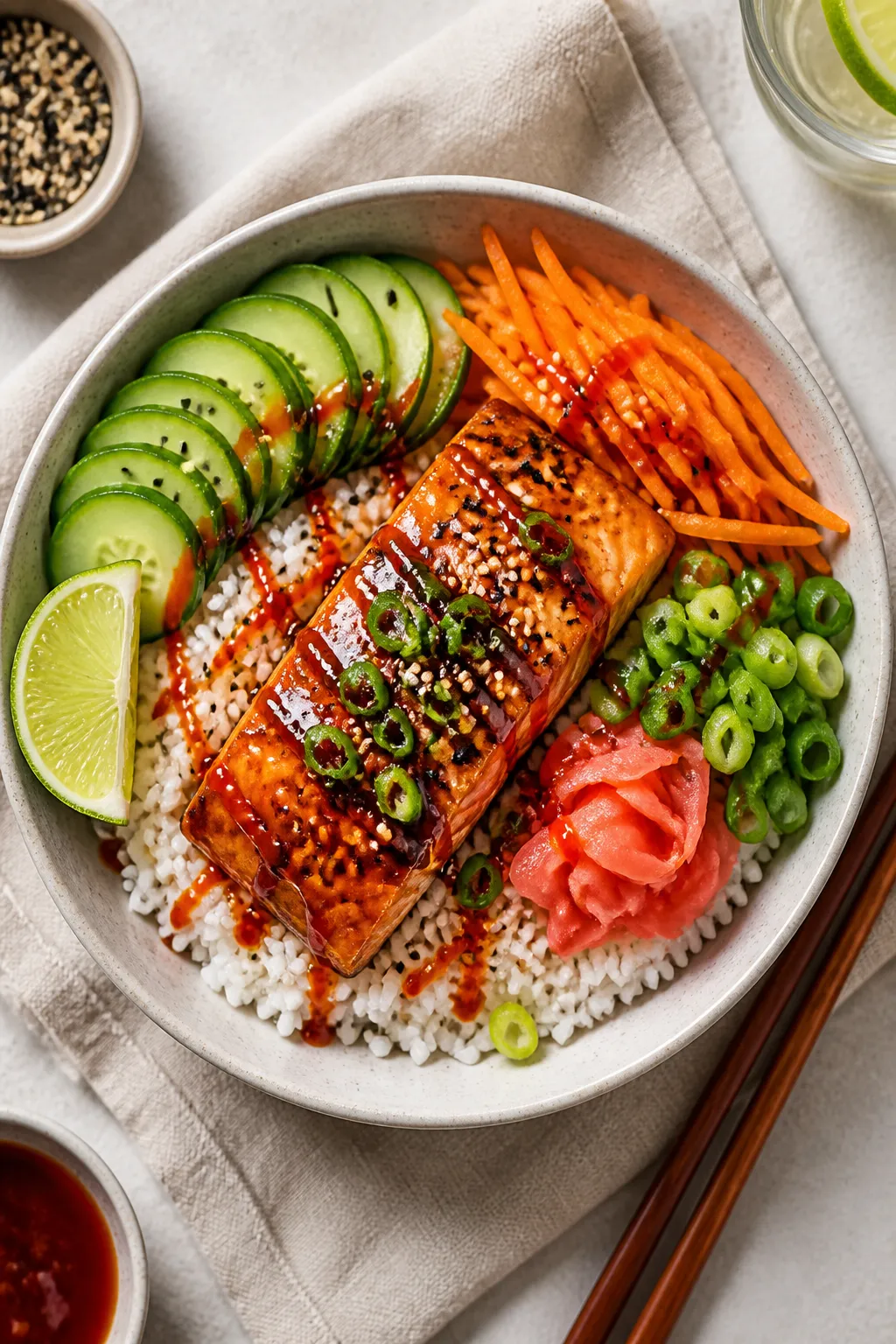
- Cook the rice. Make your preferred rice according to package directions.
Keep it warm and fluffy. If you’re using leftover rice, reheat it with a splash of water to soften it.
- Whisk the teriyaki sauce. In a small bowl, combine soy sauce, mirin, honey, rice vinegar, sesame oil, ginger, and garlic.
Set aside the cornstarch slurry for later.
- Season the salmon. Pat the salmon dry. Sprinkle both sides with a light pinch of salt and pepper.
Dry fish sears better, so don’t skip this step.
- Pan-sear the salmon. Heat the oil in a large skillet over medium-high. Place salmon in the pan, presentation side down.
Cook 3–4 minutes until golden, then flip and cook 2–4 minutes more, depending on thickness. The fish should flake easily and still look moist in the center.
- Make the glaze. Lower the heat to medium-low.
Pour the teriyaki mixture around the salmon. Simmer 30 seconds, then stir in the cornstarch slurry. Cook 30–60 seconds until glossy and slightly thickened, spooning it over the fish.
- Prep the toppings.
While the sauce thickens, slice cucumber, julienne the carrot, and cut the scallions. Have your garnishes ready so you can build the bowls while the salmon is hot.
- Assemble the bowls. Add a scoop of warm rice to each bowl.
Top with a salmon portion. Spoon extra teriyaki sauce over the rice and fish so every bite gets flavor.
- Add crunch and freshness. Arrange cucumber, carrot, and scallions around the salmon.
Sprinkle with toasted sesame seeds. Add pickled ginger for a bright bite and a squeeze of lime if you like.
- Heat lovers, add a kick. Finish with chili flakes or a drizzle of sriracha for gentle heat that plays well with the sweet-savory glaze.
Keeping It Fresh
Store leftovers in airtight containers with rice and salmon separated from crunchy veggies. Refrigerate for up to 2 days.
Reheat the salmon gently on the stovetop over low heat or in the microwave at 50% power to avoid drying it out. Add the fresh toppings just before serving so they stay crisp. If the sauce thickens in the fridge, loosen it with a splash of water while warming.
Benefits of This Recipe
- Balanced and satisfying: Protein-rich salmon, complex carbs from rice, and fiber from veggies make a complete meal.
- Weeknight-friendly: From start to finish, you can have dinner on the table in about 30 minutes.
- Customizable: Works with different grains, veggies, and heat levels.
Easy to tailor for picky eaters or special diets.
- Great for meal prep: Cook rice and sauce ahead, then sear salmon just before eating for best texture.
- Comfort meets freshness: Warm, saucy base with crisp, cool toppings keeps the bowl exciting.
Pitfalls to Watch Out For
- Overcooking salmon: Salmon goes from perfect to dry quickly. Pull it off heat when it flakes with gentle pressure and looks slightly translucent in the center.
- Sauce too salty: Use low-sodium soy sauce and taste as you go. You can balance salt with extra honey or a bit more rice vinegar.
- Watery glaze: Don’t skip the cornstarch slurry.
Simmer until the sauce clings to the back of a spoon.
- Soggy rice: Fluff rice with a fork and avoid overcooking. If using leftover rice, steam it with a splash of water for a soft, steamy texture.
- Skipping the dry pat: Moisture on the fish prevents browning. Pat the salmon well before searing.
Recipe Variations
- Air fryer salmon: Brush salmon with oil and air fry at 390°F (200°C) for 7–9 minutes, then toss with warmed teriyaki glaze.
- Grain swap: Try brown rice, quinoa, or cauliflower rice.
Adjust seasoning since different bases absorb sauce differently.
- Veggie boost: Add edamame, steamed broccoli, avocado slices, or quick-pickled radishes for color and texture.
- Citrus twist: Add orange zest and a splash of orange juice to the teriyaki for a bright, sweet note.
- Spicy teriyaki: Stir in gochujang or a squeeze of sriracha to the sauce for deeper heat.
- Gluten-free: Use tamari and confirm your mirin is gluten-free. The rest stays the same.
- No-cook toppings: Swap cucumbers for kimchi or quick slaw for a tangy crunch.
FAQ
Can I use frozen salmon?
Save time, eat healthier, and take the stress out of dinner.
Get a full week of easy healthy dinners delivered straight to your inbox.
Yes. Thaw it overnight in the refrigerator or under cold running water, then pat it very dry before cooking.
Frozen fillets can hold extra moisture, so the dry pat is essential for good sear.
What kind of rice works best?
Jasmine rice is fragrant and fluffy, while short-grain sushi rice is sticky and great for catching sauce. Brown rice adds nuttiness and more fiber. Any of these pair well with teriyaki flavors.
How do I know when salmon is done?
Look for flakes that separate with gentle pressure and a center that is just turning opaque.
If you use a thermometer, 125–130°F (52–54°C) in the thickest part gives moist, medium results.
Can I bake the salmon instead of pan-searing?
Absolutely. Bake at 400°F (205°C) for 10–12 minutes, depending on thickness. Warm and thicken the teriyaki on the stovetop, then brush or spoon it over the baked salmon.
What can I substitute for mirin?
Use a mix of rice vinegar and a bit more honey to balance the acidity, or use dry sherry with a splash of water and sweetener.
The goal is a lightly sweet, mellow note.
Is there a way to make it ahead?
Cook rice and mix the sauce a day in advance. Store them separately. Sear the salmon right before serving, then warm the sauce, thicken it, and assemble with fresh toppings.
How do I prevent the glaze from burning?
Lower the heat before adding the sauce, and keep it moving as it thickens.
The sugars in honey can scorch at high heat, so a gentle simmer is best.
What if I don’t have cornstarch?
Use arrowroot powder in the same amount, or simmer the sauce a bit longer to reduce naturally. Arrowroot thickens at a slightly lower temperature and keeps the sauce glossy.
Can I use skin-on salmon?
Yes. Sear skin-side down longer to crisp it, then flip briefly to finish.
The skin adds texture and helps protect the fish from overcooking.
How spicy can I make it?
As spicy as you like. Add chili flakes to the sauce while simmering, or finish with sriracha, chili oil, or sliced fresh chilies on top.
Wrapping Up
Teriyaki salmon rice bowls are the kind of meal that just works—tender fish, glossy sauce, and plenty of crunch and color. The method is simple, and the ingredients are flexible, which makes it ideal for weeknights.
Keep a few pantry staples on hand, and you can have this on the table fast. Once you nail your preferred balance of sweet, salty, and tangy, this bowl will slide into your regular rotation without a second thought.
Printable Recipe Card
Want just the essential recipe details without scrolling through the article? Get our printable recipe card with just the ingredients and instructions.
Loved This Recipe?
If you're looking for more simple, healthy dinners your family will actually eat, grab my FREE 7-Day Easy Dinner Reset. You'll get 7 easy dinner recipes, simple grocery lists, and a done-for-you plan that takes the stress out of mealtime.