Garlic Butter Salmon With Asparagus – Fast, Flavorful, and Weeknight-Friendly
This is the kind of dinner you can count on when time is tight and you still want something special. Juicy salmon, crisp-tender asparagus, and a silky garlic butter sauce all come together in one pan. It’s simple, bright, and full of flavor without a lot of fuss.
Stop wondering what's for dinner.
Get 7 healthy, family-friendly dinners complete with recipes and simple meal plans delivered straight to your inbox.
Whether you’re cooking for one, two, or a family, this recipe scales easily and delivers every time.
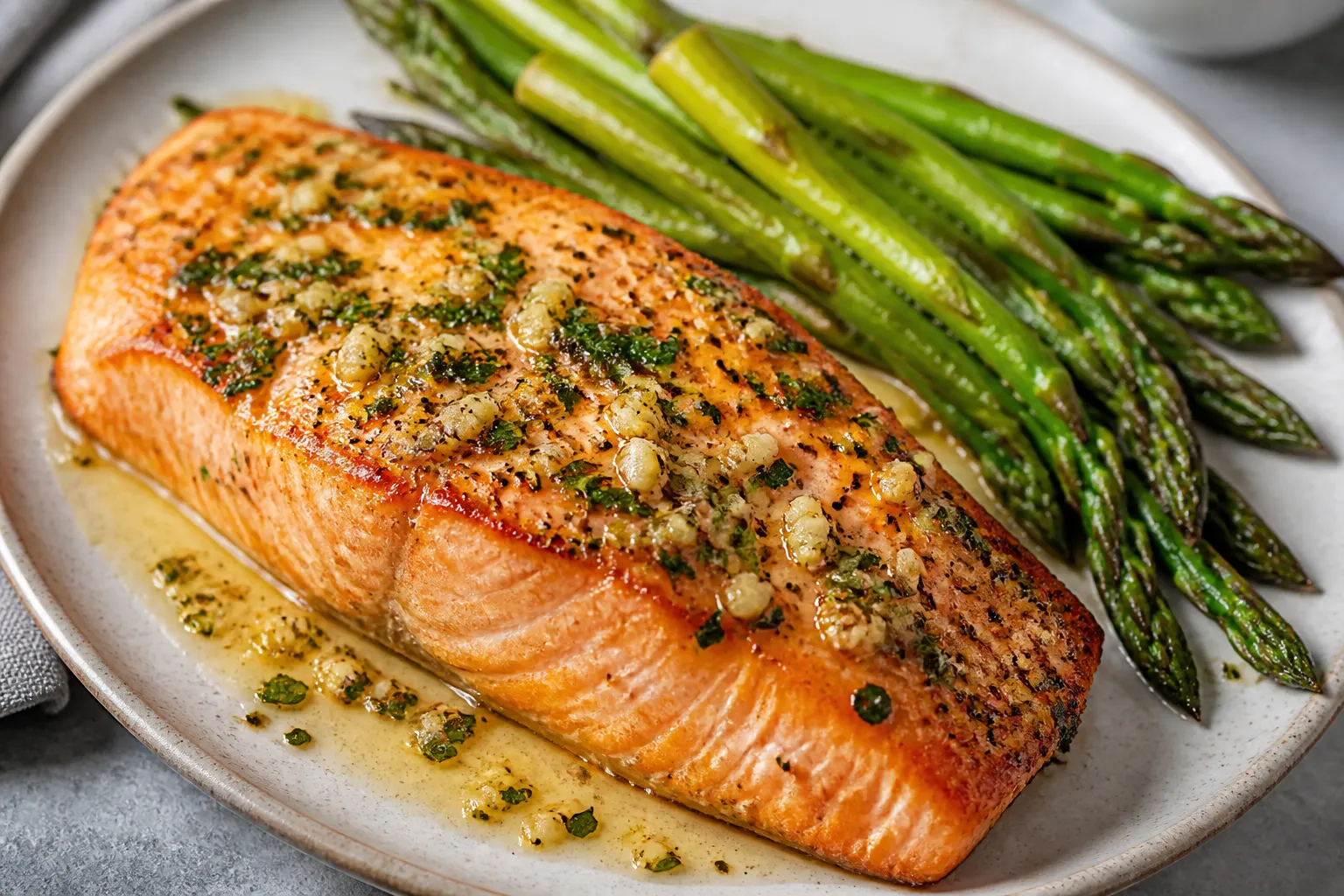
Garlic Butter Salmon With Asparagus – Fast, Flavorful, and Weeknight-Friendly
Ingredients
Method
- Prep the produce. Trim the woody ends of the asparagus. Pat the salmon dry with paper towels. Dry surfaces sear better and help prevent sticking.
- Season the salmon and asparagus. Season salmon on both sides with salt and pepper. Toss asparagus with 1 tablespoon olive oil, a pinch of salt, and pepper.
- Heat your pan. Set a large skillet (stainless steel or cast iron) over medium-high heat and add 1 tablespoon olive oil. If baking, preheat the oven to 425°F (220°C) and line a sheet pan with parchment.
- Sear the salmon skin-side down. Place salmon in the hot pan, skin-side down. Press gently with a spatula for the first 10 seconds to keep the skin from curling. Cook 3–4 minutes until the skin is crisp and the sides turn opaque about one-third up.
- Add the asparagus. Scoot the salmon to one side. Add asparagus to the pan in a single layer. If the pan looks dry, add a drizzle more oil. Cook 2 minutes, tossing once.
- Make the garlic butter. Lower heat to medium. Add butter to the pan. When melted and foamy, stir in minced garlic, lemon zest, and a pinch of red pepper flakes. Cook 30–45 seconds until fragrant, not browned.
- Flip and baste. Flip the salmon and spoon the garlic butter over the top repeatedly for 1–2 minutes. Add lemon juice and any optional add-ins like capers or Dijon. Toss asparagus in the sauce.
- Finish to desired doneness. Cook until the salmon is just opaque in the center and flakes easily with a fork, about 6–8 minutes total depending on thickness. Aim for 125–130°F (52–54°C) internal temperature for moist, medium doneness.
- Rest and garnish. Turn off the heat. Let the salmon rest 2 minutes to reabsorb juices. Sprinkle with chopped parsley and an extra squeeze of lemon.
- Serve. Plate salmon over asparagus and spoon remaining garlic butter on top. Add lemon wedges at the table.
Why This Recipe Works
This dish pairs rich, flaky salmon with asparagus, which cooks quickly and holds up to high heat. A quick sear locks in moisture and builds flavor, while garlic butter melts into a glossy sauce that coats every bite. Lemon adds a clean, fresh finish that balances the richness.
Cooking everything on one pan or skillet streamlines the process and keeps cleanup minimal. With a handful of ingredients and a few key techniques, you get restaurant-level results at home.
What You’ll Need
- Salmon fillets: 4 skin-on fillets (about 6 ounces each)
- Asparagus: 1 large bunch, ends trimmed
- Unsalted butter: 4 tablespoons
- Olive oil: 1–2 tablespoons
- Garlic: 3–4 cloves, finely minced
- Lemon: 1, zested and juiced (plus extra wedges for serving)
- Fresh parsley: 2 tablespoons, chopped (or dill for a different twist)
- Crushed red pepper flakes: A pinch (optional)
- Salt and black pepper: To taste
- Optional add-ins: 1 tablespoon capers, 1 teaspoon Dijon mustard, or a splash of white wine
Step-by-Step Instructions
- Prep the produce. Trim the woody ends of the asparagus. Pat the salmon dry with paper towels.
Dry surfaces sear better and help prevent sticking.
- Season the salmon and asparagus. Season salmon on both sides with salt and pepper. Toss asparagus with 1 tablespoon olive oil, a pinch of salt, and pepper.
- Heat your pan. Set a large skillet (stainless steel or cast iron) over medium-high heat and add 1 tablespoon olive oil. If baking, preheat the oven to 425°F (220°C) and line a sheet pan with parchment.
- Sear the salmon skin-side down. Place salmon in the hot pan, skin-side down.
Press gently with a spatula for the first 10 seconds to keep the skin from curling. Cook 3–4 minutes until the skin is crisp and the sides turn opaque about one-third up.
- Add the asparagus. Scoot the salmon to one side. Add asparagus to the pan in a single layer.
If the pan looks dry, add a drizzle more oil. Cook 2 minutes, tossing once.
- Make the garlic butter. Lower heat to medium. Add butter to the pan.
When melted and foamy, stir in minced garlic, lemon zest, and a pinch of red pepper flakes. Cook 30–45 seconds until fragrant, not browned.
- Flip and baste. Flip the salmon and spoon the garlic butter over the top repeatedly for 1–2 minutes. Add lemon juice and any optional add-ins like capers or Dijon.
Toss asparagus in the sauce.
- Finish to desired doneness. Cook until the salmon is just opaque in the center and flakes easily with a fork, about 6–8 minutes total depending on thickness. Aim for 125–130°F (52–54°C) internal temperature for moist, medium doneness.
- Rest and garnish. Turn off the heat. Let the salmon rest 2 minutes to reabsorb juices.
Sprinkle with chopped parsley and an extra squeeze of lemon.
- Serve. Plate salmon over asparagus and spoon remaining garlic butter on top. Add lemon wedges at the table.
Storage Instructions
- Refrigerate: Cool completely, then store salmon and asparagus in airtight containers for up to 3 days.
- Reheat gently: Warm on low heat in a covered skillet with a splash of water or broth until just heated through. Avoid microwaving on high, which can dry the fish.
- Enjoy cold: Flake leftover salmon into salads or grain bowls.
It’s excellent chilled with extra lemon.
- Do not freeze cooked asparagus: It turns mushy. Cooked salmon can be frozen up to 2 months, but texture is best fresh.
Why This Is Good for You
Salmon is rich in omega-3 fatty acids, which support heart and brain health. It also packs high-quality protein and B vitamins.
Asparagus adds fiber, folate, and antioxidants with very few calories. Cooking with olive oil and a modest amount of butter keeps the fat profile balanced while delivering big flavor. Lemon and herbs bring brightness without extra sodium or sugar.
Common Mistakes to Avoid
- Starting with wet fish: If the salmon isn’t dry, it won’t sear well and may steam.
Pat it thoroughly before seasoning.
- Overcrowding the pan: Crowding lowers the temperature and prevents browning. Use a large skillet or cook in batches.
- Burning the garlic: Add garlic after lowering the heat and cook briefly. Burnt garlic turns bitter fast.
- Overcooking: Salmon dries out past 140°F (60°C).
Pull it at 125–130°F for a moist, tender result.
- Skipping the rest: A short rest keeps juices in the fish, not on the plate.
- Forgetting acidity: Lemon or a light splash of vinegar brightens the butter and balances richness.
Variations You Can Try
- Sheet pan method: Toss asparagus with oil and seasonings on a sheet pan. Nestle seasoned salmon among the spears. Dot butter and garlic on top, bake at 425°F (220°C) for 10–14 minutes.
Finish with lemon and herbs.
- Brown butter twist: Let the butter cook a bit longer until nutty before adding garlic. Add a squeeze of lemon to stop the browning, then proceed.
- Herb swap: Use dill, chives, or tarragon instead of parsley. Each brings a different freshness.
- Citrus change-up: Try orange or lime zest for a new aroma.
Keep lemon juice for balance, or blend juices.
- Spicy kick: Add extra red pepper flakes or a dash of hot paprika to the butter.
- Add a crunch: Top finished salmon with toasted almond slices or panko toasted in a bit of butter.
- Saucy finish: Whisk 1 teaspoon Dijon into the pan with a splash of white wine or broth for a quick pan sauce.
FAQ
Save time, eat healthier, and take the stress out of dinner.
Get a full week of easy healthy dinners delivered straight to your inbox.
Should I keep the skin on the salmon?
Yes. The skin protects the flesh from heat and helps achieve a crisp sear. You can slide it off easily after cooking if you prefer not to eat it.
How do I know when salmon is done without a thermometer?
Press the top gently with a fork.
It should flake easily but still look slightly translucent in the very center. The sides will have turned opaque most of the way up.
Can I use frozen salmon?
Absolutely. Thaw it overnight in the fridge or under cold running water in its packaging.
Pat very dry before cooking to get a good sear.
What if my asparagus is thick?
Peeled thick spears can be lovely. Use a vegetable peeler on the bottom half, then cook 1–2 minutes longer. You want tender-crisp, not mushy.
Can I make this dairy-free?
Use a plant-based butter or replace butter with more olive oil.
You’ll lose some richness, but lemon, garlic, and herbs will still shine.
What sides go well with this?
Try roasted potatoes, buttery rice, quinoa, or crusty bread to soak up the sauce. A simple green salad or cucumber salad adds freshness.
Is farmed or wild salmon better here?
Both work. Wild tends to be leaner and cooks faster; farmed is often richer and more forgiving.
Adjust cook time by a minute or two depending on thickness.
Can I grill this instead?
Yes. Grill salmon skin-side down over medium heat and cook asparagus on a grill pan. Melt garlic butter separately and spoon over to finish.
In Conclusion
Garlic Butter Salmon with Asparagus is a fast, no-fuss recipe that tastes like you put in way more effort than you did.
With a hot pan, a handful of fresh ingredients, and a few smart steps, you’ll get crisp skin, tender fish, and bright, garlicky vegetables. Keep this one in your back pocket for busy nights, casual dinners with friends, or any time you want something satisfying and fresh. Simple techniques, bold flavor, and easy cleanup—it checks every box.
Printable Recipe Card
Want just the essential recipe details without scrolling through the article? Get our printable recipe card with just the ingredients and instructions.
Loved This Recipe?
If you're looking for more simple, healthy dinners your family will actually eat, grab my FREE 7-Day Easy Dinner Reset. You'll get 7 easy dinner recipes, simple grocery lists, and a done-for-you plan that takes the stress out of mealtime.