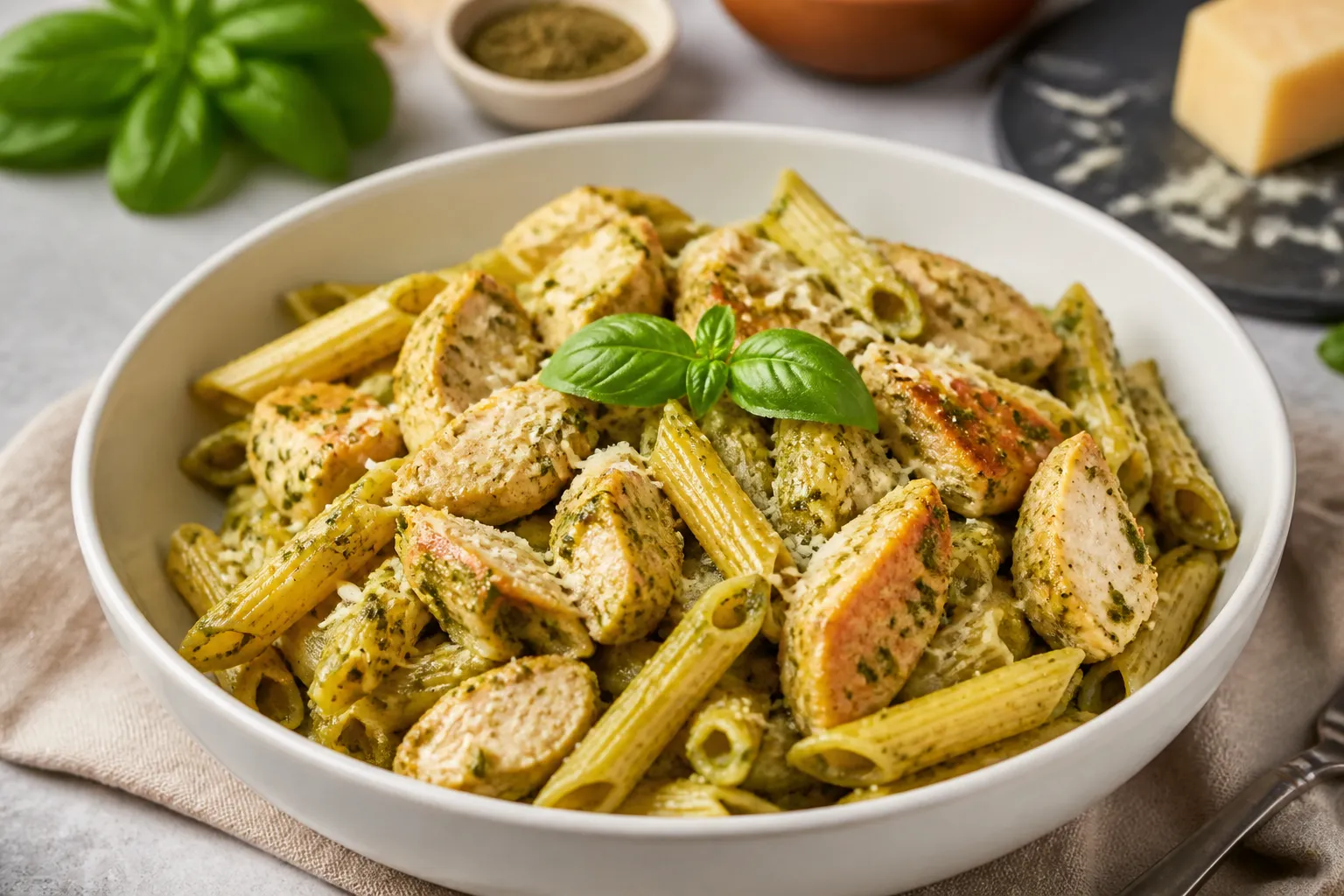
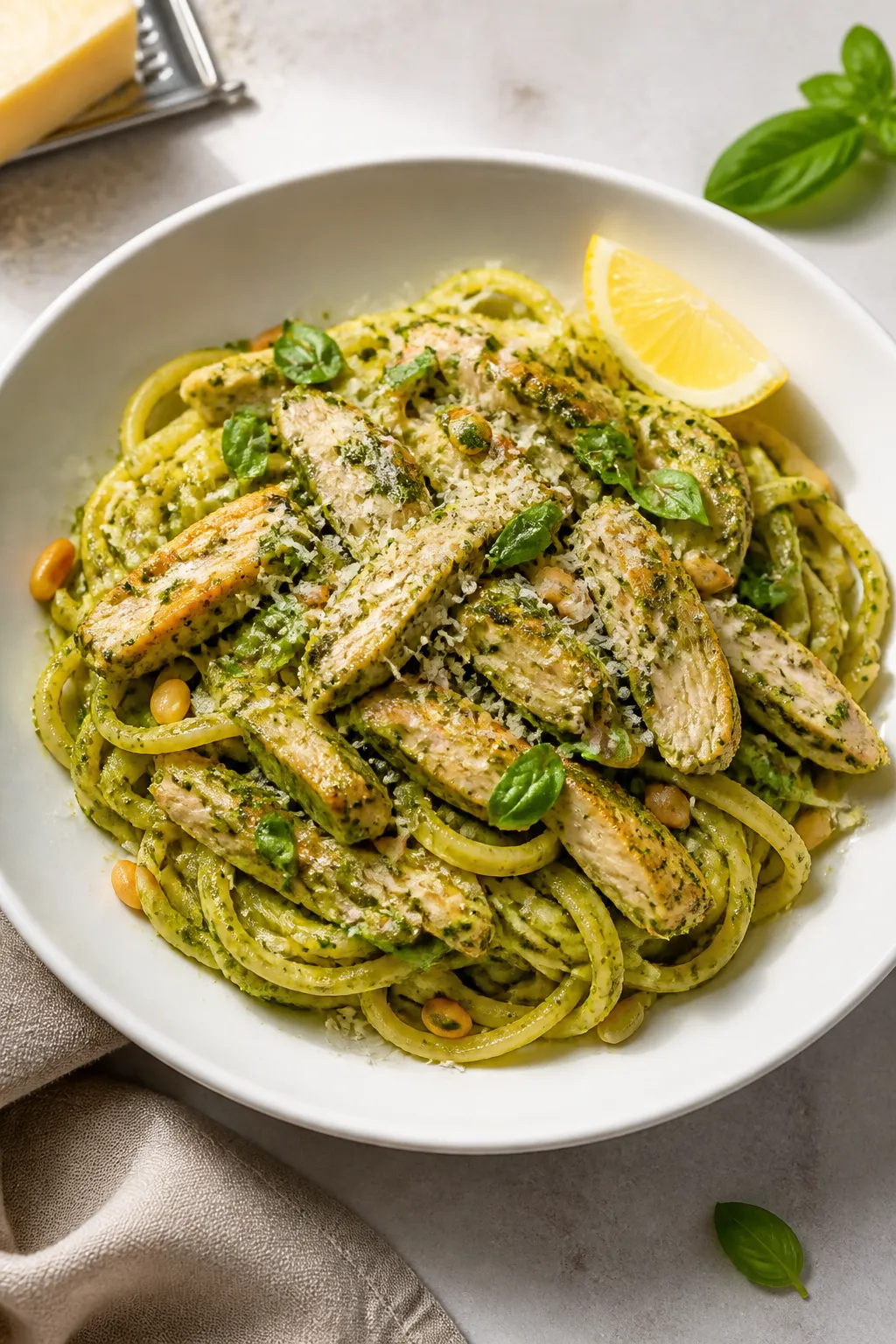
High Protein Chicken Pesto Pasta – A Fresh, Satisfying Weeknight Favorite
This is one of those meals that checks every box: fast, flavorful, and filling. Tender chicken, bright basil pesto, and perfectly cooked pasta come together in under 30 minutes. It’s the kind of dish you can throw together after work and still feel great about eating.
Stop wondering what's for dinner.
Get 7 healthy, family-friendly dinners complete with recipes and simple meal plans delivered straight to your inbox.
The texture is creamy without being heavy, and every bite has a fresh, herby kick. If you’ve been looking for a reliable high-protein dinner that doesn’t taste like “health food,” this is it.
Ingredients
Method
- Cook the pasta: Bring a large pot of salted water to a boil. Cook the pasta until just al dente. Reserve at least 1/2 cup of the cooking water, then drain.
- Make the pesto: In a food processor, add basil, parmesan, nuts, garlic, salt, pepper, and lemon juice. Pulse to combine. With the motor running, stream in 1/3 cup olive oil. Add more oil until the texture is silky but still thick. Taste and adjust salt or lemon.
- Season the chicken: Pat chicken dry. Toss with salt, pepper, garlic powder, and crushed red pepper if using.
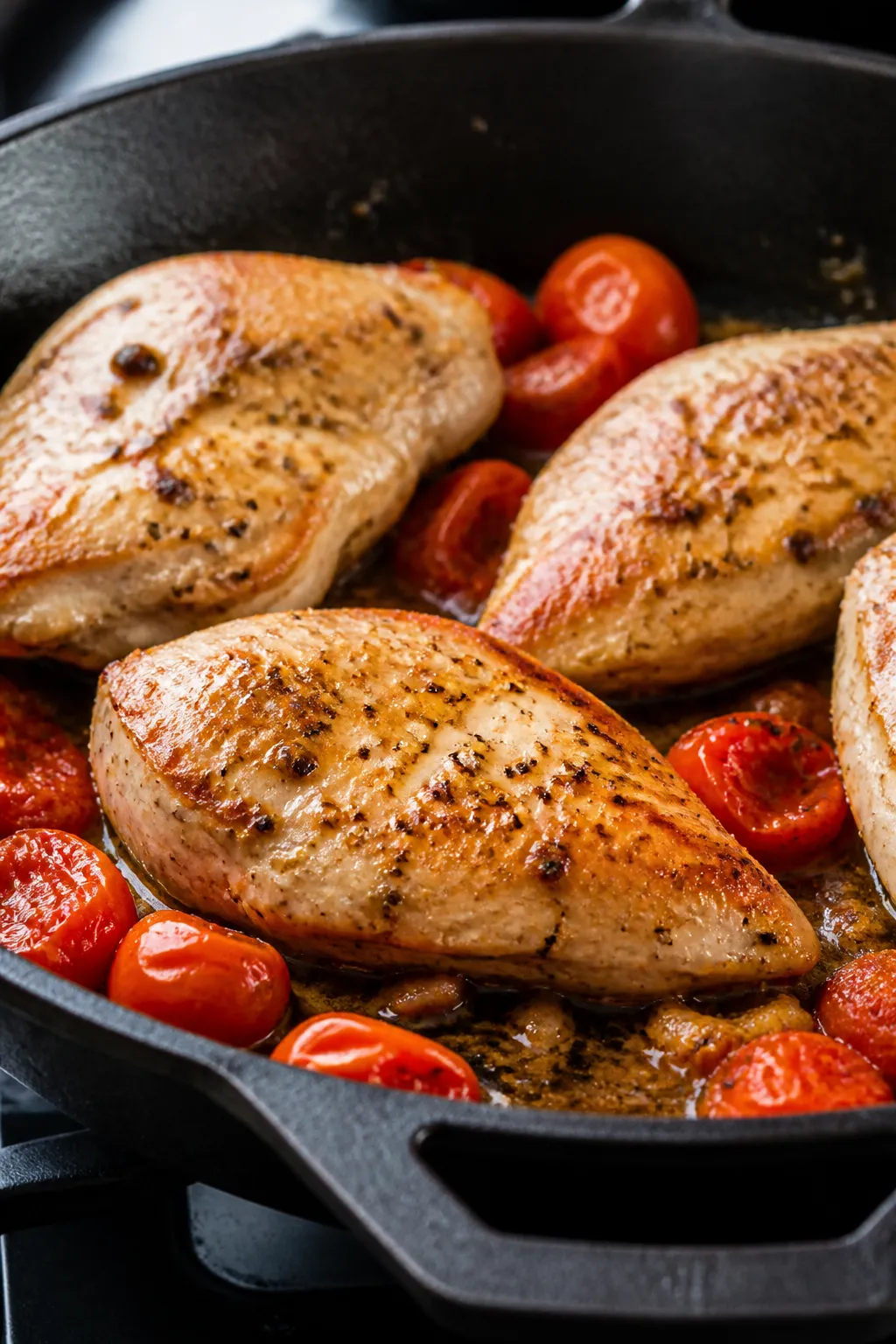
- Cook the chicken: Heat 1 tablespoon olive oil in a large skillet over medium-high. Add chicken in a single layer. Sear without moving for 2–3 minutes, then stir and cook 3–4 more minutes until cooked through and lightly browned. Transfer to a plate.
- Quick tomato toss (optional): In the same pan, add the cherry tomatoes and a pinch of salt. Cook 1–2 minutes just until they soften and release some juice. Turn off the heat.
- Combine: Add drained pasta and chicken to the skillet. Spoon in the pesto and a splash (2–4 tablespoons) of pasta water. Toss until the sauce coats the pasta. Add more water as needed to loosen. Keep the heat low to avoid dulling the basil flavor.
- Finish and serve: Taste and add salt, pepper, or a squeeze of lemon. Top with extra parmesan and torn basil. Serve warm.
Why This Recipe Works
- Balanced macros without fuss: Chicken breast and parmesan add solid protein, while the pasta provides steady energy. Pine nuts and olive oil bring healthy fats for staying power.
- Fresh pesto equals big flavor: Basil, garlic, and lemon keep things bright, so you don’t need a lot of sauce to make it satisfying.
- Smart cooking method: Searing the chicken first locks in juices.
Finishing the pasta with a splash of starchy cooking water helps the pesto cling to each piece.
- Flexible and forgiving: Swap the pasta shape, use store-bought pesto, or add veggies. It still tastes great.
Ingredients
- 12 ounces high-protein pasta (lentil, chickpea, or protein-enriched wheat pasta)
- 1 pound boneless, skinless chicken breasts, cut into bite-size pieces
- 1 tablespoon olive oil (plus more as needed)
- 1/2 teaspoon kosher salt, plus more for pasta water
- 1/2 teaspoon black pepper
- 1/2 teaspoon garlic powder
- 1/4 teaspoon crushed red pepper flakes (optional)
- 1 cup cherry tomatoes, halved (optional but great for freshness)
- 1/4 cup pasta cooking water (save more just in case)
For the pesto (or use 3/4 cup store-bought):
- 2 cups fresh basil leaves, lightly packed
- 1/3 cup grated parmesan cheese
- 1/4 cup toasted pine nuts (or walnuts/almonds)
- 1–2 cloves garlic
- 1/2 teaspoon kosher salt
- 1/4 teaspoon black pepper
- 1 tablespoon fresh lemon juice
- 1/3–1/2 cup extra-virgin olive oil
To finish:
- Extra grated parmesan
- Fresh basil, torn
- Lemon wedges
How to Make It
- Cook the pasta: Bring a large pot of salted water to a boil. Cook the pasta until just al dente.
Reserve at least 1/2 cup of the cooking water, then drain.
- Make the pesto: In a food processor, add basil, parmesan, nuts, garlic, salt, pepper, and lemon juice. Pulse to combine. With the motor running, stream in 1/3 cup olive oil.
Add more oil until the texture is silky but still thick. Taste and adjust salt or lemon.
- Season the chicken: Pat chicken dry. Toss with salt, pepper, garlic powder, and crushed red pepper if using.
- Cook the chicken: Heat 1 tablespoon olive oil in a large skillet over medium-high.
Add chicken in a single layer. Sear without moving for 2–3 minutes, then stir and cook 3–4 more minutes until cooked through and lightly browned. Transfer to a plate.
- Quick tomato toss (optional): In the same pan, add the cherry tomatoes and a pinch of salt.
Cook 1–2 minutes just until they soften and release some juice. Turn off the heat.
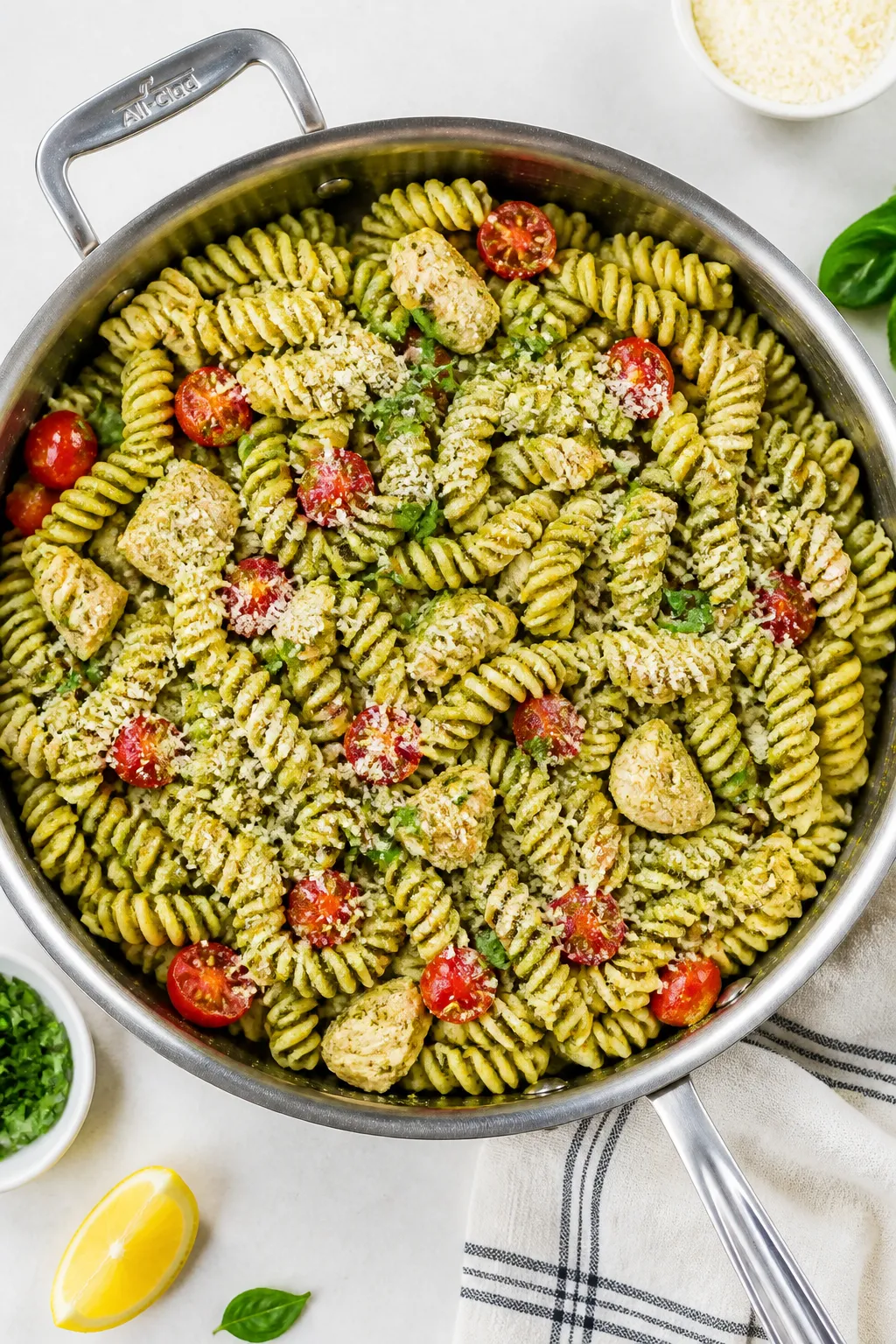
- Combine: Add drained pasta and chicken to the skillet. Spoon in the pesto and a splash (2–4 tablespoons) of pasta water.
Toss until the sauce coats the pasta. Add more water as needed to loosen. Keep the heat low to avoid dulling the basil flavor.
- Finish and serve: Taste and add salt, pepper, or a squeeze of lemon.
Top with extra parmesan and torn basil. Serve warm.
Storage Instructions
- Fridge: Store in an airtight container for up to 3 days. Add a teaspoon of water or olive oil when reheating to bring back the sauce.
- Reheat: Warm gently on the stovetop over low heat or microwave in short bursts, stirring between intervals.
Avoid overheating to protect the fresh pesto flavor.
- Freezer: Not ideal for pesto-based pastas. The basil can darken and the texture may separate. If you must freeze, do so without the pesto and stir in fresh pesto after reheating.
Why This is Good for You
- High protein for satiety: Chicken, parmesan, and protein-rich pasta add up to a satisfying meal that helps keep you full longer.
- Healthy fats for flavor and absorption: Olive oil and nuts deliver monounsaturated fats that support heart health and make fat-soluble nutrients easier to absorb.
- Micronutrient boost: Basil and lemon contribute antioxidants.
Tomatoes add vitamin C and lycopene if you include them.
- Balanced plate in one bowl: You get protein, complex carbs, and fats in a simple, tasty package.
What Not to Do
- Don’t overcook the pasta: Soft pasta won’t hold the sauce well. Stop at al dente, then finish with pesto in the pan.
- Don’t blast the pesto with high heat: Heat dulls basil and can turn it bitter. Toss off the heat or on very low.
- Don’t skip drying the chicken: Wet chicken steams instead of sears.
Pat dry for better browning and flavor.
- Don’t drown the pasta: Start with less pesto than you think and loosen with pasta water. It should coat, not pool.
- Don’t under-season: Taste at the end. A pinch of salt and a hit of lemon can bring everything to life.
Recipe Variations
- Greek yogurt pesto: Stir 2–3 tablespoons plain Greek yogurt into the pesto off heat for a tangy, higher-protein, creamy finish.
- Veggie boost: Add sautéed zucchini, spinach, or roasted broccoli.
Fold them in with the chicken.
- Swap the protein: Use rotisserie chicken, turkey, shrimp, or chicken sausage. If using shrimp, cook quickly and toss at the end.
- Nut-free pesto: Replace nuts with pumpkin seeds or sunflower seeds. You still get great texture and crunch.
- Dairy-free option: Use a vegan parmesan-style cheese or nutritional yeast in the pesto.
- Extra fiber: Choose whole wheat or legume-based pasta and add cannellini beans for even more protein and fiber.
- Spicy kick: Add Calabrian chili paste or more red pepper flakes to the pesto.
FAQ
Can I use store-bought pesto?
Yes.
Save time, eat healthier, and take the stress out of dinner.
Get a full week of easy healthy dinners delivered straight to your inbox.
Choose a brand with basil, olive oil, nuts, and real parmesan for the best flavor. You may need a squeeze of lemon to brighten jarred pesto.
What pasta shape works best?
Short shapes like rotini, penne, or fusilli catch pesto nicely. Protein-enriched spaghetti also works if you prefer long noodles.
How do I keep the pesto vibrant green?
Toss off heat, and add a splash of pasta water to help it spread.
A bit of lemon juice also helps maintain color and brightness.
Is chicken thigh okay instead of breast?
Absolutely. Thighs stay juicy and are more forgiving. They’ll add a little more fat and flavor, with only a small drop in protein per ounce.
Can I make it ahead?
You can cook the chicken and pasta in advance and make the pesto up to 2 days ahead.
Store separately. Combine and warm gently with pasta water before serving.
How much protein is in a serving?
It varies by pasta brand, but a typical serving with high-protein pasta and chicken lands around 35–45 grams of protein. Check your pasta’s label for exact numbers.
What if I don’t have a food processor?
Use a blender and stop to scrape down the sides, or chop basil, garlic, and nuts very finely by hand, then stir in oil, cheese, and lemon.
Can I make it gluten-free?
Yes.
Use a gluten-free high-protein pasta made from chickpeas or lentils. Cook just to al dente to keep the texture firm.
What can I use instead of pine nuts?
Walnuts and almonds are great. Toast them lightly to deepen the flavor before blending.
How do I prevent dry chicken?
Cut chicken into even pieces, pat dry, and don’t overcrowd the pan.
Sear over medium-high heat and pull it off as soon as it’s cooked through.
In Conclusion
High Protein Chicken Pesto Pasta is quick to make, easy to love, and endlessly adaptable. With bright basil, juicy chicken, and a silky sauce that hugs every noodle, it delivers comfort without slowing you down. Keep a batch of pesto on hand, grab your favorite protein pasta, and you’ve got a reliable weeknight staple that tastes like something special.
Enjoy it as-is, or tweak it with veggies and spice to make it your own. Either way, you’ll come back to this one again and again.
Printable Recipe Card
Want just the essential recipe details without scrolling through the article? Get our printable recipe card with just the ingredients and instructions.
Loved This Recipe?
If you're looking for more simple, healthy dinners your family will actually eat, grab my FREE 7-Day Easy Dinner Reset. You'll get 7 easy dinner recipes, simple grocery lists, and a done-for-you plan that takes the stress out of mealtime.