Make the marinade. In a bowl, whisk together soy sauce, rice vinegar, honey, ginger, garlic, toasted sesame oil, and sriracha (if using).
Taste and adjust sweetness or saltiness as needed.
Prep the salmon. Pat salmon dry with paper towels. This helps the glaze stick and encourages browning. If using skin-on fillets, make sure there are no pin bones.
Marinate briefly. Place salmon in a shallow dish or zip-top bag.
Pour in half the marinade and turn to coat. Reserve the other half for glazing. Marinate 15–30 minutes in the refrigerator.
Don’t go much longer to avoid a mushy texture.
Choose your cooking method. You can bake, broil, or pan-sear. Each works well: Bake: Preheat oven to 400°F (200°C). Line a sheet pan with parchment or foil.
Place salmon skin-side down, brush with a little neutral oil, and bake 10–14 minutes, depending on thickness.
Broil: Preheat broiler and position rack 6 inches from heat. Broil 6–9 minutes for 1-inch-thick fillets, watching closely to avoid burning.
Pan-sear: Heat a skillet over medium-high with neutral oil. Cook salmon skin-side down 4–5 minutes, flip, then cook 2–4 minutes more until just cooked through.
Glaze while cooking. Brush or spoon some of the reserved marinade over the salmon during the last few minutes of cooking to create a shiny, flavorful finish.
Optional: thicken the sauce. For a restaurant-style glaze, simmer the remaining marinade in a small saucepan.
Stir cornstarch with water to make a slurry, then whisk it into the simmering sauce until thick and glossy, 30–60 seconds.
Check doneness. Salmon is ready when it flakes easily and the center is just turning opaque. For precision, cook to an internal temperature of 125–130°F (52–54°C) for medium and let it rest a couple of minutes.
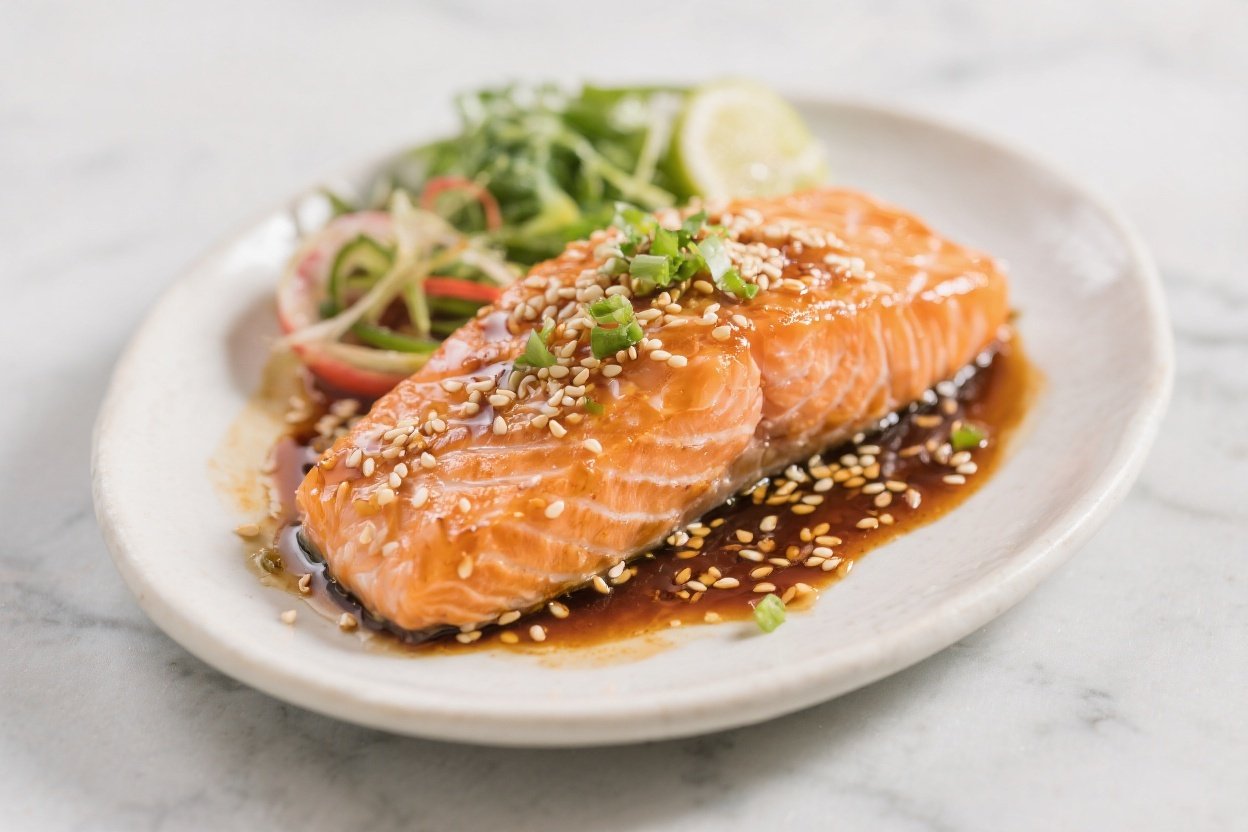
Garnish and serve. Sprinkle with toasted sesame seeds and scallions. Add lime wedges on the side for a fresh pop of acidity.
Serve with rice, quinoa, or noodles and a simple veggie like bok choy, broccoli, or snap peas.